

Audio By Carbonatix
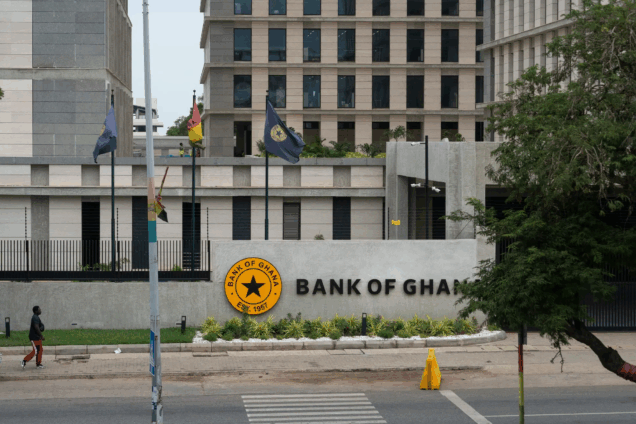
The Bank of Ghana has issued comprehensive new regulations governing the registration and operations of all International Money Transfer Operators (IMTOs), facilitating money flows into the country.
The "Guidelines for the Registration and Operations of International Money Transfer Operators (IMTOs) in Ghana," dated December 2025, establishes a rigorous framework aimed at strengthening oversight, consumer protection, and the integrity of the vital remittance sector.
Citing remittances as "a vital pillar of Ghana’s socio-economic development," the Central Bank states the evolving digital landscape necessitates a "robust regulatory framework" to uphold public trust and safeguard financial stability. The guidelines apply universally to IMTOs, banks, payment service providers, and any institution approved to terminate inward remittances.
A cornerstone of the new regime is a strict licensing process. Prospective IMTOs must already be licensed in their home country and submit a detailed application to the Bank of Ghana, including shareholder structures, profiles of ultimate beneficial owners, and internal control systems.
The Bank pledges to grant or refuse an application within "ninety (90) days" of receiving a complete submission. Crucially, the issued "registration status accorded to an IMTO shall not be transferable."
Operationally, the guidelines impose significant restrictions. Registered IMTOs are confined strictly to inward remittance services on a "person-to-person transfer" basis.
They are explicitly prohibited from a suite of financial activities, including outbound international transfers, deposit-taking, lending, and forex trading. In a major shift, IMTOs shall not "allow termination of inward remittances into business/corporate accounts," mandating payouts only to individuals.
Furthermore, the Bank of Ghana has mandated specific settlement rules. All inward transactions must be settled in Ghana Cedis through a designated bank account. The conversion rate must use the "Average Opening Bloomberg USD/GHS Regional (REGN) bid–ask range, or the corresponding Currency Pair Rate range" on the day the transfer is received for same-day conversion.
Compliance obligations are stringent. IMTOs and their agents must collect detailed transaction data, including the purpose of transfer and beneficiary gender, and maintain records for at least six years. Monthly electronic data returns must be submitted by the "ninth (9th) working day of the ensuing month," while suspicious transaction reports must be filed within 24 hours.
The guidelines also enforce a clear chain of accountability. While IMTOs must operate through approved agent banks or payment service providers, they bear ultimate responsibility for compliance. All agents must operate under a formal Service Level Agreement, and IMTOs are required to "monitor compliance of their agents with AML/CFT/CPF requirements."
Sanctions for non-compliance are severe, ranging from fines—such as an administrative penalty of not less than 1,000 penalty units for unauthorised material changes—to suspension and outright de-registration. Existing operators have a three-month transitional period to align with the new rules upon publication.
"The operations of an IMTO and their agents shall be guided by a Service Level Agreement (SLA) specifying the terms and conditions of the partnership," the document states, underscoring the formalised relationships now required within the remittance ecosystem.
Latest Stories
-
We must account for every cedi entrusted to us as public officials – Ato Forson
13 minutes -
Supreme Court rejects Solomon Asamoah’s bid to overturn Sky Train ruling
28 minutes -
Nungua Traditional Stool, WT Plastics partner to establish factory, create 1,400 jobs
30 minutes -
Mahama describes Ghana’s religious diversity as its greatest treasure, defends fairness to all faiths
35 minutes -
Police to arrest motorists who use pedestrian footbridges – ACP Obeng
36 minutes -
KNUST announces revised reopening dates, lectures begin October 19
50 minutes -
GoldBod, military engineers partner to reclaim galamsey-damaged Tano Nimri Forest
50 minutes -
NACOC educates 450 Koforidua SHS students on dangers of drug abuse
50 minutes -
First-year students stranded as Obuasi SHTS remains closed over misconduct probe
52 minutes -
Court halts promotion of 40 police officers pending IGP’s appeal
55 minutes -
Gender Ministry deploys teams nationwide to monitor LEAP cash grant payments
60 minutes -
GNFS contains Somoco warehouse fire; bushfire near TTU in Takoradi
1 hour -
Recurring teacher-student sexual abuse cases give cause for worry – Salaga South MP
1 hour -
D-Black shocked as only 16 radio and TV stations pay music royalties
1 hour -
Former SIC Savings and Loans MD Amma Frimpomaa Dwumah honours EOCO invitation
1 hour