

Audio By Carbonatix
The Governor of the Bank of Ghana (BoG), Dr Johnson Asiama, has called for a review of the Gold-for-Reserves programme, urging the Minister for Finance, Dr Cassiel Ato Forson, to consider a more sustainable financing structure for the Ghana Gold Board’s (GoldBod) trading operations.
He said such a rethink is necessary to ease the financial burden currently borne by the central bank.
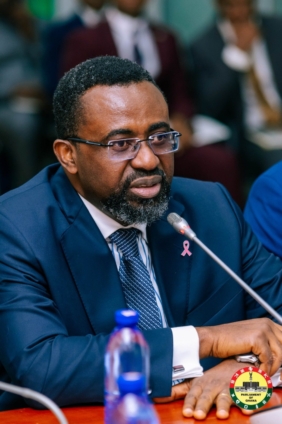
Dr Asiama made the appeal while responding to questions at a sitting of Parliament’s Public Accounts Committee, where concerns were raised about losses incurred by the Bank of Ghana in supporting GoldBod’s gold purchasing activities.
He explained that the programme plays a key role in building Ghana’s foreign reserves and therefore requires stronger backing from the Ministry of Finance.
“It’s not a question of shutting it down, but enhancing its efficiency by looking at the inefficiencies and taking them out,” he said.
According to the BoG Governor, a critical issue is whether the costs associated with the programme should continue to be absorbed by the central bank.
“The best thing now, in the national interest, is to look again at the trading model and decide whether the Ministry of Finance should make a budgetary allocation to take care of the costs, given that this is supporting our reserves build-up,” Dr Asiama stated.
He added that these are policy questions that require consensus at the national level.
Dr Asiama noted that the Bank of Ghana has already taken steps to address some inefficiencies within the programme and stressed the need for a coordinated approach to ensure its long-term success.
“In the case of the Gold-for-Reserves, as the name suggests, the objective was to help us build reserves, and the evidence is clear,” he said, pointing to improvements made so far.
“Going forward, let’s look at the aspects we can fix in the interest of the country. It calls for a unified approach.”
The BoG has come under intense scrutiny following revelations by the International Monetary Fund in its fifth review of Ghana’s ongoing IMF programme that losses from artisanal and small-scale gold transactions under the scheme had reached US$214 million by the end of September 2025.
While GoldBod itself has reportedly recorded profits, the IMF noted that the central bank absorbed most of the losses arising from the programme.
However, the Majority Caucus in Parliament has disputed the characterisation of the figure as losses, arguing instead that the amount represents transactional and insurance costs incurred by GoldBod in its gold trading activities during 2025.
Despite the differing interpretations, Dr Asiama maintained that a policy rethink on the financing of GoldBod is essential to prevent further pressure on the Bank of Ghana.
Latest Stories
-
Ten climbers missing after avalanche hits Himalayan base camp
37 minutes -
NPP had more permanent fuel relief measures than current GH¢2 diesel cut – Amin Adam
1 hour -
Photos from the 3rd Republic Bank-JoyNews Habitat Fair Clinic
1 hour -
Ethiopia’s army promises restraint amid fears of new civil war
1 hour -
Amin Adam calls for review of fuel taxes as diesel prices remain above GH¢18
2 hours -
World Vision Ghana, Ahafo districts sign MoU for universal WASH coverage
2 hours -
When the gold engine stutters: What Ghana’s Cedi and reserves are telling us about the new economic architecture
3 hours -
Two reportedly die after being trapped in mining pit at Juaboso
3 hours -
Petrosol cleans up Wa Municipal Hospital, to donate medical equipment
3 hours -
‘If NPP was ‘insensitive’ over fuel prices, NDC must accept same description now’ — Amin Adam
3 hours -
KiDi brings the hits to London in sold-out UK headline concert
3 hours -
The last goodbye of Ghanaian shot dead in the US
3 hours -
MCC opens door to Ghana again as MiDA revives development partnership
4 hours -
CSIR moves to turn scientific research into jobs, national growth
4 hours -
More patrons troop in as 3rd Republic Bank-JoyNews Habitat Fair clinic enters final day stretch
4 hours