

Audio By Carbonatix
Kenya’s Catholic Church has rejected a donation of about $40,000 (£32,000) made by President William Ruto.
He offered the money towards the building of a priest’s house and as a gift to the choir during Mass on Sunday at the Soweto Catholic Church in the capital, Nairobi.
The donation followed a recent statement by Catholic bishops, who had hit out at the government for failing to fulfil their electoral promises.
Churches have been under pressure this year from young anti-tax protesters who have accused them of being too close to politicians.
Following Ruto’s much-publicised donation on Sunday, many Kenyans urged the Catholic Church to reject the money.
The president had given around 2.6m Kenyan shillings ($20,000, £16,000) in cash, pledged the rest of the money later and also promised to give the parish a bus.
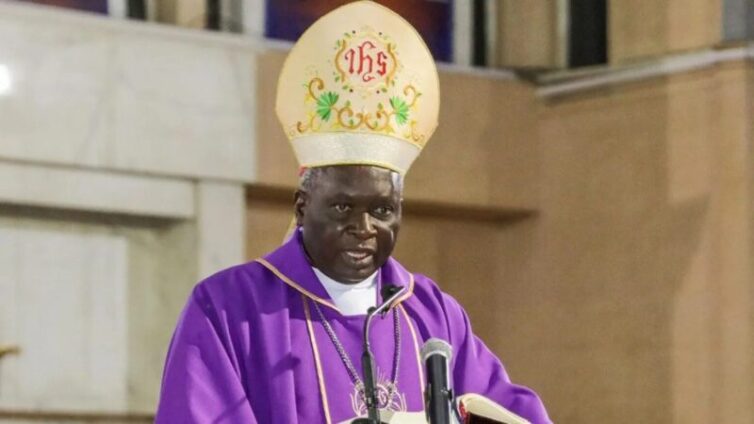
The Catholic Archbishop of Nairobi, Philip Anyolo, said the cash would be returned over "ethical concerns and the need to safeguard the Church from being used for political purposes".
He also declined his other pledges and said a donation of 200,000 Kenyan shillings made by the Governor of Nairobi, Johnson Sakaja - who attended the same service, was also being handed back.
"The Catholic Church strongly discourages the use of church events such as fundraisers and gatherings as platforms for political self-promotion," Archbishop Anyolo said.
Such donations were in breach of the church directives as well as the Kenyan law, he added.
The long ties between churches and political institutions - in a country where more than 80% of the population are Christian - seem to be fraying.
Three years ago, established churches banned politicians from using the pulpit during services in return for donations.
But the relationship was still perceived to be close - with young demonstrators accusing the churches of siding with the government when it decided to impose new taxes earlier this year.
Under the social media hashtag #OccupyChurch, many hit out at the churches for failing to take their side during the deadly protests that erupted in response to the planned tax hikes.
The uproar forced President Ruto’s government to withdraw the controversial finance bill in July.
Then last week, the Kenya Conference of Catholic Bishops - which represents all Catholic bishops in the country - accused the government of perpetuating a "culture of lies".
In a scathing statement, it also raised issues about over-taxation, corruption, violation of human rights, freedom of speech, unemployment as well as a "crumbling" education system and healthcare services.
"Despite the calmness we are experiencing, there is a lot of anxiety and most people are losing trust in the government," it said.
In response, President Ruto appeared to hit back at the clergy, saying "we must be careful to give factual information lest we become victims of the things we accuse others of doing".
A senator allied to government, Aaron Cheruiyot, also accused the church of "misinformation", adding that the "clergy must avoid being purveyors of propaganda, fake news and falsehoods".
Many of Kenya’s Christians are Catholic - estimated to number 10 million, about 20% of the population, according to government statistics.
Other Christians belong to a variety of evangelical churches and other denominations, including the Anglican Church of Kenya - which has defended the Catholic Church’s position.
Anglican Archbishop Jackson Ole Sapit said the Catholic bishops had reflected the feelings of many Kenyans.
"Calling church leaders names or dismissing the bishops' statement as ‘misleading, erroneous and false,’ is itself dishonest," he said.
"The [Catholic] bishops have spoken the minds of Kenyans and faithfully expressed the truth as things are on the ground."
Latest Stories
-
Baffour Awuah: EOCO effected an arrest, detained MP after hours of waiting, questioning – Afenyo-Markin
8 minutes -
EOCO court warrant authorised search of Baffour Awuah’s law firm, not residence – Afenyo-Markin
24 minutes -
NPP delegates conference: 3,000 to 4,000 police personnel deployed for security in Kumasi – Anthony Karbo
25 minutes -
KGL Foundation commits $200,000 to support juvenile football for the next two years
41 minutes -
UNDP invites Mahama Ayariga to Northern Peace Conference in Tamale
46 minutes -
Afoko can give NPP ‘new identity’ ahead of 2028 to overcome NDC – Political scientist, Dr Amakye-Boateng
1 hour -
2 injured amid gunshots during raid at Nawara Mining office at Nsuapemso
1 hour -
St Augustine’s College retains 2026 National Investment Quiz title
1 hour -
KNUST Nursing and Midwifery School staff recognised at 2026 Health Ministry Excellence Awards
1 hour -
JoyNews’ Esther Esi Nkrumah selected for UK Media Excellence for Emerging Technology Fellowship
1 hour -
Five NDC youth organisers in Western Region pay courtesy call on Armah-Kofi Buah
2 hours -
NACOC demands tighter port controls to prevent Tema Harbour drug trafficking
2 hours -
Ghana’s startup ecosystem must build sustainability into innovation – Ghana Hubs Network
2 hours -
Friday’s beachfront demolition was carried out at Labadi Beach Hotel’s request, not for flood mitigation – Stan Dogbe
2 hours -
LA 2028: Mukarama returns to Black Queens squad for Olympic Games qualifiers
2 hours