

Audio By Carbonatix
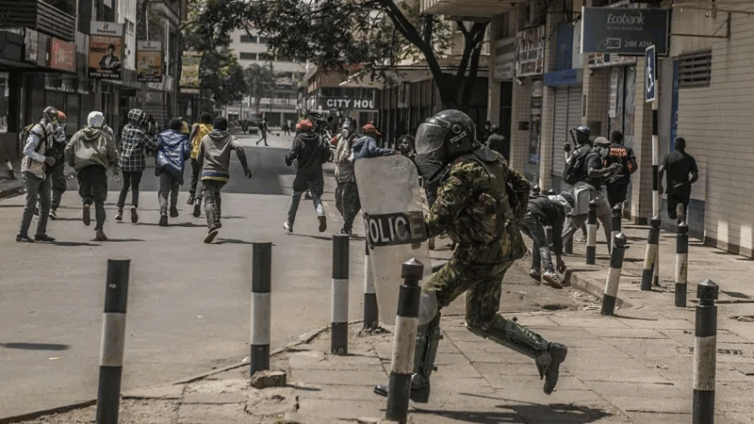
Kenya's security forces have blocked all major roads leading into central Nairobi, ahead of planned nationwide protests.
Much of the city centre is deserted, with businesses shut and a heavy security presence on the streets. Some schools have advised students to stay at home.
Hundreds of early-morning commuters and overnight travellers were stranded at checkpoints, some located more than 10km (six miles) from the city centre, with only a few vehicles allowed through.
Within the city, roads leading to key government sites - including the president's official residence, State House, and the Kenyan parliament - are barricaded with razor wire.
In a statement issued on Sunday evening, the police said it was their constitutional duty to protect lives and property while maintaining public order.
Monday's protests, dubbed Saba Saba (Swahili for 7 July), commemorate the 1990s struggle for multiparty democracy in Kenya.
These demonstrations have been organised primarily by young people, demanding good governance, greater accountability, and justice for victims of police brutality. They are the latest in a wave of anti-government protests that began last year.
On 25 June, at least 19 people were killed and thousands of businesses looted and destroyed in a day of nationwide protests that were being held in honour of those killed in last year's anti-tax protests.
Recent demonstrations have turned violent, with reports of infiltration by "goons", who are accused of looting and attacking protesters. Civil society groups allege collusion between these groups and the police - accusations the police have strongly denied.
On Sunday, an armed gang attacked the headquarters of a human rights NGO in Nairobi. The Kenya Human Rights Commission had been hosting a press conference organised by women calling for an end to state violence ahead of Monday's protests.
This year marks the 35th anniversary of the original Saba Saba protests - a key moment that helped usher in multiparty democracy in Kenya after years of one-party rule.
The response by the then government under President Daniel arap Moi was brutal. Many protesters - including veteran politician Raila Odinga, who is now working with the government, were arrested and tortured, while at least 20 people were reportedly killed.
Since then, Saba Saba has come to symbolise civic resistance and the fight for democratic freedom in Kenya.
Latest Stories
-
EOCO court warrant authorised search of Baffour Awuah’s law firm, not residence – Afenyo-Markin
12 minutes -
NPP delegates conference: 3,000 to 4,000 police personnel deployed for security in Kumasi – Anthony Karbo
14 minutes -
KGL Foundation commits $200,000 to support juvenile football for the next two years
30 minutes -
UNDP invites Mahama Ayariga to Northern Peace Conference in Tamale
35 minutes -
Afoko can give NPP ‘new identity’ ahead of 2028 to overcome NDC – Political scientist, Dr Amakye-Boateng
49 minutes -
2 injured amid gunshots during raid at Nawara Mining office at Nsuapemso
53 minutes -
St Augustine’s College retains 2026 National Investment Quiz title
57 minutes -
KNUST Nursing and Midwifery School staff recognised at 2026 Health Ministry Excellence Awards
1 hour -
JoyNews’ Esther Esi Nkrumah selected for UK Media Excellence for Emerging Technology Fellowship
1 hour -
Five NDC youth organisers in Western Region pay courtesy call on Armah-Kofi Buah
1 hour -
NACOC demands tighter port controls to prevent Tema Harbour drug trafficking
1 hour -
Ghana’s startup ecosystem must build sustainability into innovation – Ghana Hubs Network
2 hours -
Friday’s beachfront demolition was carried out at Labadi Beach Hotel’s request, not for flood mitigation – Stan Dogbe
2 hours -
LA 2028: Mukarama returns to Black Queens squad for Olympic Games qualifiers
2 hours -
Fusaini Yakubu Abanga leads NPP National Youth Organiser race with 45% in Global InfoAnalytics poll
2 hours