

Audio By Carbonatix
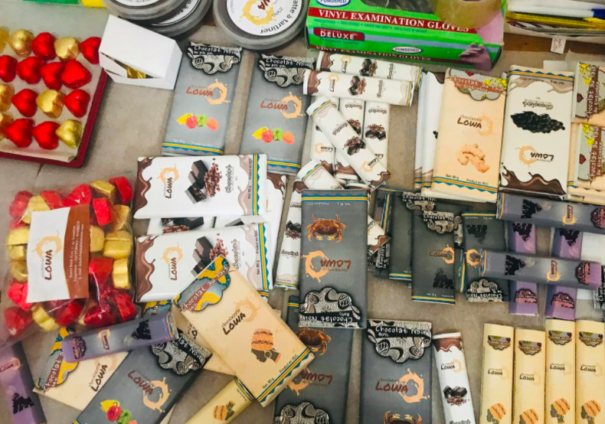
Aisha Kalinda melts the chunks of cocoa in a pan and spoons the brown gloop into a mould which will become the latest bar produced at the Lowa chocolate factory, the first locally owned producer in Democratic Republic of Congo.
For decades, eastern Congo’s underground riches such as gold and coltan have sustained cycles of deadly violence in the area.
But before the country fell apart in the 1990s, North Kivu province exported overground riches too, like coffee and cocoa.
“People have that ignorance of looking at chocolate like it’s something from abroad, that can’t be made in Africa,” Kalinda said, stirring the pot. “We decided to break that rule.”
Boosted by increased consumer interest in the provenance of ingredients, cocoa and coffee are experiencing a renaissance in Congo, said Kevin Wilkins, a cocoa specialist from ELAN DRC, a UK Aid-funded private sector development programme.
Thriving in the rich volcanic soils, the beans have attracted interest from brands like coffee-chain Starbucks and specialty chocolatier Theo Chocolate.
Exports surged to 11,000 tonnes in 2016, up from 600 tonnes in 2000, government data shows.
But while the big brands provide jobs and valuable export earnings for the country, Congolese chocoholics have for many years been deprived the pleasure of gorging on their own supply.
In 2014 Kalinda’s grandfather, Kalinda Salumu, had a dream of turning plantations abandoned after Congo’s independence into productive cooperatives that could export beans abroad.
In 2018 his first harvest of 200 kg (441 lb) was not enough to reach the legal minimum to export so he sent his son to Kampala, Uganda’s capital, to train as a chocolatier.
“We have cocoa, even the best cocoa of all the cocoa in the world,” Salumu boasts happily.
Last year the family established the Lowa factory, named after the river near where the beans are grown, 150 km (93 miles) west of provincial capital Goma.
Lacking sophisticated modern equipment, their output is meagre, only 2 kg (4.40 lb) per day, but the bars have found a devoted following in Goma.
At a local supermarket Baritegera Nikuse Gloria grabbed a $5 bar. She likes it because it’s local, and organic.
“Since I tasted this chocolate, I haven’t been able to put it down.”
Latest Stories
-
Schizophrenia-related disorders lead mental health cases recorded in Ghana
4 minutes -
Dutch authorities enlist Ghana in hunt for fugitive drug lord Bolle Jos
27 minutes -
Ghana housing finance conference adopts communiqué to improve affordable housing access
5 hours -
Special Initiatives Minister urges Wa Technical Institute to enrol more girls as EU-backed solar training lab opens
5 hours -
In the matter of my first year at the Bar
6 hours -
ActionAid Ghana calls for an end to child marriage, greater investment in girls’ rights
6 hours -
Newsfile to tackle World Cup visa scandal, beach demolitions, education strikes, BRICS bid
6 hours -
UK-Ghana Trade & Investment Summit: Trade Resource Centre to help businesses maximise UK-Ghana trade opportunities
6 hours -
Embassy of Denmark celebrates World Maritime Day
6 hours -
Linking LEAP to productive inclusion could cut extreme poverty by 2030 – UNICEF
8 hours -
Trade Ministry backs use of creative arts to rehabilitate prison inmates
8 hours -
Negotiations with government to continue despite strike suspension – GNAT
8 hours -
‘Ghana cannot afford to waste public resources; every cedi has a job’ – Ato Forson
8 hours -
Ghana expects economic boost as World Assemblies of God Congress brings 10,000 delegates to Accra
8 hours -
Joy in Nayilifong as Farouk Aliu Mahama donates 100kVA transformer to improve power supply
8 hours