

Audio By Carbonatix
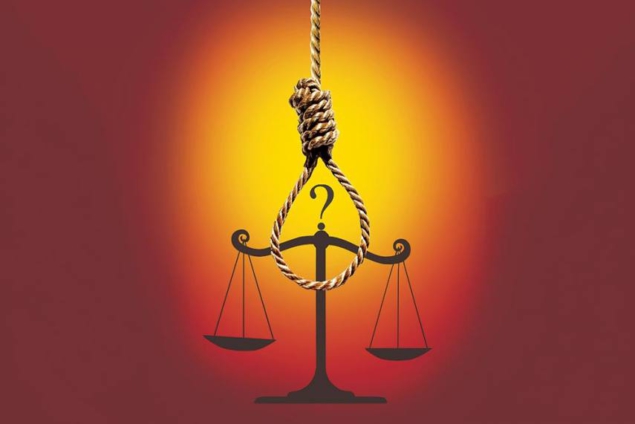
On July 25, Ghana's parliament took a significant step by voting to abolish the death penalty. This move makes Ghana the 29th African country and the 124th country worldwide to put an end to capital punishment. Despite not carrying out any executions since 1993, there were 176 individuals still on death row as of the previous year, as reported by the Ghana Prisons Service. The decision was made through the Criminal Offences (Amendment) Bill 2022, which, upon President Nana Akufo-Addo's approval, will replace the death penalty with life imprisonment. The bill was tabled by Francis Xavier Sosu, a parliamentarian who views this development as a significant advancement in Ghana's commitment to human rights.
Analysis
In a way, Ghana is late to a party that has been raving for more than a decade. Its decision to abolish the death penalty, more than 60 years post-independence, reflects a broader shift among African nations towards rejecting colonial-era laws and practices, which often imposed severe punishments on their subjects to facilitate resource extraction.
While many sub-Saharan African countries have made significant strides in repealing capital punishment, the movement to repeal still faces socio-religious obstructions in North Africa where the biggest challenge remains punishment prescribed by holy books. According to the World Coalition Against the Death Penalty, as of 2022, 26 African countries had completely outlawed the practice, while Ghana and 14 others had significantly reduced executions.
Rwanda abolished the death penalty in 2007, Burundi and Togo in 2009, Gabon in 2010, Benin in 2012, Congo and Madagascar in 2015, Guinea in 2016 for ordinary crimes and 2017 for military crimes, Burkina Faso in 2018, Chad in 2020, Sierra Leone in 2021, the Central African Republic, Equatorial Guinea and Zambia in 2022. This positive trend was further bolstered when Ghana recently became the 29th African country to abolish the death penalty entirely, a move celebrated by human rights activists.
Ghana’s historical use of the death penalty dates back to the colonial era when it was applied for various crimes such as murder, attempted murder, genocide, piracy and smuggling of precious metals. However, since 1993, no Ghanaian president has signed a death warrant for executing offenders. The recent legislation means that the 176 people on death row, including six women, will likely have their sentences commuted to life imprisonment.
The decision to abolish the death penalty came after much deliberation, with lawmakers expressing varying opinions. Some argued that removing the death penalty might increase serious crimes, while others emphasised the need for a more humane approach to justice. Francis Xavier Sosu, the MP behind the bill, also highlighted the disproportionate impact of capital punishment on vulnerable individuals from disadvantaged backgrounds, who have often faced significant personal traumas.
Despite the decision to abolish the death penalty, certain groups in Ghana still have reservations. However, human rights organisations and legal experts view this step as a significant advancement towards protecting the right to life and aligning Ghana with the global trend of abolishing capital punishment. It is essential to note that even though Ghana has not executed anyone since 1993, courts have continued to hand down death sentences.
The next crucial step is for Ghana’s President, Nana Akufo-Addo, to sign the bill into law for it to take effect. While this landmark decision represents a substantial victory, we acknowledge that the complete abolition of the death penalty would require revising the country’s constitution, which still permits the death penalty in cases of high treason. We hope Ghana’s commitment to upholding human rights will lead to further progress.
Latest Stories
-
Nestlé and NBA announce multi-year international marketing partnership
2 minutes -
Mahama sends condolences to Nigeria over plane crash that killed 25
3 minutes -
Our lifestyles may be killing us but our spatial planning is too
13 minutes -
12 arrested as police seize firearms, suspected drugs in Tamale
14 minutes -
Chamber of Mines challenges Reuters report on proposed mining law
22 minutes -
LA 2028: Black Queens take first leg advantage with 3-0 win over Mauritius
25 minutes -
UG academic calendar could collapse if GAUA strike extends into next week – Awandare
27 minutes -
Black Sherif partners with Telecel Ghana to promote Telecel Cash
30 minutes -
Nestlé Ghana expands Tema factory, raises evaporated milk production capacity
32 minutes -
Telecel Ghana launches CARE Month with customer rewards and community outreach
36 minutes -
Venezuela’s ex-leader Nicolás Maduro charged with conspiracy to commit torture
39 minutes -
Nestlé Ghana expansion shows Ghana’s 24-hour economy in action – Mahama
47 minutes -
Ghana to lead ECOWAS adoption of Accra Convention on cargo documents – Trade Minister
1 hour -
100-bed Atiwa Trauma Hospital to be commissioned in January 2027
1 hour -
Trade Minister launches Invest Ghana Summit, Ghana Club 100 to drive Ghana’s new economy
1 hour