

Audio By Carbonatix
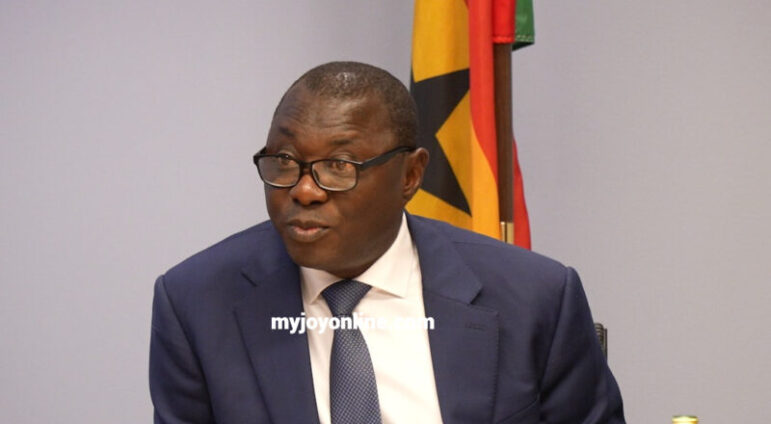
Finance Minister Dr Mohammed Amin Adam has reassured businesses and market stakeholders, stressing that the Bank of Ghana (BoG) holds sufficient dollar reserves to meet market demands.
“We should look at the current reserve position of the Bank of Ghana, and that should give everyone some comfort about its ability to meet market demand,” Dr Amin Adam stated.
He said this during a press briefing in Washington, D.C., held alongside the Annual IMF and World Bank meetings.
“I can tell you that the Bank of Ghana has accumulated significant reserves to meet the demand,” he added.
According to Bank of Ghana data, Ghana’s international reserves reached $7.5 billion by the end of August 2024.
Expected Inflows
The finance minister revealed that Ghana anticipates a December inflow of $360 million from the IMF, pending approval of the third program review.
“That should bring in some foreign exchange,” he noted.
Additionally, the World Bank is expected to disburse $300 million to Ghana under its Development Policy Operations (DPO) Series, further bolstering the country’s foreign currency reserves.
“In addition to what the Bank of Ghana already has, these expected inflows should help in stabilising the cedi going forward,” Dr Amin Adam remarked, addressing concerns about recent fluctuations in forex markets.
The assurance comes at a time when some forex bureaus are reportedly selling the dollar above GHS17, despite data provided to the Bank of Ghana showing transactions under GHS16.
Pressure on the Cedi: Contributing Factors
The Ghanaian cedi has faced mounting pressure over the past month, following a period of relative stability.
Market analysts attribute this volatility to a spike in dollar demand, as businesses prepare to finance imports ahead of the Christmas season.
Some commercial banks report that businesses are also rushing to restock for next year, fearing a depreciation of the cedi in the coming months.
Additional market pressures stem from speculation and concerns surrounding the upcoming December elections, which have increased demand for foreign currency, as well as the activities of speculators aiming to capitalise on uncertainties.
Bank of Ghana’s Role and Measures
The Bank of Ghana has actively intervened in the market to meet dollar demand, selling foreign currency through its dollar auction program.
It has specifically targeted Bulk Oil Distribution Firms and conducted weekly auctions for commercial banks to ensure a steady supply.
Furthermore, the Central Bank has implemented additional measures to stabilise the cedi, which it describes as part of a broader strategy to manage market uncertainty and minimise the negative impact on the currency’s value.
Latest Stories
-
Kwabena Boamah appointed Board Chair for Impact Investing Ghana
3 minutes -
Striking teacher unions to meet Fair Wages and Salaries Commission on October 6
17 minutes -
EOCO working with AG to arraign Nana Baffour Awuah before weekend court
21 minutes -
Duraplast reassures customers after fire, announces October 5 reopening
29 minutes -
Call off strike, gov’t will not renege on promotion arrears pledge – Haruna Iddrisu appeals to teacher unions
31 minutes -
Committee set up to validate teachers eligible for 20% deprived-area allowance – Education Minister
35 minutes -
Five-member committee to search for new Black Stars coach after Sports Ministry-GFA meeting
1 hour -
Pinktober: Breast cancer survival exceeds 90% when detected early – Breast Society of Ghana
1 hour -
TCDA to adopt Upper West’s MATCO mango farm as northern prototype, issues warning against felling shea trees
1 hour -
‘Fear delegates’ tag: Afoko touts genuineness among delegates ahead of NPP delegates conference
1 hour -
John Boadu: The leader our party needs at this time – Amb. Edward Akwasi Boateng
2 hours -
Baffour Awuah: EOCO arrested, detained MP after hours of waiting, questioning – Afenyo-Markin
2 hours -
EOCO court warrant authorised search of Baffour Awuah’s law firm, not residence – Afenyo-Markin
2 hours -
NPP delegates conference: 3,000 to 4,000 police personnel deployed for security in Kumasi – Anthony Karbo
2 hours -
KGL Foundation commits $200,000 to support juvenile football for the next two years
2 hours