

Audio By Carbonatix
The transformation of education and skill requirements is changing worldwide, but not at the same rate. Different countries and regions are adapting, largely influenced and shaped by their social and economic priorities and conditions.
Are traditional degrees becoming obsolete?
There was the era of ‘employability’ in the UK in the early 2000s for post-1970 institutions, where degree programmes had to go through extensive overhauls and transformation to meet the graduate outcome of employability. The process required consultation with industry stakeholders, including relevant subject-specific accreditation bodies, to ensure the professional skills set was being met in the curriculum. The introduction and integration of numeracy and science in business were crucial. For example, with subjects such as data analytics for market research and big data insights, digitisation and internationalisation for a more global perspective.
In the last 10 years, a similar shift has been observed in the higher education landscape on the African continent. In Ghana, perhaps more obvious with the private institutions, but certainly across the sector, where specialisation and integration into higher education have become clearer and more precise over time.
Undoubtedly, there is the affirmation of the education system and the strength of the public institutions, which is shown by the unwavering loyalty of several generations of families. However, we cannot lose sight of a few private institutions which have stood the test of time and remained relevant to industry needs. There are also those institutions - the underdogs - which have been revolutionary in their specialised approach to higher education and are succeeding, nevertheless.
Unbundling and decolonising degrees
On broad terms, there has been an increase in independent postgraduate or professional schools for specific career paths. The shift has also realised the unbundling of degrees, which involves the breakdown of the traditional degree into smaller, more specialised components. Whereas the unbundling process has been fueled by demand in certain subject areas such as science, public health, technological advancements, sustainability development and the changing workforce; in some cases, the high cost, limited time and accessibility of degrees are the reasons. Thus, a rise of micro-credentials obtained through short courses, executive education, specialised bootcamps, which are intensive training programmes for specific skills in demand on the job, are thriving with well-established institution brands.
Another interesting shift is the move towards decolonising the curriculum – challenging, reclaiming and transforming how Western colonial perspectives have dominated knowledge and learning, involving what is taught, how it is taught and who is involved in the process. This is where the underdogs exist! The smaller, perhaps, unassuming specialised institutions are committed to preserving the indigenous skills and narrative in a way that is sustainable and relevant to the modern industry.
Some institutional commonalities
An example is Nkinkyim Museum, which is expanding into an educational institution of spoken and visual language, and promotes apprenticeship as a legitimate form of learning. Its focus is on creating and adapting knowledge for learners through oral traditions and culture. The aim of this institution is what may be described as radical - to strip African dexterity of colonial language, culture and influence. The purpose is to restore and reintroduce pure creativity as a standard, intentional for advancement. For example, the visual culture’s silent education should transcend into Ghanaian fashion, which considers factors such as the African climate, spirituality and aesthetics. According to the founder, Kwame Akoto-Bamfo, “The language – spoken or visual - is created by Ghanaians for Ghanaians and adapted accordingly based on development and research, without obligation to western pedagogy as compensation for inferiority or low self-esteem. To be able to achieve this, I have to interrogate and decipher the roots of thought, thought patterns, and culture by engaging with oral culture”. Thus, the museum is in regular dialogues and conversations about way of life, technology, and education, which are gleaned and preserved. This data will inform higher education curriculum, ensuring it is authentic and free of colonial language.
Another example is Kokrobitey Institute, which focuses on sustainability education and social entrepreneurship by exploring and integrating traditional knowledge systems with regenerative resourceful design practices to inform multiple disciplines across the arts and sciences, such as fashion, architecture and agriculture. Learners include designers, researchers, and innovators from industry, multidisciplinary and educational institutions. The founder, Renee Neblett, stresses the importance of environmental literacy, that is, the ability to read, understand and respect our environment and its inhabitants to approach design in a way that sustains us all. For example, waste glass bottles are upcycled into decorative home accessories, and secondhand clothing is transformed into iconic fashion pieces.
Finally, Design & Technology Institute (DTI Africa) is another example where job opportunities are created in the industrial and prototype space through technical and vocational training - specifically in design and innovation, precision welding and fabrication and entrepreneurship for work-ready skills.
The commonalities across these institutions are clear - entrepreneurship and a drive to build and preserve local and indigenous knowledge through skills development.
These changes in higher education are expected to guide the nation toward clearer professional skills and resources for workforce development. Amid rising de-globalisation and inward-looking policies worldwide, it is timely to deepen our understanding of who we are and the ecosystems that sustain us, so we can shape our own narrative for greater productivity and resourcefulness. This calls for both emerging and established institutions to remain agile, fostering cross-institutional partnerships that strengthen professional practice and meet industry labour demands, which drive social and economic impact.
******
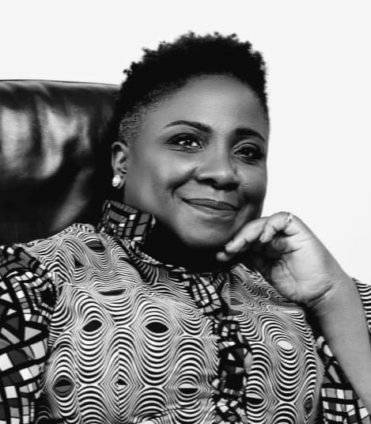
The writer, Dr Linda Deigh, is a Higher Education Consultant
Latest Stories
-
Pentecost University to host international sustainability conference
2 minutes -
Ampofo Ankrah did not collect World Cup visa money – Lawyer
12 minutes -
Baffour Awuah to spend night in EOCO custody – Atta Akyea
15 minutes -
Torgbiga Wenya III opposes proposed elevation of 36 Anlo chiefs to Paramount status
22 minutes -
The strengthening El Niño and what it could mean for Ghana
25 minutes -
Baffour Awuah formally charged with money laundering, loss of public funds – Lawyer
26 minutes -
Drone flight over EOCO building could attract 30-year jail term – Security consultant
34 minutes -
Flying drone over EOCO premises is strictly prohibited – Security consultant
35 minutes -
SIC file was surrendered to client, EOCO has no reason to search Manhyia South MP’s firm – Atta Akyea
35 minutes -
EOCO search of Baffour Awuah’s law firm raises confidentiality concerns – Atta Akyea
36 minutes -
“I will never ignore an invitation from EOCO if I had received one” — Manhyia MP
38 minutes -
Baffour Awuah ready to cooperate fully with EOCO investigation – Bosome Freho MP
1 hour -
How a Ghanaian technology is helping fish farmers detect hidden threats before fish die
1 hour -
AI tool helps Ghanaian farmers identify crop threats from field observations
1 hour -
NEIP: Designing a Ghana Startup Agency that builds enterprises, not programmes
1 hour