

Audio By Carbonatix
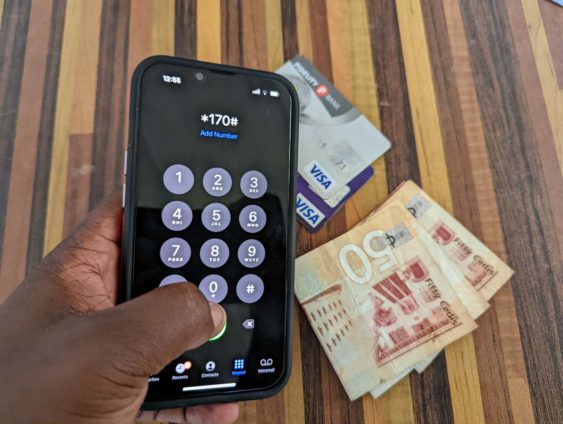
The implementation of the Electronic Transaction Levy (E-levy) commences today, May 1, as announced by the Ghana Revenue Authority (GRA).
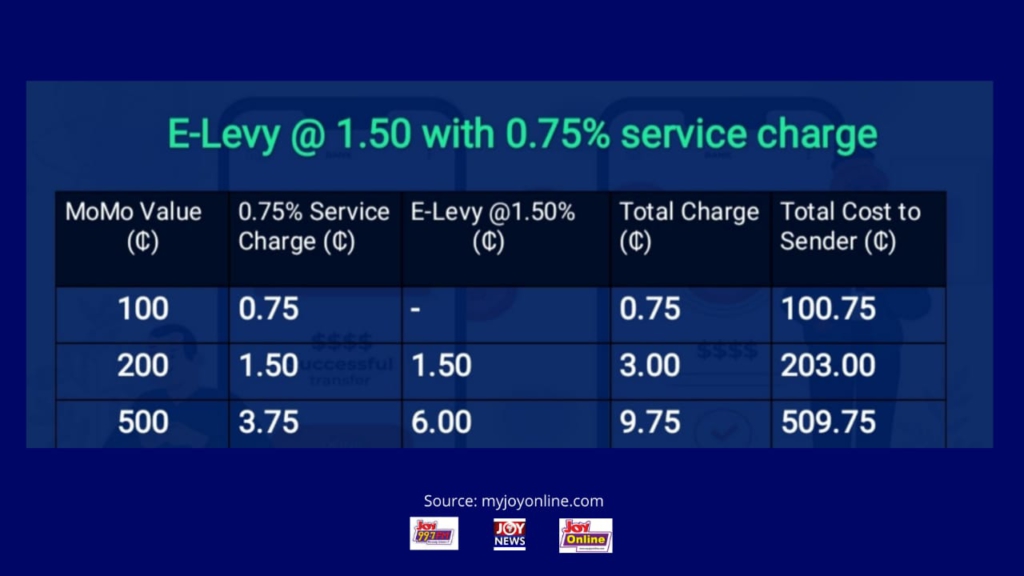
This means a rate of 1.5% will be imposed on all electronic transactions above GH¢100.00 starting Sunday.
Already, some Ghanaians have put the system to a test and have shared their experiences on Twitter.
According to some users, they engaged in transactions above the GH¢100 threshold, but did not experience the effect of the levy.
Others, however, recounted how their transactions were hit by the levy.
Also, some users are alleging that the levy is being implemented on transactions below the given threshold.
Meanwhile, in-house checks have revealed that the implementation of the E-levy has kick-started.
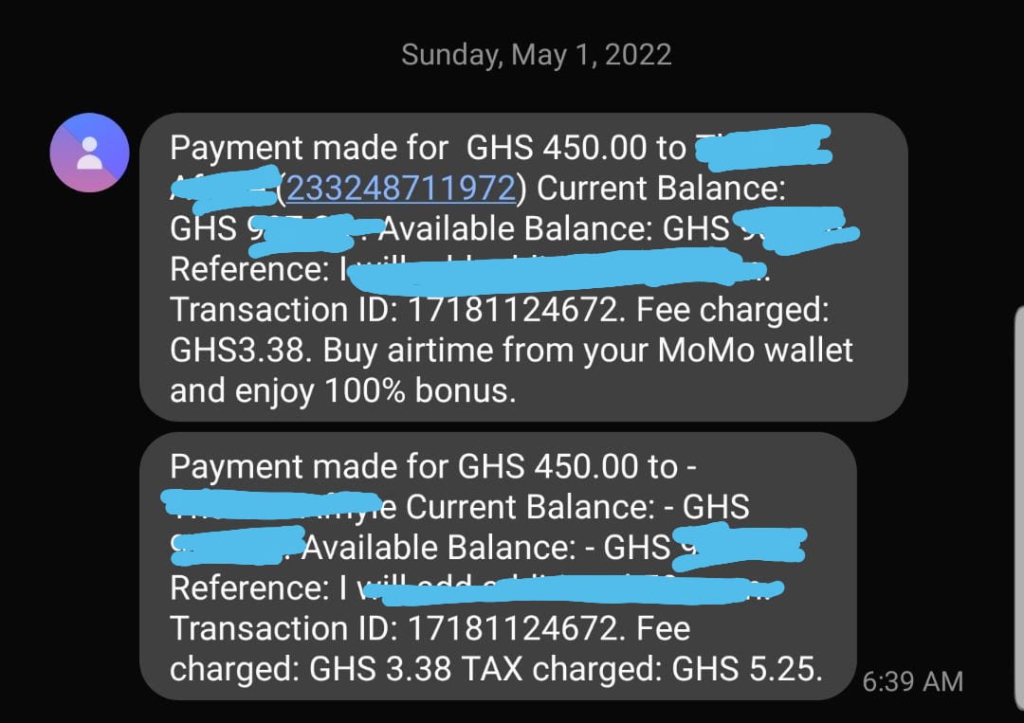
An amount of GH¢450 was used to test the system.
Service Charge
Before the inception of e-levy, the service charge for sending GH¢450 was GH¢4.50. But this time around, the sender was charged GH¢3.38.
This translates into a reduction in the rate from 1% to 0.75% as agreed by the Telecos earlier.
E-Levy
In addition to the service charge of GH¢3.38, it was realised that the sender was charged an extra amount of GH¢5.25, representing a rate of 1.50% not on the entire GH¢450 (transacted amount) but rather the value-added (GH¢350) using GH¢100 as the base line.
Total Charge
With a service charge of GH¢3.38 plus e-levy of GH¢5.25, it means, the sender was charged a gross amount of GH¢8.63 for sending an amount of GHC¢450.
What you need to know about E-levy
Electronic transactions that will not come with a 1.5% tax rate.
- A cumulative transfer of ¢100 made by the same person.
- A transfer between accounts owned by the same person.
- Transfers for the payment of taxes, fees and charges on the Ghana.gov platform
- Electronic clearing of cheques
- Specified merchant payments (that is, payments to commercial establishments registered with the GRA for income tax and VAT purposes)
- Transfers between principal, master agent, and agent’s accounts.
Transfers that will be affected include:
- Mobile money transfers done between accounts on the same Electronic Money Issuer.
- Mobile money transfer to a receiver on another Electronic Money Issuer [Interoperability transfer]
- Transfer from a bank account to [another person’s] mobile money account.
- From a mobile money account to [another person’s] bank account.
- Bank transfers on an instant paid digital platform.
Court Case
On March 29, a Majority-sided Parliament approved the Electronic Transactions (E-Levy) Bill. The Bill was considered under a certificate of urgency.
President Akufo-Addo on March 31, signed the E-levy Bill into law.
But Minority Leader of Parliament, Haruna Iddrisu, and his colleagues Mahama Ayariga and Samuel Okudzeto Ablakwa, have dragged the Attorney-General to the Supreme Court over the approval of the Electronic Transactions Levy (E-Levy).
They contend that Parliament did not have the required number of at least half of its members present, when the controversial tax policy was approved.
But Attorney-General (A-G) Godfred Yeboah Dame has replied to the matter, saying that 266 MPs participated in the processes leading up to the approval of the Electronic Transactions Levy (E-levy).
According to the A-G, the approval of the E-levy Bill and the subsequent passing into law is constitutional.
He argues that on March 29 when the policy was approved, there were only 274 validly elected Members of Parliament and not 275 because the election of the Assin North MP, James Gyakye Quayson, had been canceled.
The A-G explains that this is a result of a Court of Appeals’ ruling on March 22 which struck out an appeal filed by Mr. Quayson.
The AG, therefore, says the number required to transact Parliamentary business on the said day was 137.
He points out that with the exception of Dome-Kwabenya MP, Sarah Adwoa Sarfo, all 137 members of the Majority side were present.
“That there is a constitutional and statutory presumption of regularity of all laws passed in Ghana and therefore an injunction to restrain the enforcement of Act 1075 is unjustified especially as plaintiffs have failed to demonstrate a cause of action, “ Mr. Dame concludes.
Latest Stories
-
Stakeholders demand action against foreign-led illegal mining in Ahafo Region
1 hour -
Ghana handed tricky draw at 2026 Amputee World Cup
1 hour -
2024 Nyankpala election violence: Youth group petitions authorities over slow probe
1 hour -
Ghana, UNICEF strengthen partnership to advance child protection
2 hours -
Day Two of 3rd Republic Bank-JoyNews Habitat Fair ends with great homeownership offers and financing solutions
2 hours -
Guinness Ghana DJ Awards 2026 Pub Fest celebrates Ghana’s DJ culture as Accra turns up the energy
2 hours -
10th woman found dead in South Africa’s string of killings
2 hours -
French Embassy trains Ghana Police CTU in counter-terrorism operations
3 hours -
UPSA uncovers mass results manipulation involving 178 students, over 500 results compromised
3 hours -
ECG announces planned power outages in parts of Tema from Sept. 29 to October 1
4 hours -
Sylvester Mensah urges Latenu FM to promote trade, export opportunities in Ga
4 hours -
Ga language under threat of decline as children shy away from speaking it – Sylvester Mensah
4 hours -
‘Let every Ga child you raise know the Ga language and story’ – Sylvester Mensah
4 hours -
‘We are not deterred’ – Ablakwa responds to backlash over South Africa evacuation
4 hours -
Day Two: Republic Bank-JoyNews Habitat Fair gains momentum at Junction Mall
5 hours