

Audio By Carbonatix
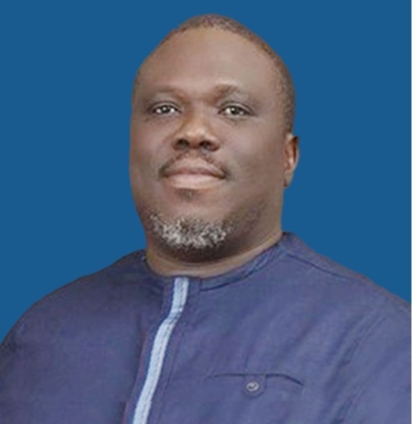
Prof. Festus Ebo Turkson, an Associate Professor of Economics at the University of Ghana, has strongly urged government to diversity Ghana’s economy production base to achieve sustainable growth.
Speaking during a UK-Ghana Chamber of Commerce and Deloitte Ghana seminar on “Enhancing the Investment Climate in Ghana: The Role of Government,” Prof. Turkson cautioned that Ghana’s economy remains too dependent on imports and vulnerable to external shocks.
“Our production base is too narrow. We import almost everything. And as the growing middle class comes up, we are becoming much more import dependent rather than be self-sufficient.”
Prof. Turkson argued that diversifying Ghana’s economy production base starts with supporting local farmers and driving deliberate demand for Ghanaian produce. This demand, he said, must not be left to market forces but should be intentionally cultivated through government policies.
“Adding value to and demanding local produce will boost their productivity. Once we produce enough for export, we can then produce for import substitutes,” he noted.
He further urged the government to invest in human capital, explaining that Ghana’s human resource quality has improved from a “low” to a “moderate” scale over the past two decades – a good foundation for light manufacturing.
“What we need now is to tailor measure education to the needs of industry,” he said.
Finally, Prof. Turkson called for investment into soft infrastructure to enhance youth training and promote the use of appropriate, labour-intensive technologies.
He argued that providing incentives for firms that adopt technology while creating jobs would guarantee a steady stream of revenue needed to fuel further growth.
“This is the way we can develop. That is what we call transformation,” he concluded.
Enhancing Ghana’s investment climate: what should government prioritise?
Cheryl Otoo, a Senior Manager at Deloitte Ghana, highlighted Ghana’s regulatory complexity and infrastructure deficits as two of the biggest constraints to investment.
Her colleague, Wisdom Kpano, Partner at Deloitte Ghana, recommended that the government channel resources into agriculture and agro-processing, renewable energy, and oil and gas – sectors with high potential for inclusive growth.
Nicolas Jørgensen Gebara, CEO of the European Chamber of Commerce in Ghana, pointed to mining and digital transformation, especially in the context of the government’s 24-Hour Economy Policy, while Osman Aziz, Senior Investment Officer at Venture Capital Trust Fund, underscored the need to bridge the gap between education and industry needs.
For Prof. Turkson, resolving these systemic bottlenecks and creating an enabling environment for private sector growth must be central to government policy.
Investor Opportunity Mapping Project – a step forward
Government’s 24-Hour Economy Policy has prioritised agribusiness and agro-processing and is encouraging the youth to participate in farming to supply raw materials for industry.
Through the Ghana Investment Promotions Centre (GIPC), government is also pursuing the establishment of robust manufacturing, building and construction, and ICT sectors, and is currently identifying projects nationwide for targeted investment.
Kwame Kesse Agyapong, the Head of the Investment Promotion and Business Development Division (IP&BD) at GIPC, shared that the recently launched Investor Opportunity Mapping Project will survey all districts in Ghana to identify viable projects aligned with government’s priorities.
“After mapping them out, we will host the international and domestic community next year to showcase these projects and attract capital,” Agyapong remarked.
Kpano commended the initiative, especially for its potential to generate valuable investment data. He, however, urged the GIPC to track the impact of actual investments, as well as track its expansion by focusing investments existing local businesses are making, not just new foreign ones.
“A lot of fully owned Ghanaian businesses do not know that you can be members of the GIPC. We should do more to raise awareness across regions so these existing businesses, whether Ghanaian owned or foreign owned, can understand these opportunities and access them,” he advised.
Moderated by Deloitte Ghana’s Naa Ayeley Komey, the seminar also explored related themes such as policy consistency, capital mobilisation, and strategic government communication to attract and retain investors.
Latest Stories
-
Customer Service Africa CEO urges business leaders to observe staff and customer interactions
8 minutes -
On night of mayhem for Liverpool, Barcola arrives in style
10 minutes -
Muzic Mensah finds healing and renewed love in new single ‘WayƐ Late’
22 minutes -
FIFA to offer extra £2.6bn for football development
24 minutes -
Government backing is no EPA permit – Authority warns GoldBod, ministries
32 minutes -
Real Madrid produce stunning late fightback to down Roma
44 minutes -
EPA orders immediate halt to unpermitted reclamation and dredging nationwide
52 minutes -
Afenyo-Markin’s lawsuit against Sammy Gyamfi takes focus away from development – Kpebu
1 hour -
FWSC urges media to guard against misinformation in proposed IPEC transition
1 hour -
MoMo Fest 2026: Shatta Wale to Rock Accra Stadium on October 17
1 hour -
GTEC’s letter directing public universities to reopen by October 16 is unprofessional – GAUA
2 hours -
Suspect in viral video assaulting wife jailed for 3 months
2 hours -
GAUA insists strike will end only after Fair Wages addresses market premium issue
2 hours -
Kpemka seeks compensation as he sues BOST over alleged unlawful termination
2 hours -
GES asks applicants to check status of 2026 promotion applications on October 15
2 hours