

Audio By Carbonatix
The plan
Ecuador’s La Tri arrive at the 2026 World Cup as one of the most solid and respected teams in Conmebol. They finished second in the qualifiers behind Argentina (despite the points deduction from the 2022 Byron Castillo case), standing out for having one of the continent’s best defences and, by mid-May, a long unbeaten streak under the coach, Sebastián Beccacece.
Tactically, Beccacece – influenced by Jorge Sampaoli and Marcelo Bielsa – relies on high intensity, aggressive pressing and quick transitions. He frequently uses a 4-2-3-1 system along with a 4-4-2 or variations of it featuring a solid double pivot, a creative attacking midfielder and explosive wingers. The block remains compact, with emphasis on defensive solidity and vertical attacks. The defensive line is the team’s greatest strength: Willian Pacho (Paris St-Germain), Piero Hincapié (Arsenal), Pervis Estupiñán (Milan) and Joel Ordóñez (Club Brugge), who sometimes plays as a full-back, all provide balance and strength. In midfield, Moisés Caicedo (Chelsea) is the box-to-box engine; up front Enner Valencia (Pachuca) remains lethal, while Gonzalo Plata (Flamengo) brings pace and flair.
After an inconsistent 2024 Copa América campaign, where they won only one game in the group before being knocked out by the eventual champions Argentina in the quarter-finals, Ecuador secured World Cup qualification with key victories that showed collective maturity. This is not a team dependent on one superstar; it is young and balanced. However, scoring goals remains an issue; Beccacece’s side scored just 14 goals in the qualifiers (they conceded only five).
“We wanted to maintain the defensive solidity the team already had … but also release the chains to maximise the players’ individual strengths,” said Beccacece. The head coach has had some mild criticism for sometimes being too cautious, and his declarations are no longer as well received by a significant portion of fans inside the country – something that may not be as visible abroad.
Ecuador are a dangerous dark horse: disciplined, athletic and eager to get through Group E against Germany, Côte d’Ivoire and Curaçao and repeat the success of advancing beyond the first round like they did at the 2006 edition in Germany.
The coach
The Argentinian Sebastián Beccacece took charge in August 2024 after Félix Sánchez was sacked following Ecuador’s Copa América quarter-final defeat. A former assistant to Jorge Sampaoli with Chile and Argentina, Beccacece previously coached Racing, Independiente and Elche but this is his first experience as a national team head coach. He has brought structure, intensity and tactical flexibility, and under his leadership, Ecuador breezed to second in Conmebol’s qualifications. His rockstar-like style has rejuvenated La Tri, and although some still criticise him for a style of play that does not fully excite fans, Beccacece is focused on the majority: “The most rewarding and satisfying thing since we’ve been at the helm is seeing the fans reconnect with the players and rekindle their love for the national team. The fans have fallen back in love with the national team, particularly with this group of players.” Heading into 2026, he is one of the continent’s most respected – and talked-about – coaches.
Star player - Moisés Caicedo.
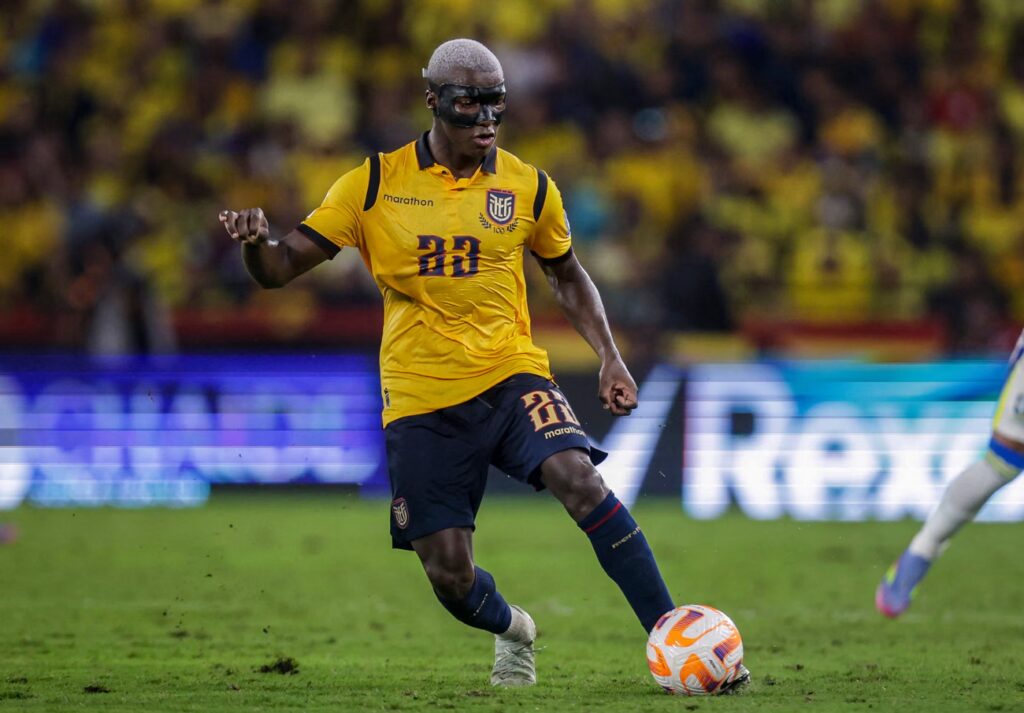
A relentless midfield engine, he recovers balls, distributes with precision and constantly arrives in attacking areas. He is considered one of the best players in the world in his position, with top-level experience in the Premier League and Champions League. Alongside Willian Pacho and Piero Hincapié, he forms the core of Ecuador’s new European-based generation. “It’s a short competition and we have to make the most of it,” Caicedo says of this summer’s tournament. “We can’t settle for just qualifying: we know we’re capable of more. We’re raring to take that next step so that the days when simply qualifying was the be-all and end-all are confined to the past.” A future captain in the making, Caicedo combines physicality, technique and leadership. Ecuador no longer depends solely on Antonio Valencia; Caicedo is the axis that makes everything work.
One to Watch
Kendry Páez remains Ecuador’s biggest emerging talent, although his European career has not exploded as expected. After his multimillion-dollar move to Chelsea, he struggled for consistency and has been far from the level many predicted, leading to loan spells at Strasbourg and River Plate. At River, he has earned only sporadic minutes and in recent weeks has not been a regular part of Eduardo Coudet’s squad. Even so, Sebastián Beccacece continues to trust his dribbling ability, vision and immense potential. The 2026 World Cup could become his perfect opportunity to prove why he is considered one of South America’s most exciting prospects. A rough diamond that needs to shine now.
Unsung hero
Willian Pacho and Alan Franco are Ecuador’s silent heroes. Pacho is the elegant left-footed centre-back who organises the defence with composure in buildup play and flawless duels. He does the quiet work that allows Ecuador to press high without taking unnecessary risks. Alan Franco, meanwhile, is the all-action midfielder responsible for the dirty work: recovering balls, covering spaces, helping defensively and bringing balance to midfield. They do not steal headlines like Moisés Caicedo does or Antonio Valencia did, but they are fundamental to Ecuador’s collective solidity and to maintaining the best defense in Conmebol.
What to expect from fans at games?
Ecuadorian fans are expected to travel to the United States in strong numbers thanks to the proximity and they will be boosted by the large Ecuadorian migrant community living in the US. Expect bright yellow everywhere, giant flags, hats and nonstop joy. Supporters loudly sing “¡Ecuador, Ecuador!” and “Sí se puede.” The atmosphere will be vibrant, festive and generally peaceful – more dancing than fighting. Fans are expected to turn the venues into a true tricolor celebration filled with colour, drums and unconditional support as they seek revenge after Qatar 2022, where the team exited in the group stage. Bring sunscreen … and patience for the traffic!
This article is part of JoySports' collaboration with The Guardian. The cooperation enables readers to access team news, previews, and more from all 48 teams that qualified for the FIFA World Cup 2026.
Latest Stories
-
Wealth Over Water: How Galamsey Is Threatening Ghana’s Water Security
13 minutes -
LA 2028: Black Queens pumped up for second leg of Mauritius tie
20 minutes -
LA 2028: Black Queens hold final training session ahead of second leg against Mauritius
54 minutes -
Standards are not Seasonal: What the EC appointments teach both sides
1 hour -
King Mohammed VI urges private sector to create youth jobs and spread benefits of growth
1 hour -
KGL U17 Colts 2026: Greater Accra win title after penalties win over Western Region
1 hour -
UK Investment Roadshow opens in London to advance UK-Ghana growth partnership
1 hour -
Assemblies of God requires pastors to resign before entering partisan politics – Rev. Wengam
1 hour -
Ghana targets 20% annual reduction in maternal deaths – Health Minister
2 hours -
Cyber attacks in Africa grow faster than global rate, report finds
2 hours -
Ghana signs UAE deal to create 5,000 overseas jobs
2 hours -
One Million Coders Programme targets 100,000 digital jobs in two years – Sam George
2 hours -
John Jinapor, Italian Ambassador explore opportunities for energy sector investment
2 hours -
NHIA seeks legal reforms to support Free Primary Healthcare
2 hours -
Beatrice Annan defends Afi Agbenyo’s EC appointment, cites record of gender advocacy
2 hours