


Audio By Carbonatix
I’ve noticed yet again announcements by major Oil Marketing Companies (OMCs) for further fuel price reductions in the second pricing window of January 2026. Looking back to December 2024, petrol was averaging over GH¢14 per litre, diesel above GH¢15, and LPG near GH¢18–19 per kilogram. Today, petrol is approaching GH¢9.97–9.99 in some stations, with diesel and LPG also significantly lower, providing much-needed relief for ordinary Ghanaians.
Fuel prices impact households, transporters, businesses, and the prices of everyday goods. The reductions we are seeing are influenced by several factors: a stronger Ghana cedi against the US dollar, declining international refined petroleum product prices, and structured oversight and coordination along the value chain.
The National Petroleum Authority (NPA) is well-positioned to support this value chain in regulating prices, monitoring supply, and protecting consumers. I believe under Godwin Edudzi Tamakloe Esq., the NPA has effectively coordinated importers, distributors, Oil Marketing Companies, LPG marketers, and strategic storage operators to maintain market stability. Initiatives such as the Unified Petroleum Pricing Fund (UPPF) Scheme, monitoring of fuel stocks and supply chains, issuing clear pricing frameworks and floors, enforcing compliance, and ensuring consistent pricing across regions have been key to achieving these reductions. Ghana currently maintains sufficient reserves, over 200 million litres of petrol and 150 million litres of diesel, enough to sustain domestic needs for more than two months, shielding the country from global shocks.
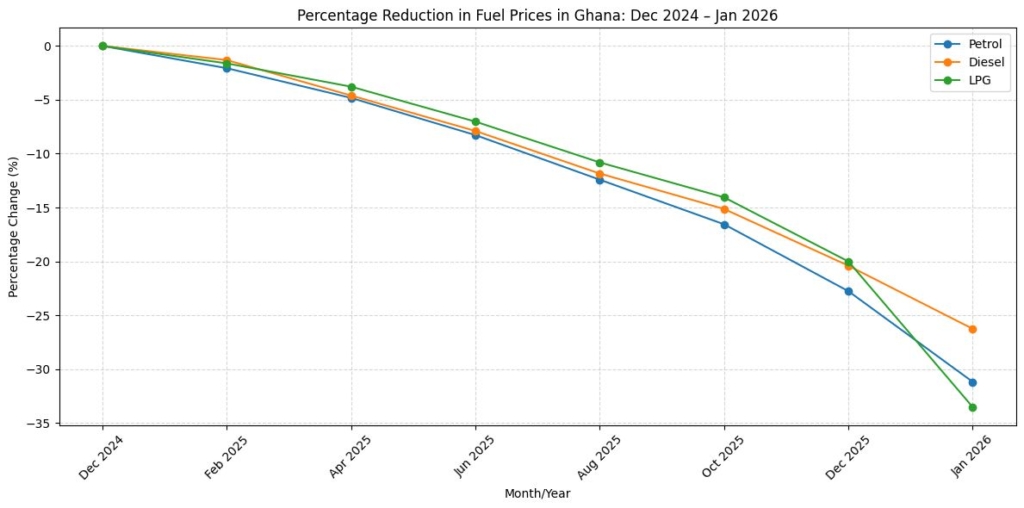
Through its data-driven approach, the NPA has made pricing predictable, transparent, and fair, boosting public confidence and allowing businesses to plan effectively. By keeping fuel costs down, the government, through the NPA, indirectly eases transport and logistics expenses, moderates prices of goods and services, and increases disposable income for households and small businesses.
I commend the NPA for its effective role in coordinating the petroleum value chain and ensuring these tangible benefits for ordinary Ghanaians. I also encourage other state companies to leverage the enabling environment created by the government and the Finance Minister through prudent macroeconomic policies to drive similar positive outcomes that improve the everyday lives of citizens.
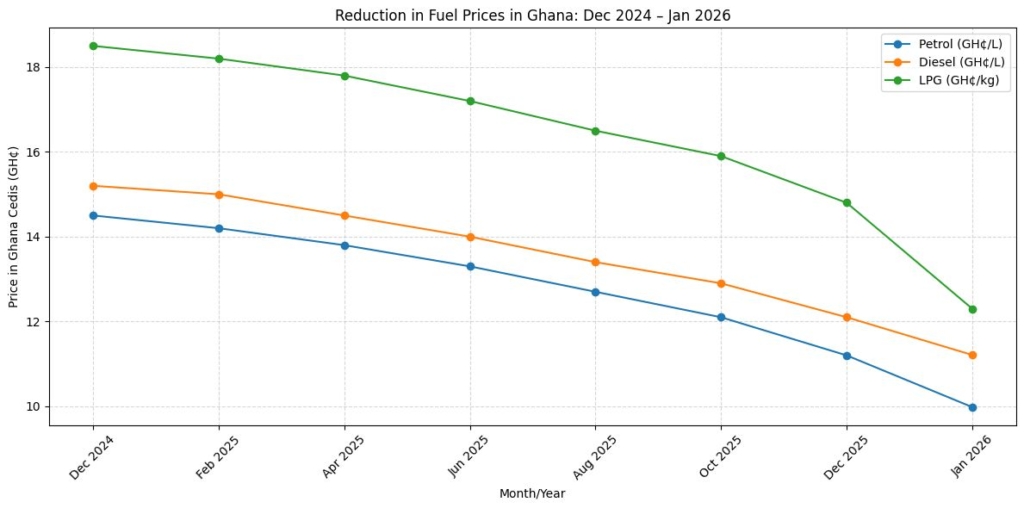
As an Energy and Finance Analyst observing the market, it’s clear that effective regulation, oversight, and coordinated action along the value chain can deliver real relief and sustainable benefits for the public.
Latest Stories
-
ECG announces power outage in parts of Tema, Central Region due to network fault, maintenance
21 minutes -
When the Gospel Becomes a Weapon: The church, blackmail and the abuse of faith
46 minutes -
JoyNews’ Jacqueline Ansomah Yeboah selected for UK Media Excellence for Emerging Technology Fellowship
1 hour -
Mental Health Alliance urges government to operationalise Mental Health Fund
1 hour -
Ghana–Holy See agreement heads to Parliament after Cabinet approval
1 hour -
Luv FM Corporate Games 2026: Kumasi Central Prisons, Amanfiman Bank win big amid fun
2 hours -
WAFU B U17: Ghana top Group A after win over Togo
2 hours -
Ho Central Mosque reopens amid unresolved leadership dispute that led to closure
3 hours -
Minority caucus questions GH¢16.4m in Ablakwa’s SA evacuation spending, demands independent audit
3 hours -
Gender Ministry meets Nana Akua Addo’s husband over domestic violence after hospital discharge
4 hours -
UG Vice-Chancellor urges swift operationalisation of National Research Fund
5 hours -
Pope Leo to have surgery after lump found in lung
5 hours -
Joseph Cudjoe writes: Ghana must break free from the dangerous mindset that natural resources are the foundation for wealth
5 hours -
Children among 109 dead after boat capsizes off Djibouti, UN says
5 hours -
OmniBSIC Bank’s 11th health walk promotes fitness and business growth
5 hours