

Audio By Carbonatix
Ethiopia has said Egypt “must abandon its aggressive approach” towards a controversial hydroelectric dam on the River Nile as tensions between the two countries continue to escalate.
Addis Ababa was responding to a letter Egypt sent to the UN Security Council last week accusing Ethiopia of violating international law by continuing to fill the dam without agreement from downstream countries.
In its letter to the Security Council, Ethiopia rejected what it called “a litany of unfounded allegations” from Cairo.
This latest round in a long-running dispute comes as Egypt forges closer military ties with Ethiopia’s neighbour Somalia, which has its own disagreement with Ethiopia.
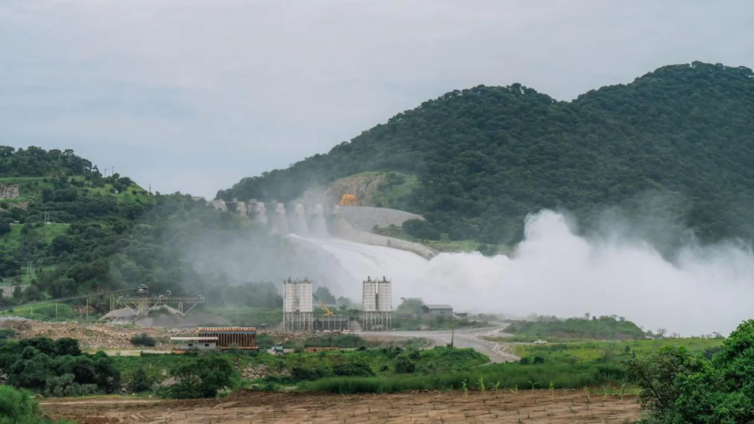
The row dates back to 2011 when Ethiopia began building the Grand Ethiopian Renaissance Dam (Gerd) on the Blue Nile, a tributary from where 85% of the Nile's waters flow.
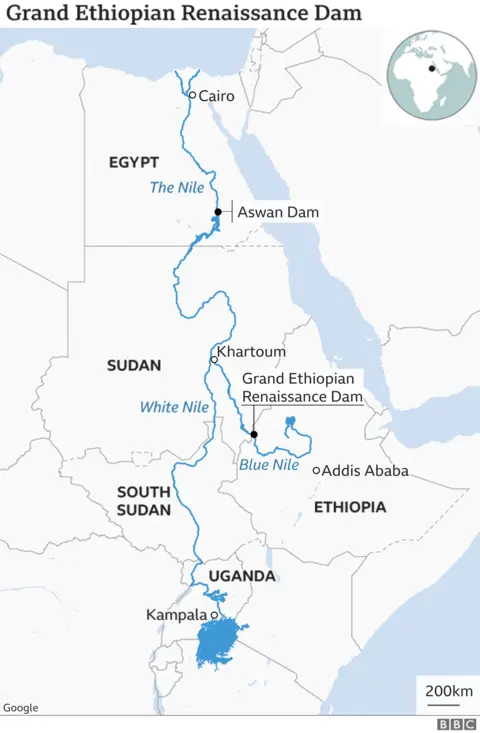
Egypt sees this as an existential issue as it relies almost entirely on the river for its water and fears that the dam could mean that the flow of the river is disrupted. It also says that two colonial-era treaties guarantee that it has a right to veto upstream projects.
But for Ethiopia, the huge project, set to be the largest hydroelectric plant in Africa, is an integral part of its efforts to develop the country and get electricity to millions of households.
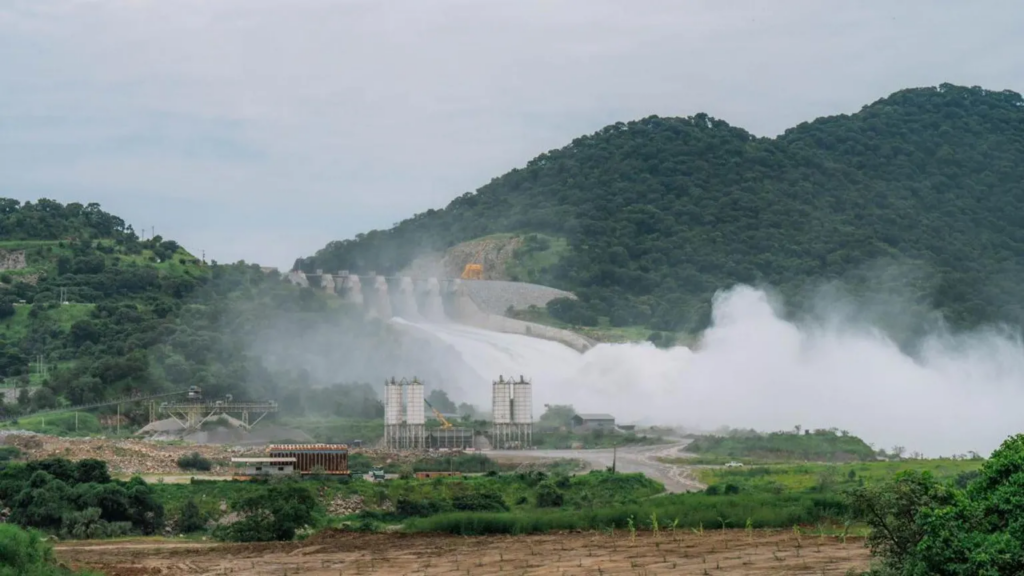
The dam is nearing its completion, with the reservoir filling with water since 2020, and has already started generating power.
Egypt, along with Sudan – through which the Nile also flows, have been raising concerns that their essential water supplies would be under threat, especially if there are successive years of drought.
Multiple diplomatic efforts to reach a binding deal have not succeeded.
The most recent efforts ended in December last year with both countries accusing the other of intransigence.
In its letter to the Security Council, Ethiopia said Egypt was "only interested in perpetuating its self-claimed monopoly" over the river.
In recent weeks, tensions across the Horn of Africa have grown, especially after a military pact was agreed between Egypt and Ethiopia’s eastern neighbour Somalia.
Relations between Mogadishu and Addis Ababa deteriorated after landlocked Ethiopia signed a deal in January with the self-declared Republic of Somaliland over access to the sea and possible use of the coastline for a naval base.
Somalia sees Somaliland as part of its territory and said the agreement was an act of aggression.
This weekend, Ethiopia’s Prime Minister Abiy Ahmed warned against attacks on his country, saying anyone from “afar and nearby” daring to invade the country would be repelled.
He did not specify which country he was talking about.
Latest Stories
-
My focus is victory in 2028, those with Agenda 2032 can wait — John Boadu
18 minutes -
AK24 Entertainment wins Event Promoter of the Year at Ghana Entertainment Awards USA 2026
20 minutes -
KNUST, UNCDF host EU Ambassador to advance EU Pact for skills development initiative agenda
21 minutes -
Teachers’ strike: School in Wa turns ghost town; pupils forced onto ‘virtual holiday’
23 minutes -
Gov’t should not see bipartisan probe into 3.9-tonne cocaine haul as attack – Akuapem North MP
35 minutes -
The foundation of every boy’s upbringing is important – Kobby Kyei
37 minutes -
Middle East conflict pushed Ghana fuel prices higher in first half of 2026 – COMAC
43 minutes -
President Mahama puts mining firms on notice over 2030 raw mineral ore export ban
45 minutes -
Ghana’s fuel consumption rises 12.24% to 4.06 billion litres in first half of 2026
45 minutes -
Global oil shock tests Ghana’s shift towards domestic fuel production
49 minutes -
Roads Ministry threatens legal action against utility companies over excavation of completed roads
50 minutes -
Mammography available in only 5 regions, making breast cancer screening difficult – Radiologist
1 hour -
Pastor Daniel Amoateng pays for release of 23 Nsawam prison inmates
1 hour -
Government to equip health facilities with mammography, radiotherapy machines – Deputy Health Minister
1 hour -
Floodwaters recede in Hohoe as residents begin returning home – NADMO
1 hour