

Audio By Carbonatix
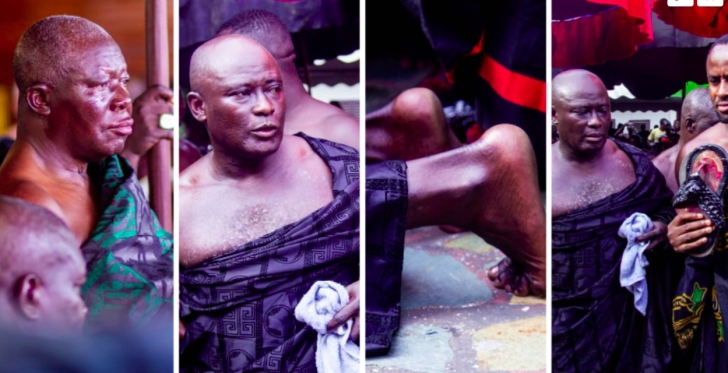
The decision by Otumfuo Osei Tutu II to destool his linguist, Kyeame Kofi Nti, has drawn widespread public attention, not only because of the prominence of the office involved but also due to the cultural and institutional implications within the Asante traditional system.
The removal, announced following a meeting of the Asanteman Council at the Manhyia Palace on April 20, 2026, was based on a series of allegations that the Council determined amounted to a breach of duty and tradition. The issues raised went beyond administrative concerns and touched on the core responsibilities and symbolic authority of the office of the Kyeame.
What does it mean to be a Kyeame?
In the Asante traditional hierarchy, the Kyeame, also known as the Okyeame, serves as the chief linguist and spokesperson of the Asantehene. The role is not merely ceremonial; it is central to communication within the palace, interpretation of customary law, and the articulation of the chief’s authority.
The Kyeame also plays a critical role in invoking and interpreting the Otumfuo Ntam Kɛseɛ—a sacred oath that carries deep spiritual and judicial significance. The ability to properly invoke this oath is seen as a test of legitimacy, knowledge and adherence to tradition.
Key issues that led to the destoolment
According to details made public by the Palace, one of the primary concerns was the question of Kyeame Kofi Nti’s royal lineage. Within the Asante system, lineage is not a mere formality; it is fundamental to legitimacy and the right to occupy certain stools. Doubts about his background, coupled with his reported inability to properly invoke the Ntam Kɛseɛ, raised serious concerns about his suitability for the role.
The Council also cited the alleged improper handling of the Ntam Kɛseɛ. He was accused of retaining multiple invocations of the oath beyond what is traditionally permitted. In Asante custom, the handling of such oaths is tightly regulated, as they are not only symbolic but carry binding authority in disputes and governance.
Another significant issue was his failure to report invocations of the Ntam Kɛseɛ. This omission was described as a grave breach of duty, as the reporting process ensures accountability and preserves the integrity of the traditional justice system.
Additionally, the Council considered allegations brought forward by the Ayaasehene concerning the alleged wrongful enstoolment of an Ayaase Dikro. Such claims, if established, point to interference in chieftaincy processes, which are governed by strict customary procedures.
What does destoolment signify?
Destoolment is the traditional process by which a chief or office holder is removed from their position. In the Asante context, it is both a judicial and cultural action, symbolising a loss of authority, honour and legitimacy.
The decision is typically taken after deliberations by the Asanteman Council, which serves as the highest traditional decision-making body under the Asantehene. Once destooled, the individual loses all rights and privileges associated with the office.
Why this decision matters
The removal of a Kyeame is relatively rare and underscores the seriousness with which the Asante traditional authority treats issues of accountability, competence and adherence to custom.
It also highlights the continued relevance of traditional governance systems in Ghana, where institutions like the Asanteman Council operate alongside the modern state, particularly in matters relating to chieftaincy, land and customary law.
The case further illustrates the importance of cultural knowledge and institutional discipline within traditional leadership structures, where roles are not only administrative but deeply rooted in heritage and spiritual responsibility.
Latest Stories
-
Muntaka vows not to compromise in prosecuting drug suspects despite political pressure
37 minutes -
Cannabis traffickers using ambulances and bullion vans – Interior Minister
42 minutes -
Over 90% of people displaced by Savannah conflict back home – Muntaka
47 minutes -
LA28: Desmond Ofei invites 32 Black Meteors players for Libya clash
58 minutes -
ECG to undertake maintenance work in parts of Accra from October 12 to 16
1 hour -
Ablakwa: Ghana’s Embassies, High Commissions to support World Assemblies of God Congress
1 hour -
Joyce Bawah Mogtari cites infrastructure, healthcare reforms as evidence of Mahama’s development agenda
1 hour -
Ghana had no single gadget to detect narcotics when we took office – Muntaka
1 hour -
GES to consult stakeholders on academic calendar adjustments
1 hour -
Mahama reaffirms commitment to equitable development across Ghana
1 hour -
Youth employment must remain central to Ghana’s economic reset – Joyce Bawah Mogtari
1 hour -
Ethnic conflicts, land disputes and illicit drugs remain major security concerns – Muntaka
2 hours -
Mahama Ayariga visits Kumasi Central Market fire scene to assess damage
2 hours -
Ghana has 48 legitimate entry points but over 300 illegal crossing points – Interior Minister
2 hours -
Ghana is much safer now than in 2025 – Muntaka
2 hours