

Audio By Carbonatix
The World Bank Group in collaboration with the National Disaster Management Organisation (NADMO), National Development Planning Commission (NDPC) and other major stakeholders held a stakeholders consultation workshop towards the development of a national social protection shock response strategy to show the importance of shock response strategies in Ghana.
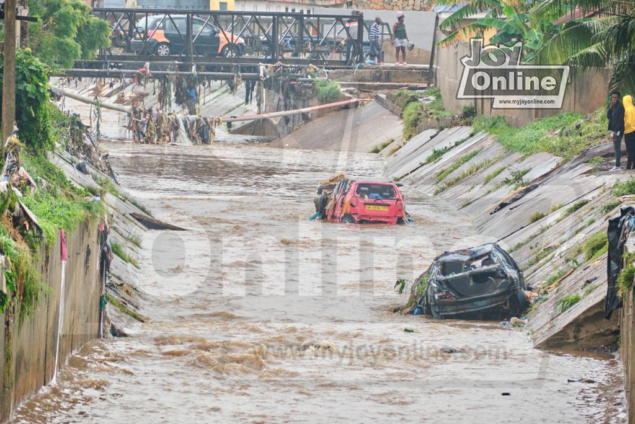
According to them, Ghana is rated “high” (the highest level on a four-point scale) for several climate-related shocks, including extreme heat; water scarcity; and urban, river and coastal flooding.
These were accounted to be some of the major risk factors in the country.
Estimates by the United Nations Office for Disaster Risk Reduction and CIMA Research Foundation indicated that, on average, floods in Ghana adversely affect 45,000 individuals annually accounting for 0.16 per cent of the country’s population, thus, reducing annual national Gross Domestic Product (GDP) by 0.23 per cent.
Also on average, drought in the country adversely affects 3.5 million individuals annually indicating 13 per cent of the population and reduces annual inflation by 15 per cent.
The accumulated effect of both flood and drought is a 15.23 per cent reduction in GDP and affects some 3,545,000 individuals annually representing some 13.16 per cent of the population.
The workshop focused on examining; the spatial distribution of drought and flood risk in Ghana, the association between the distribution of these risks and the distribution of the country’s population and poverty levels across districts to determine which region requires what social safety plan, and finally the association between the distribution of the risk and the distribution of social safety net programs participation levels across districts in the country.
The World Bank Group also discovered that both drought and flood risks are determined as increasing functions of “hazard” and “vulnerability” and decreasing functions of “capacity”.
That is, as “hazard” and “vulnerability” rise, floods and drought also rise likewise a fall in “capacity” leads to a fall in both floods and drought.
Hazard, according to them, is the probability of occurrence of a climatic shock, vulnerability is the potential impact of climatic shock as determined by land use and population density, and capacity is the institutional and organisational strength to respond to the shock.
Latest Stories
-
“US Embassy introduced TRIBE Culture Fest to NSA, GTA” – Kofi Adams
31 minutes -
“NSA did not tell us of any embassy arrangement” – Kofi Adams
55 minutes -
Glasner suffers loss on Selhurst return as Palace beat Forest
3 hours -
WAFU B U17: ‘We won but I expected more from my boys’ – Kassim Ocansey
3 hours -
Man City cruise to statement win over 10-man Liverpool
3 hours -
Be careful with cross-border lending, foreign currency exposures – BoG to financial institutions
5 hours -
GPL 2026/27: Medeama go three clear as Hearts of Oak recover and Bechem stage stunning comeback
5 hours -
Ntiamoah Foundation launches “BEYOND 20” anniversary campaign
6 hours -
Credit Risk Management Directive: BoG to begin implementation for banks, others from July 1, 2027
6 hours -
Ghana Brands Awards 2026: Leading brands, business trailblazers to shine on November 20
6 hours -
T-bills auction: Demand improves as government exceeds target by about 76%; interest rates soften
6 hours -
Ziope undertakes initiative to build a technologically inclined community, commissions self-help ICT lab
7 hours -
ECG announces power outage in parts of Tema, Central Region due to network fault, maintenance
7 hours -
When the Gospel Becomes a Weapon: The church, blackmail and the abuse of faith
7 hours -
JoyNews’ Jacqueline Ansomah Yeboah selected for UK Media Excellence for Emerging Technologies Fellowship
8 hours