

Audio By Carbonatix
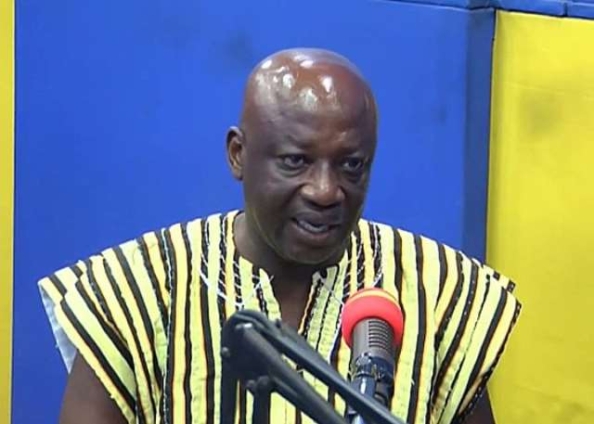
A startling proposition for national development has been put forward by Thomas Kusi Boafo, a former Chief Executive Officer (CEO) of the Public Sector Reforms Secretariat, who has publicly advocated for the complete collapse and structural rebuilding of Ghana’s public sector.
Kusi Boafo asserts that the current bureaucratic framework is fundamentally flawed, suffering from crippling inefficiencies and systemic corruption that actively impede national progress and drain state resources.
Systemic Flaws: Poor Ethics and Bribery
Speaking passionately on Nhyira FM's popular current affairs programme, "Kuroyimunsem", Kusi Boafo detailed his assessment, arguing that the public sector's poor performance is not due to a lack of technical skill but a failure of work culture and ethics.
He noted that Ghana’s public institutions are staffed with numerous university graduates and highly skilled professionals.
Yet, these professionals, he claims, are trapped in a system where poor work habits are tolerated and illicit practices thrive.
According to him, despite having professionally qualified workers, poor work ethics hinder performance but promote to bribery, ultimately draining the country's resources.
Kusi Boafo suggests that inefficiencies and corruption within the public sector cost the nation billions of Ghana Cedis annually through delayed projects, inflated contracts, and lost revenue from bribery.
His critique applies broadly to Ministries, Departments, and Agencies (MDAs), which collectively employ over 700,000 workers, according to recent civil service data.
The former CEO was emphatic that a large majority of public service employees are simply not meeting the standards required for effective national service.
Kusi Boafo emphasised that most public sector workers are not fit for purpose, with the exception of State-Owned Enterprises (SOEs) established for commercial purposes.
By explicitly excluding commercially oriented State-Owned Enterprises (SOEs)—such as utilities, banks, and major trading bodies—Kusi Boafo focused his criticism squarely on the core civil and local government services responsible for policy implementation, social services, and public administration.
He argues that these non-commercial bodies are where the inefficiencies are most pronounced, resulting in poor service delivery across sectors like health, education, and revenue collection.
Kusi Boafo's solution is not incremental reform but a radical surgery of the entire system.
He is demanding that the government move beyond minor procedural changes and adopt a bold strategy to fundamentally redesign the public sector from the ground up to prioritize efficiency, accountability, and value for taxpayer money.
He is advocating for a complete overhaul and rebuilding of the public sector to ensure effectiveness and efficiency.
This drastic suggestion is expected to reignite the national debate on civil service reform, the size of the public wage bill (which consumes a significant portion of the national budget), and the political will required to implement structural changes necessary for Ghana to achieve accelerated development.
Latest Stories
-
Ten climbers missing after avalanche hits Himalayan base camp
35 minutes -
NPP had more permanent fuel relief measures than current GH¢2 diesel cut – Amin Adam
59 minutes -
Photos from the 3rd Republic Bank-JoyNews Habitat Fair Clinic
1 hour -
Ethiopia’s army promises restraint amid fears of new civil war
1 hour -
Amin Adam calls for review of fuel taxes as diesel prices remain above GH¢18
2 hours -
World Vision Ghana, Ahafo districts sign MoU for universal WASH coverage
2 hours -
When the gold engine stutters: What Ghana’s Cedi and reserves are telling us about the new economic architecture
3 hours -
Two reportedly die after being trapped in mining pit at Juaboso
3 hours -
Petrosol cleans up Wa Municipal Hospital, to donate medical equipment
3 hours -
‘If NPP was ‘insensitive’ over fuel prices, NDC must accept same description now’ — Amin Adam
3 hours -
KiDi brings the hits to London in sold-out UK headline concert
3 hours -
The last goodbye of Ghanaian shot dead in the US
3 hours -
MCC opens door to Ghana again as MiDA revives development partnership
4 hours -
CSIR moves to turn scientific research into jobs, national growth
4 hours -
More patrons troop in as 3rd Republic Bank-JoyNews Habitat Fair clinic enters final day stretch
4 hours