

Audio By Carbonatix
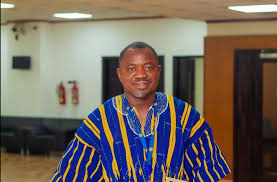
A member of Parliament’s Health Committee, Professor Titus Beyuo, has described Ghana’s newly launched Free Primary Healthcare initiative as a “game changer,” arguing that it introduces the country’s first coordinated national system for disease prevention and adult health screening.
The Free Primary Healthcare initiative is part of the government’s broader push to expand access to basic health services and strengthen preventive care across the country, amid growing concerns over rising non-communicable diseases in Ghana’s adult population.
Speaking on the Joy Super morning show, Prof. Beyuo said Ghana has historically lacked a structured, nationwide preventive healthcare system, particularly for adults, with most interventions being donor-driven and disease-specific.
“In Ghana, that is a fact. We do not have any national coordinated program for disease prevention in the country,” he said.
“Occasionally, we have donor-funded programs. So when there is funding for HIV, you see all the adverts and education campaigns. When the funds go, it goes down.”
He added that similar patterns have been observed in areas such as tuberculosis and, more recently, COVID-19, where public health campaigns tend to surge only during outbreaks or periods of funding support.
Prof. Beyuo explained that while Ghana has relatively strong childhood immunisation programmes as a form of preventive care, the adult population has largely been left out of structured screening systems.
“In the adult population, our biggest concern is not infectious diseases but non-communicable diseases, and there is none,” he noted.
According to him, conditions such as hypertension, diabetes, mental health disorders and obesity account for a significant proportion of disease burden and deaths in the country, yet there is no consistent national screening framework to detect them early.
He said the Free Primary Healthcare initiative, introduced under the government’s broader health reform agenda, seeks to change that by shifting Ghana’s health system from “sick care to healthcare.”
“For the first time in Ghana… the country is financing a national prevention and screening program where every adult gets the opportunity to be screened at least once a year for common non-communicable diseases,” he said.
Prof. Beyuo further argued that the programme would ensure continuous monitoring of citizens’ health data over time, allowing for early detection and follow-up interventions, even without financial barriers.
He cited the vision of a system where individuals could be tracked over time for conditions such as blood pressure and blood sugar levels, with reminders and follow-ups for further screening when necessary.
Latest Stories
-
Huge crowds greet Pope in Paris for open-air Mass
8 minutes -
‘I never said I’ll declare a state of emergency’ – President Mahama on galamsey
48 minutes -
Bobby Banson condemns EOCO’s attempted arrest of Nana Agyei Baffour Awuah
1 hour -
When Kumasi begins to look like somebody is in charge
1 hour -
Parliamentary probe into cocaine seizure would be a waste of time – Inusah Fuseini
1 hour -
Cocaine seizure: Focus on Ghana’s reputation, not partisan blame – Osae-Kwapong
1 hour -
Two Invitations, Three Interrogations: Did Baffour Awuah tell the whole story?
2 hours -
Drug cartels may be seeing Ghana as easy route – Lenin Anane Agyei
2 hours -
Ghana risks gaining notoriety as drug-trafficking hub – Bobby Banson
3 hours -
Government dismissed my drug trafficking warning, then tried to arrest me – Ntim Fordjour
3 hours -
Day Two: 3rd Republic Bank-JoyNews Habitat Fair Clinic underway at Junction Mall
3 hours -
NACOC addressing inherited gaps in fight against drug trafficking – Deputy Director-General
3 hours -
Taekwondo goes to school as GTF launches five-region youth campaign
3 hours -
The issues Mourinho is struggling to fix at Real Madrid
3 hours -
Hundreds throng EducationUSA College Fair in Kumasi in pursuit of abroad studies
3 hours