

Audio By Carbonatix
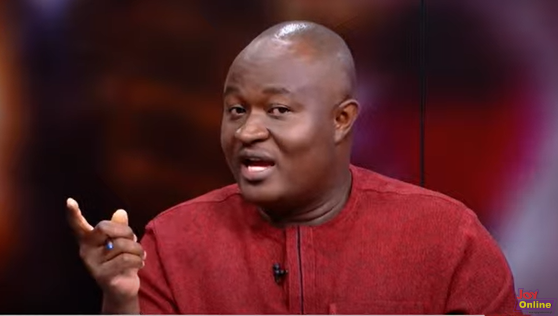
The Public Relations Officer (PRO) of the Education Ministry, Kwasi Kwarteng, has urged Ghanaians to consider the Free Senior High School (SHS) policy as an investment policy.
According to him, with every investment, many resources have to be pumped into sustaining it and transforming it into the desired quality.
He argued that most Ghanaians view the policy as an expensive venture that has cost the state so much resources, thereby affecting other sectors. This perspective, he said, has robbed many of seeing the benefits of the policy.
He contributed to JoyNews’ National Dialogue on the Free SHS Promise on Thursday, March 21.
“I have always insisted that it all boils down to how you see the policy, whether you see it as an investment policy or a policy of expenditure. If you see it as an investment, your narrative, your thinking, and your embracing of the policy will be different from how you see it when you consider it as an expenditure.
“I have heard sections of Ghanaians saying that other sectors of the economy probably are not doing well because they believe that a lot of money is being channeled into the Free SHS policy,” he said.
He argued that in the Education Ministry, education is largely anchored on three key pillars: Access, quality, and relevance. In all these, the ministry ensures that these factors are assessed for their impacts, and the ministry is focused on impacting the socioeconomic transformation of the lives of Ghanaians.
Mr Kwartey stressed that the motive for the government investing in the Free SHS policy is to invest in access. He argued that since the introduction of the flagship programme, more people have had access to secondary education, thereby positively impacting general development.
“The SHS policy is an investment policy. Investment in the areas of assets. If you look at the enrollment data for instance in 2014, in terms of the number of students that were placed, that is 386,412. Out of this number, only 273,152. This is about 17.69% actually, went to school.
“Now compare these same figures to 2023. In 2023, 554,034 SHS students were placed and out of these numbers you have 504,580 apparently taking up the admission and getting enrolled. That's about 91.7%.
“Beyond that, beyond even the percentage statistics, let me make it simple terms for you. Before the free SHS policy, every year when students graduate from BECE and they have to go to the senior high schools, at least you have a minimum of 100,000 students that were denied access to higher education.
“Of course, largely because of these cost barriers that we've already highlighted. And even the number of students that also proceed to the senior high schools, by the time they get to second year you have about 20% of them dropping,” he said.
Nevertheless, with the introduction of the policy, many people have had access, which he argued is the basis of free SHS.
Latest Stories
-
Let The Constitution direct Chieftaincy to deliver “All Development Is Local”
13 minutes -
Ghana explores centre of excellence for hearing, communication and cochlear implant care
2 hours -
Schizophrenia-related disorders lead mental health cases recorded in Ghana
2 hours -
Dutch authorities enlist Ghana in hunt for fugitive drug lord Bolle Jos
2 hours -
Ghana housing finance conference adopts communiqué to improve affordable housing access
7 hours -
Special Initiatives Minister urges Wa Technical Institute to enrol more girls as EU-backed solar training lab opens
7 hours -
In the matter of my first year at the Bar
7 hours -
ActionAid Ghana calls for an end to child marriage, greater investment in girls’ rights
8 hours -
Newsfile to tackle World Cup visa scandal, beach demolitions, education strikes, BRICS bid
8 hours -
UK-Ghana Trade & Investment Summit: Trade Resource Centre to help businesses maximise UK-Ghana trade opportunities
8 hours -
Embassy of Denmark celebrates World Maritime Day
8 hours -
Linking LEAP to productive inclusion could cut extreme poverty by 2030 – UNICEF
9 hours -
Trade Ministry backs use of creative arts to rehabilitate prison inmates
9 hours -
Negotiations with government to continue despite strike suspension – GNAT
10 hours -
‘Ghana cannot afford to waste public resources; every cedi has a job’ – Ato Forson
10 hours