

Audio By Carbonatix
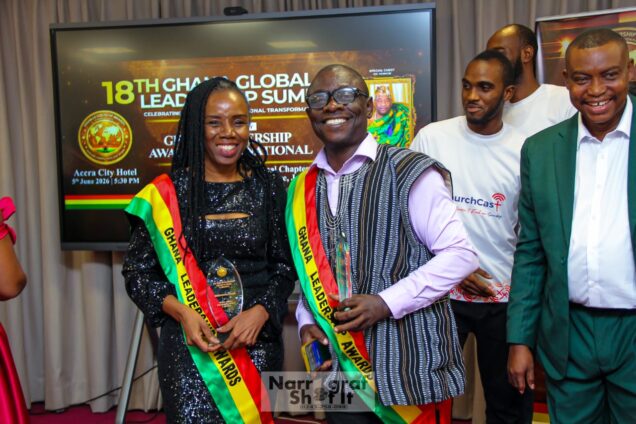
The Ghana Leadership Awards International (GLAI) on Friday, 5 June 2026, held its 18th Awards Ceremony in Accra, honouring distinguished Ghanaians whose leadership, achievements and contributions continue to inspire future generations and advance national and international development.
Among those recognised were His Royal Majesty Nii Tackie Teiko Tsuru II, the Ga Mantse; Professor Elsie Effah Kaufmann, renowned moderator of the National Science and Maths Quiz; Dr Akwasi Agyeman, Editor of the Adom Brands of Multimedia Group Limited; Okronkronyi Nyame Somafo Yawoh, leader of the Asomdwee Ntonton Som; and celebrated musician, entrepreneur and philanthropist Akosua Agyapong.
Addressing participants, Founder and Chief Executive Officer of Ghana Leadership Awards International, Rev. Prof. Emmanuel Yao Nash, said the organisation was proud to celebrate visionary leaders whose work continues to shape society and contribute meaningfully to development.
"As Ghana Leadership Awards International marks 18 years of God's faithfulness, we remain committed to recognising individuals whose leadership and achievements inspire future generations and contribute significantly to national and global development," he said.
Rev. Prof. Nash noted that GLAI has gained significant international recognition over the years, reaching an estimated global audience of more than 286 million people through its leadership platforms, media engagements, policy contributions and international partnerships.
According to him, the awards and associated leadership summit continue to create opportunities for diplomacy, investment, business networking and strategic partnerships by connecting influential leaders and institutions with a global audience.
"Today, Ghana Leadership Awards International continues to provide a powerful platform that connects leaders, institutions, businesses and organisations with national and international audiences, creating opportunities for influence, partnerships and sustainable growth," he stated.
Dr Akwasi Agyeman recognised
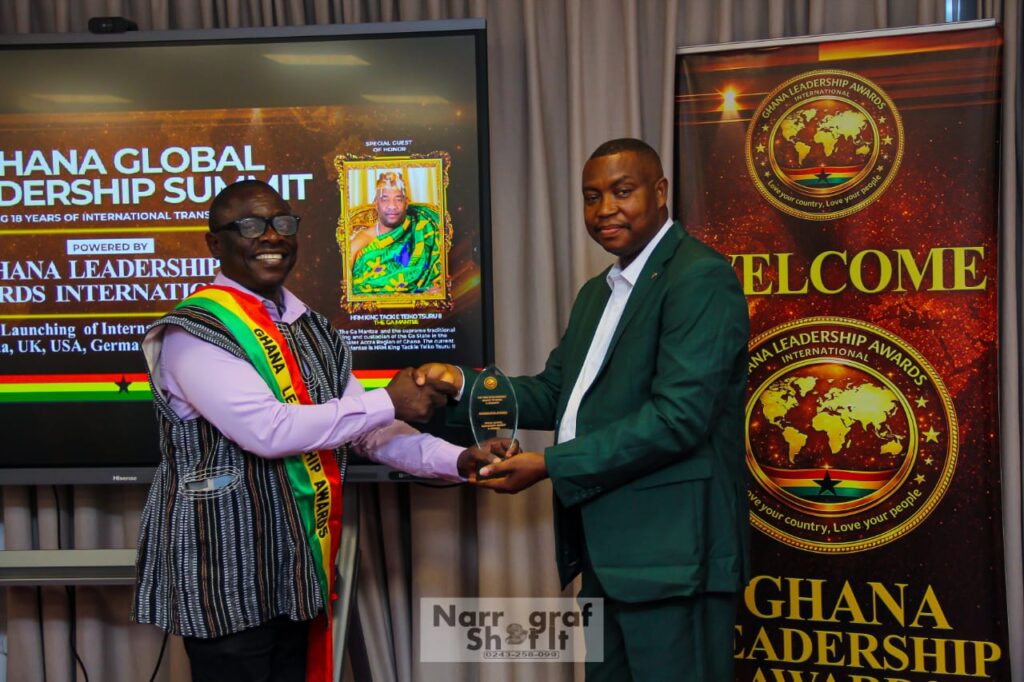
Dr Akwasi Agyeman received recognition for his distinguished journalism career spanning more than two decades, as well as his recent academic achievement of earning a Doctor of Philosophy (PhD) in African Studies (History and Politics) from the University of Ghana.
The organisers noted that his academic accomplishment has inspired many journalists across the country to pursue higher education and contribute to raising professional standards within the media industry.
Media's role in tackling climate change
As part of the event, Dr Agyeman delivered a presentation on the theme, "The Role of the Media in Climate Change: The Ghanaian Media Experience."
He emphasised that climate change is no longer a distant environmental concern but a present-day reality affecting livelihoods, economies and communities across the world.
"In Ghana, the effects of climate change are becoming increasingly evident through floods, prolonged droughts, coastal erosion, rising temperatures and unpredictable rainfall patterns," he said.
According to Dr Agyeman, these challenges highlight the urgent need for informed public discourse, collective action and sustained media engagement.
He argued that the media occupies a strategic position in the fight against climate change by serving as a bridge between scientific knowledge and the public.
"The media informs, educates and mobilises citizens to understand environmental issues and adopt sustainable practices," he noted.
Referencing media scholar Denis McQuail, Dr Agyeman explained that journalists play a crucial role in translating complex scientific information into content that ordinary citizens can understand and act upon through news reports, documentaries, feature stories, discussions and digital media platforms.
He identified public awareness creation as one of the media's most important contributions, noting that many Ghanaians first encounter information about climate change through radio, television, newspapers and online platforms.
Media coverage of flooding in Accra, drought conditions in northern Ghana, illegal mining, deforestation and coastal erosion, he said, has helped draw national attention to pressing environmental concerns.
Dr Agyeman further highlighted the educational role of the media, stressing that expert interviews, environmental programmes and public discussions help citizens understand the causes and consequences of climate change while encouraging environmentally responsible behaviour.
He also underscored the media's watchdog function, noting that investigative journalism has helped expose illegal logging, pollution and environmental degradation, thereby promoting accountability and encouraging enforcement of environmental regulations.
Opportunities and challenges
Dr Agyeman observed that radio remains one of the most effective tools for climate communication in Ghana due to its extensive reach, particularly within rural communities.
Community radio stations, he said, play a vital role by delivering climate-related information in local languages to farmers, fisherfolk and other vulnerable groups.
He added that digital and social media platforms such as Facebook, X, YouTube and WhatsApp have expanded opportunities for climate communication, advocacy and public mobilisation, especially among young people.
Despite these gains, he acknowledged that climate reporting continues to face challenges.
According to him, climate issues are often highly technical and scientific, making accurate reporting difficult for many journalists. Limited funding, inadequate training and competition from political, sports and entertainment content also reduce the prominence of climate stories on the national news agenda.
To address these challenges, Dr Agyeman called for continuous capacity-building programmes for journalists, stronger collaboration between media practitioners and climate scientists, and increased investment in environmental journalism.
He also urged media organisations to dedicate more airtime and editorial space to climate-related issues, stressing that environmental sustainability remains closely linked to national development.
Drawing on Development Media Theory, Dr Agyeman argued that the media in developing countries have a responsibility to support national development through education, awareness creation and social transformation.
"Climate change is one of the greatest development challenges of our time, and the media must remain at the forefront of efforts to create awareness, influence policy and inspire action," he stated.
He concluded by calling for stronger collaboration among journalists, policymakers, communicators and citizens to ensure climate information reaches all parts of the country and drives meaningful action.
"The fight against climate change is not solely the responsibility of governments and environmental organisations. It is a collective responsibility, and the media has an indispensable role to play in leading the national conversation towards a sustainable future," he said.
Latest Stories
-
Mobile Money Fintech LTD, UMB train hairdressers and beauticians
2 hours -
Asylum votes show people want help, says Kemi Badenoch
3 hours -
Badenoch welcomes expanded grooming gangs inquiry
3 hours -
GACL MD sues Samuel Buabeng over alleged Facebook defamation
3 hours -
Christa Pike in critical condition after surviving two lethal injections, lawyer says
4 hours -
Kemi Badenoch backs face covering ban at protest
4 hours -
Man City not ‘above the rules’, says No 10 after backlash to Burnham remarks
4 hours -
Real Madrid submit ‘substantial’ dossier in Barca payments case
4 hours -
Messi completes purchase of second Spanish club
4 hours -
Government must engage horticulturists on tomato crisis – GhIH
4 hours -
King Promise’s ‘Can’t Tame Us’ becomes official Chelsea anthem
4 hours -
Afenyo-Markin demands Baffour Awuah’s release from EOCO’s custody, end to alleged political intimidation
4 hours -
Rapper Rick Ross arrested on domestic violence charges
5 hours -
Minority demands security review of Ghana-Colombia visa waiver and port deals
5 hours -
Pursue drug kingpins, not persecute political opponents – Afenyo-Markin tells EOCO
5 hours