

Audio By Carbonatix
More children are dying from Galamsey-related incidents in mining areas. So why is the government trumpeting free education so much in the upcoming elections when many children in these mining communities may not live long enough to benefit from it?
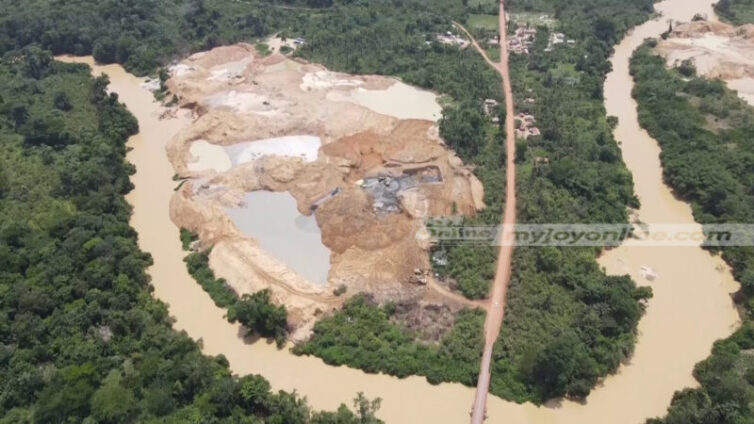
In Ghana, the issue of illegal mining, popularly known as “Galamsey”, has reached alarming proportions. Today, rivers such as Bonsa, Pra, and Ankobra have been heavily polluted as a result of illegal mining. Not only does Ghana risk importing water by 2030, it also risks the safety of its children who are exposed to hazardous chemicals used in mining.
According to the Pediatric Society of Ghana, not only are the adverse effects of illegal mining linked to child morbidity and mortality, but also lead to delayed language acquisition, poor speech development, and overall poor quality of life.
“Exposure to chemicals such as lead, mercury, arsenic and other heavy metals from inappropriate disposal of wastes and the “Galamsey” menace is contributing to deaths among children as well as cognitive deficits which affects their school performance and suspected to cause congenital malformations.”
As illegal mining continues to devastate our water bodies, labor unions and several youth groups are urging the government to declare a state of emergency. Yet, instead of addressing this critical issue, the government is focused on promoting free senior high school education in its campaigns. This initiative feels hollow in light of the high child mortality rates in galamsey-affected areas. How can education be a priority when so many children may not live long enough to benefit from it?
This contradiction raises serious questions about the government's priorities. While free education is essential for long-term development, it must be accompanied by immediate and effective measures to ensure the safety and well-being of children in these communities. Addressing the root causes of illegal mining, including poverty, lack of economic opportunities, and inadequate enforcement of mining regulations, is critical.
To make the promise of education a reality for children in mining areas, the government must immediately ban all activities of illegal mining and implement a robust strategy to regulate mining in Ghana. This situation has become very tragic. It’s very horrific! And I’d actually advise those who are involved – regardless of their role – to stop.
-
Elizabeth Dansoa Osei
Graduate Student, University of Oxford.
Latest Stories
-
IMMILAC president recounts personal losses as security women lead breast cancer awareness campaign in Wa
2 minutes -
University of Ghana postpones October 12 reopening as GAUA strike persists
16 minutes -
Bahass Foundation launches vocational skills training to support mental health recovery in Wa
48 minutes -
NPP orders parliamentary aspirants and their supporters to suspend campaign activities
1 hour -
Techiman unites against child marriage: Joy Impact Makers Awardee leads charge on International Day of the Girl Child
2 hours -
Ghana Psychological Association calls for greater involvement of people with lived experience in mental health care
3 hours -
Ablakwa says Ghana could evacuate more citizens from South Africa if the situation worsens
3 hours -
Violence against girls must be tackled through individual responsibility – Gender advocate
3 hours -
Ghana’s BRICS bid must be guided by national interest – International Affairs Analyst
3 hours -
Journalists look back on a decade of breast cancer reporting in Ghana
4 hours -
President Mahama ends Resetting Ghana tour of Ahafo Region
6 hours -
African negotiators seek delivery of climate commitments at COP31
6 hours -
BoG develops AI rules for financial sector
6 hours -
‘Big Push’: Government assures contractors of prompt payments
6 hours -
Court fines miner for breaking into gold buying shop
6 hours