

Audio By Carbonatix
Ghana is seeking to position itself beyond the role of a consumer of space technology, with the country exploring opportunities to participate more actively in the growing global space economy.
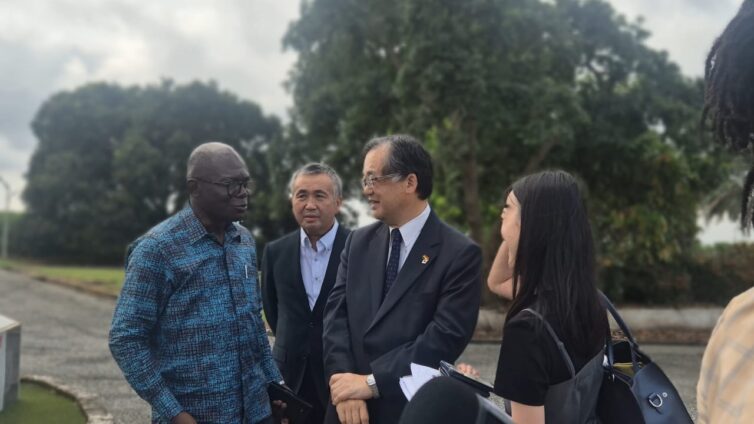
The ambition was highlighted during a visit to Ghana by veteran Japanese astronaut Koichi Wakata, Astronaut and Chief Technology Officer, Asia Pacific at Axiom Space, to the Ghana Space Science and Technology Institute.
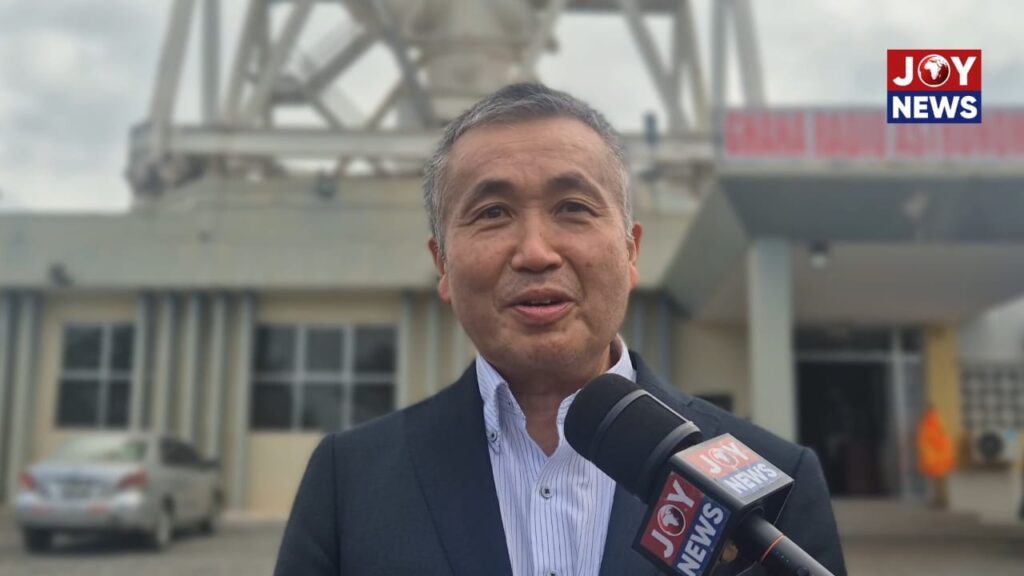
Wakata, who has completed five space flights and spent 504 days in space, engaged researchers and students during his visit as part of efforts to deepen discussions around aerospace, space science and Ghana’s potential in the sector.
According to the Director of the Ghana Space Science and Technology Institute, Dr Joseph Bremang Tandoh, Ghana already has a policy framework for the sector and must now focus on implementation.
“Ghana already has a space policy that has been approved by Cabinet, and last year an approval was given for the establishment of Ghana Space Agency.”
He said the country’s ambition should extend beyond using technologies developed elsewhere.
“We have a policy, and we need to start implementing it. We don’t want to be consumers; we want to partake, and we want to position ourselves in a way that we will contribute to the space economy.”
Dr Tandoh acknowledged that Ghana is still at an early stage of its space journey but believes sustained investment and commitment could eventually see the country produce an astronaut.
“Currently, we are in the baby stages, but if we are able to put in the right tools and the right commitment, we will be able,e in the next few years, also, to produce our own astronaut who can go to space.”
Learning from an astronaut
The visit also provided an opportunity for Ghanaian researchers and students to engage directly with someone who has experienced spaceflight.
Prof Felix Akomah Asante, a Professor at the University of Ghana and Principal Investigator of the Japan Centre Project, said Wakata was invited as the project’s scholar for the year.
He said the visit was intended to expose the astronaut to Ghana’s aerospace activities while creating an avenue for knowledge-sharing with researchers.
“He is an astronaut and works with Axiom Space, and he’s been to space several times, and the visit is several times, our aerospace things in Ghana and have discussions with researchers and he will share ideas on how we can also get closer to going to space.”
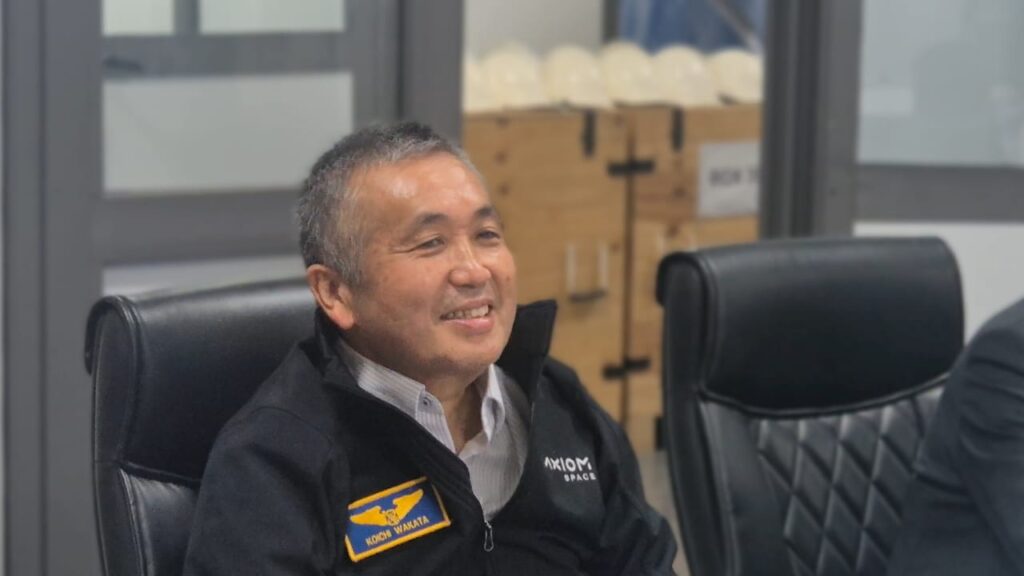
For students, the encounter offered something textbooks and classroom lessons cannot easily provide: direct interaction with someone who has actually been to space.
One student described the experience as particularly significant because astronomy had largely been something learned through scientific facts rather than direct experience.
“Ever since I was in basic school, it’s always been about scientific facts about astronomy, and you never get to experience it, but meeting an astronaut today will definitely help me make an impact.”
A Ghanaian astronaut?
For Wakata, the prospect of seeing more Ghanaians become involved in space exploration is one worth pursuing.
The veteran astronaut, who now works with Axiom Space on the development of commercial space activities, said he would like to see greater participation from Ghana.
“I would really like to see more people in Ghana who will utilise the space environment.”
He also expressed hope that Ghana could eventually have an astronaut participate in a space mission.
“I’m also looking forward to seeing a Ghanaian astronaut flying with us to the International Space Station at Axiom Space Station, and Ghana has huge potential in space exploration.”
Wakata’s career spans more than three decades in human space activities. He has flown on four types of spacecraft, including the Space Shuttle, Soyuz and Crew Dragon, and became the first Japanese astronaut to command the International Space Station in 2014.
His visit comes at a time when Ghana is seeking to strengthen its capacity in space science and technology and explore how the sector can contribute to national development.
For Ghana, the conversation is therefore no longer simply about looking up at the stars.
It is increasingly about asking what role the country can play once the next chapter of space exploration unfolds and whether, someday, a Ghanaian could be among those making that journey.
Latest Stories
-
Chrysler Building to get its crown restored after being sold
3 minutes -
Infantino re-election boost as Concacaf chief will not stand
12 minutes -
Everton’s Sherif fined for breaching betting rules
21 minutes -
Suspended fine for Xhaka over Covid-19 certificate
27 minutes -
Businessman dragged to court over GH¢480,000 fraud
36 minutes -
Pregnant woman and husband found dead in a room at Anloga-Kportorgboe
48 minutes -
Man, 87, jailed 20 years for defiling nine-year-old girl at Ofankor
58 minutes -
Maresca says ‘feeling is fantastic’ among Man City squad
1 hour -
Sam George warns FBI Director against taking sole credit for Ghana cybercrime operation
1 hour -
Foreign capital no passport to Ghana’s informal retail market – GIPA CEO
1 hour -
E&P model should be seen as a blueprint for building local mining giants – GIPA Boss
1 hour -
Govt’s decision to reduce nurse training long overdue – GRNMA
2 hours -
Ghana needs emergency health fund to respond swiftly to outbreaks – SEND Ghana
2 hours -
Gov’t must prioritise local vaccine manufacturing for future outbreaks – SEND Ghana
2 hours -
Salomey Awiti Baffoe reunites with family and colleagues after release
2 hours