

Audio By Carbonatix
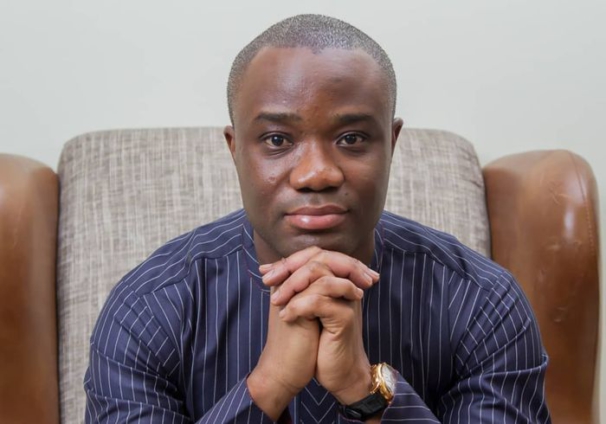
Former Deputy Minister for Information, Felix Kwakye Ofosu has said that Ghana currently has the worst credit rating ever in 20 years.
Speaking in an interview on NewsNight on Thursday, he said with this data, he does not understand why Ghanaians would be told that the economy “today is better than in the past.”
“Today, our public debt as of the end of the first quarter in the light of the recent cedi depreciation, is GHC400 billion. Our public debt in 2016 was GHC120 billion the debt to GDP ratio in our estimation is around 85% as we speak. In 2016, it was 66%, the fiscal deficit for 2021 was 12% in 2016, it was 6%. As we speak, we have the worst credit ratings ever in 20 years since the rating started,” he said.
Mr. Kwakye Ofosu made these comments in reaction to the speech delivered by Vice President Dr. Mahamadu Bawumia on the state of economy at a forum organised by the NPP’s National Youth Wing on Thursday.
Dr. Bawumia during his address, stated that, “after a period of sluggish and declining growth, real GDP growth picked up from 3.4% in 2016 to an average of 6.9% between 2017 and 2019. The onset of COVID-19 in 2020 however, resulted in a sharp decline in GDP growth to 0.4% (many countries in the world recorded negative growth).”
He said “the resilience of the economy manifested in 2021 with a pick up of real GDP growth from 0.4% in 2020 to a projected 5.3% in 2021, with the non-oil sector projected to grow at 6.9% in 2021. The average rate of GDP growth for 2017-2021 (including COVID-19 period) was 5.3% compared to an average rate of growth of 3.0% between 2013 and 2016. Therefore, even with COVID-19, the growth of the economy is fundamentally stronger than it was in the 2013-2016 period.”
In response, Mr. Kwakye Fosu said, “what has happened is that they have attempted to blame Covid and then the 6 weeks old Ukrainian-Russian conflict for the economic mess we’ve seen in the last 2 to 3 weeks.”
According to him, the economy has already been mismanaged long before the outbreak of Covid-19.
“They were hiding the true extent of our budget deficit and so increasingly they began to cause disaffection in the international bond and financial market.
“Indeed when the budget was read, just a day after the budget was read, the yields on our bond were increased by bondholders because they did not trust the assumptions and financial calculation that has been done, they saw that this was a government that was claiming that they will increase revenue by as much as 40%. The investors looked at the figures and saw that it will not add up, so they increased their yield just after the budget was read,” he said.
Latest Stories
-
(Photos) Mfantsipim School launches historic 150th anniversary
22 minutes -
Knights and Ladies of Marshall group backs Catholic Bishops’ stance on anti-LGBTQ+
1 hour -
Bright Simons writes: All the Filla in the Ibrahim Mahama/E&P – Gold Fields Saga
2 hours -
Monetise Idiocy In Ghana
2 hours -
The Ghanaian prophet and the mysterious death of his scottish wife Charmain Speirs
3 hours -
Nearly 400 sentenced in Nigeria for links to militant Islamists
3 hours -
Ghana’s recovery supported by gold strength despite global oil price pressures – Standard Bank Research
3 hours -
Methodist Church hails Mfantsipim@150; calls for “fresh consecration” to excellence
3 hours -
‘Excellence is our inheritance’ – Nana Sam Brew-Butler hails Mfantsipim’s 150-year reign in leadership
4 hours -
Kwaku Azar writes: A-G vs OSP
4 hours -
Mfantsipim–Adisadel rivalry built excellence, not division – Sam Jonah
4 hours -
Vice President launches Mfantsipim’s 150 years of shaping Ghana’s greatest mind
4 hours -
I assure Otumfuo, Mahama will join him to commission KNUST Teaching Hospital by end of this year – Haruna Iddrisu
5 hours -
Barcelona dominate derby to extend La Liga lead
5 hours -
Gov’t to roll out free special education for persons with disabilities from July 1 – Education Minister
5 hours