

Audio By Carbonatix
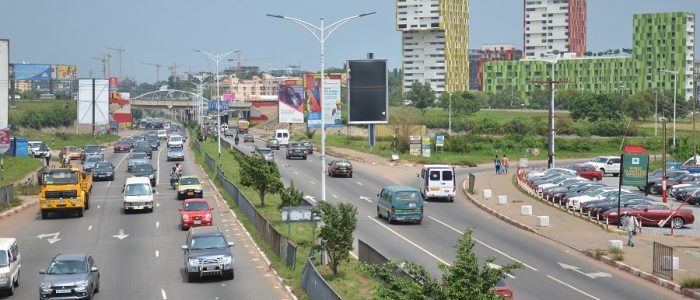
Ask any Accra resident about their morning commute, and you will likely get the same weary answer: “I left home at 5:30 a.m. just to get to work by 8.” The Spintex road, the Circle-Achimota stretch, the Madina-37 corridor. These are not merely roads; they are daily battlegrounds where time, money, and dignity are lost in slow-moving traffic.
Greater Accra is home to over five million people, and that number keeps climbing. Yet the transportation systems meant to move people efficiently have not kept pace. A 2026 study by Glima Research found that traffic congestion costs Ghana’s economy an estimated GH¢4.5 billion every year: GH¢3.2 billion in lost time (71%), GH¢434 million in wasted fuel, and GH¢815 million in stress-related productivity losses. Beyond the money, idling vehicles generate approximately 73,000 metric tons of excess carbon dioxide annually, the climate equivalent of cutting down three million trees every year.
As a transportation engineer who has studied and used public transit systems across more than a dozen developed countries, I can say clearly: this is not a capacity problem. It is a governance and strategy problem. The choices Ghana makes in the next few years will shape its cities and economic productivity for the next half-century.
The Backbone of the System: Tro-Tros
Start with the tro-tro. These privately owned minibuses carry approximately 70 per cent of daily commuters in Accra, governed by trade unions which set flat fares in consultation with the Ministry of Transport. Following the cedi’s 16.7 per cent appreciation, nationwide fares were officially reduced in May 2025, providing real relief to commuters.
The tro-tro’s genius is its adaptability: it goes nearly everywhere, operates without timetables, and charges a fraction of what a taxi costs. No government system has ever matched its coverage. But its dominance is also a symptom of a formal system that has never consistently shown up. Vehicles are poorly maintained, safety standards are essentially unenforced, and the “fill-and-run” model means passengers wait indefinitely. The tro-tro is organically efficient but structurally fragile.
The BRT That Became Bus Slow Transit
In November 2016, President John Mahama launched the Aayalolo Bus Service with roughly $95 million in international funding, including from the World Bank and the Agence Française de Développement. The vision was sound: dedicated lanes, scheduled departures, and electronic payment. What followed is one of the more instructive cautionary tales in Ghanaian infrastructure policy.
The dedicated lanes were never built. The government purchased nearly three times more buses than the World Bank recommended. Successive administrations neglected the system. By 2025, Aayalolo drivers were observed stopping indiscriminately along the Accra-Nsawam highway, competing directly with trotros on the very corridor the system was meant to bypass. In December 2024, the Aayalolo CEO alleged that his staff were forcibly evicted from the Tudu and Adenta terminals following the elections.
Aayalolo is not proof that BRT cannot work in Ghana. It is proof that without physically separated lanes, institutional independence, and continuity across administrations, no bus system will ever justify its investment.
Rail: Real Progress, Long Road Ahead
Ghana’s railway network forms an “A” shape on the map: the Eastern Line (Accra to Kumasi, 300km), the Western Line (Kumasi to Sekondi-Takoradi, 340 km), and the Central Line connecting them at Huni Valley and Kotoku. Decades of neglect left most of it non-operational. As of late 2024, just four passenger train services were running nationally on any given day. The most significant recent milestone is the Tema-Mpakadan line: a 96.7 km standard-gauge railway inaugurated in November 2024 and financed with $447 million from India’s Exim Bank. It is the first phase of the Ghana-Burkina Faso Railway Interconnectivity Project and a genuine step forward.
For the Eastern Line, six international companies were shortlisted for a $1 billion project to rehabilitate the Accra-Kumasi corridor to standard gauge. If completed, it would reduce a typically six-hour road journey to under three hours, with none of the safety risk of what remains one of West Africa’s most dangerous roads. The economic case is compelling. The Western Line, with $500 million committed on paper over multiple administrations, remains almost entirely non-operational. The gap between announcement and execution has been Ghana’s most persistent infrastructure problem.
What Should Actually Be Done
Having studied transport systems from Boston to Amsterdam to London, my assessment is that Ghana does not need to pick one mode and abandon the rest. It needs a sequenced, multimodal strategy with clear short, medium, and long-term horizons. In the short term, the highest-return move is formalising the tro-tro sector through fleet renewal incentives tied to compliance, digital ticketing to generate planning data, and a route licensing framework built with, not against, the GPRTU. Alongside this, the government must commit to one fully operational BRT corridor, not another pilot. The Mallam-Kasoa corridor is the strongest candidate. Build the physical lane. Enforce it legally. Create an independent transport authority modelled on Transport for London’s arms-length structure, with a mandate that survives election cycles.
In the medium and long term, expand BRT systematically along Accra-Tema and Circle Achimota, and begin the Eastern Rail Line rehabilitation in earnest, starting with Accra-Nsawam to build operational capacity before attempting the full Kumasi corridor. Rail is not a quick fix; it is a 15-to-20-year investment horizon. But planting that seed now, with realistic timelines and secure corridor rights-of-way, is non-negotiable for Ghana’s long-term mobility. Light rail is probably not Ghana’s priority right now. It is expensive, requires dense land-use coordination, and Accra’s informal settlement patterns make it premature. Commissioning light rail studies before mastering BRT operations would be like buying a sports car before passing one’s driving test.
The Real Infrastructure Problem
For policymakers: designate and legally protect BRT corridors before spending a single cedi on construction. Establish an independent urban transport authority for Greater Accra with statutory
funding and fixed terms that do not expire with each administration. Create a tro-tro fleet renewal
programme financially attractive enough for individual owners to join. For the private sector: the opportunity lies in the integration layer, including digital ticketing, fleet management, maintenance depots, and logistics services along BRT and rail corridors. Ghana’s railway master plan explicitly welcomes private participation. The companies that move early with serious capital will find a willing government partner.
For civil society and the media: hold government accountable to specificity. Not “we are working on BRT”, but which corridor, which timeline, which agency head is responsible, and what are the consequences for failure? The era of transport announcements without accountability must end. Aayalolo is a Ga word meaning “still moving on.” It was chosen as a symbol of resilience. Ironically, it has become a metaphor for a system technically in motion but not really going anywhere. Ghana can do better. The data is clear, the models from comparable cities exist, and the expertise is available within the Ghanaian diaspora and at home. What is required now is the discipline to match ambition with execution.
*******
Author: Nathan David Obeng-Amoako
Transportation Engineer & PhD Researcher, Northeastern University, Boston, Massachusetts, USA
Secretary, Ghana Transportation Professionals Forum, North America (GTPF-NA)
Member, Massachusetts Bicycle and Pedestrian Advisory Board
Latest Stories
-
Ghana, Côte d’Ivoire mark major border milestone with 37 new pillars
15 minutes -
Almost everything in Ghana is expensive – CUTS Director on airfare debate
25 minutes -
NAFCO builds GH¢100m food buffer as Ghana moves to strengthen food security
41 minutes -
Oil heads higher as US-Iran peace talks in stalemate
1 hour -
GAF sets Sept. 28–30 for Documentation, Body Selection Exercise
1 hour -
I resigned five months ago – BoG Governor Asiama explains GoldBod Board exit
1 hour -
Trump says men arrested at UK air base used by US were looking to do ‘big damage’
2 hours -
Trump confirms meeting with Anthropic’s Amodei, repeats dismissal of AI fears
2 hours -
China pushes back against US on Iran and Cuba in UN speech
2 hours -
OpenAI, Anthropic CEOs called to appear at Australian AI probe
2 hours -
No land is worth a human life – Sissala West MP mourns 2 dead in Buo-Tiwii clashes
4 hours -
GCAA explains why some prospective airlines fail to complete certification
5 hours -
WHO says Congo Ebola outbreak spreads to two new health zones
5 hours -
Nigeria come from benhind to win in AFCON 2027 qualifier
5 hours -
South African white genocide does not exist, new ambassador to US tells BBC
5 hours