

Audio By Carbonatix
Ghana needs stronger international cooperation to tackle cybercrime as digital threats increasingly cross national borders, Director-General of the Cyber Security Authority (CSA), Dr Divine Selase Agbeti, has said.
He said Ghana could not address the growing cybersecurity threat alone, particularly as businesses, financial systems and public services became increasingly interconnected.
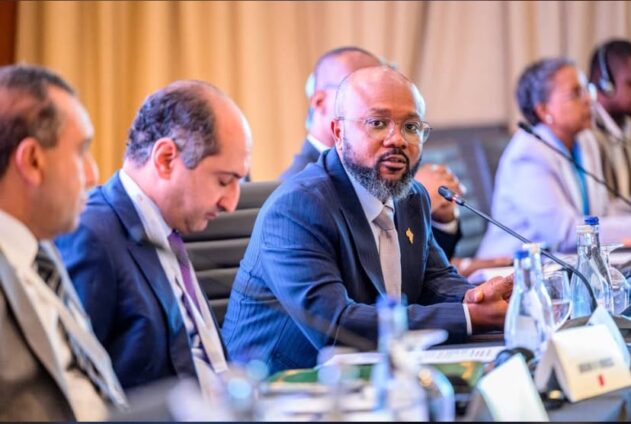
Speaking at the 2026 Morocco Cybersecurity Week in Rabat, Dr Agbeti called on African countries to strengthen cooperation between their cybersecurity agencies and foreign affairs ministries to improve responses to cyber threats.
He said collaboration should include sharing threat intelligence, conducting joint exercises and coordinating responses to cyber incidents affecting multiple countries.
“Cyber diplomacy has become an important instrument for advancing national interests, building trust and facilitating cooperation on issues affecting cyberspace,” he said.
Dr Agbeti said stronger international cooperation could help Ghanaian businesses and authorities respond more effectively to cybercrime originating abroad or involving criminal networks operating across multiple jurisdictions.
He cautioned, however, that international partnerships must deliver practical benefits rather than remain limited to agreements and declarations.
“International partnerships should respond to national priorities, support sustainable capacity development and equip our institutions to manage cybersecurity risks independently over time,” he said.
The CSA Director-General also called for stronger national cybersecurity institutions, better coordination among government agencies and increased investment in technical skills.
He urged African countries to deepen collaboration with regional organisations, development partners, universities and the private sector to strengthen their ability to prevent and respond to cyber incidents.
Dr Agbeti said the success of international cybersecurity cooperation should be measured by whether it improved incident response, information-sharing and the resilience of Africa’s digital systems.
He stressed that the continent’s digital future would depend not only on how quickly countries adopted new technologies, but also on how effectively they secured those technologies and built public trust in them.
Latest Stories
-
Old students of Peki SHS break ground to give 70-year-old school infrastructure a facelift
10 minutes -
Ablakwa facing ‘personal vendetta’ over refusal to grant Nana B service passport – Majority
11 minutes -
Every year, the lawyers come out, and so does the nonsense! – Ace Ankomah writes
23 minutes -
Digital transformation without an ownership culture can digitise poor service
27 minutes -
Fishing communities demand revocation of offshore gold exploration licences over livelihood concerns
30 minutes -
How Ghanaian tycoon Manoj Lakhiani built a water and plastics empire from a $25,000 loan
31 minutes -
GoldBod recovers GH¢38.7m of GH¢55.8m outstanding receivables; remainder subject to legal action – Sammy Gyamfi
38 minutes -
GEXIM Bank donates GH¢200,000 worth of medical equipment to Korle-Bu Child Health Department
41 minutes -
Majority rejects Minority’s claims over GH¢49.7m South Africa evacuation
43 minutes -
GEXIM urges banks to support refurbishment of Korle-Bu Teaching Hospital’s Child Health Department
46 minutes -
Don’t appoint your cheerleader as referee
50 minutes -
Ghana needs stronger international cooperation to fight cybercrime – CSA
52 minutes -
CSA warns of growing cyber threats as Ghana’s digital dependence increases
59 minutes -
USTED dean warns GAUA strike could disrupt Ghana’s restored academic calendar
1 hour -
Bechem meat processing factory 50% complete, set for March 2027 completion – Kwakye Ofosu
1 hour