

Audio By Carbonatix
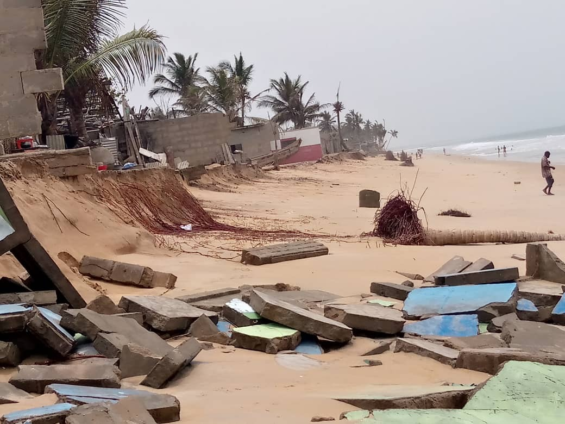
Ghana has placed coastal protection and ecological restoration at the centre of its environmental agenda, announcing a series of large-scale programmes aimed at restoring damaged ecosystems and shielding vulnerable communities from climate impacts.
Speaking during the seventh session of the United Nations Environment Assembly (UNEA-7) in Nairobi, the Minister for Lands and Natural Resources, Emmanuel Armah Kofi Buah, said coastal communities were already feeling the effects of environmental degradation and climate change.
“For us in Ghana, this reality is not distant. Fishermen watch the sea clean their shores. Farmers face failing rains. Families breathe polluted air.”
He explained that restoration efforts have become a key part of Ghana’s response. “Across our landscapes, reclamation programmes are restoring degraded soils, rebuilding river banks and bringing life back to damaged lands,” he said.
The Minister added that the government is also “strengthening coastal resilience through mangrove and lagoon restoration. We are shaping a fair and responsible model for critical minerals," he said.
On clean energy, the Minister highlighted a major new investment plan. “Ghana launched a $3.4 billion clean energy investment plan,” he said. The programme will expand solar and wind power, develop new mini-grids, and introduce solar irrigation systems for farmers.
He described it as “a defining step in West Africa’s clean energy future” and said it reflected President Mahama’s vision for “a resilient, innovative and inclusive transition”.
The Minister appealed to the international community, urging countries to match Ghana’s efforts with stronger global cooperation. “We call on this assembly to match national ambition with global responsibility. We call for climate finance that is accessible, predictable and fair. We call for a strong technological partnership that allows developing nations to act at the speed demanded by science.”
He added a further appeal for tighter environmental governance.“We call for strong global rules on pollution, especially plastics, chemicals, e-waste and hazardous waste.”
Addressing the growing importance of critical minerals, the Minister said, “We call for fairness in the critical minerals economy. Countries like Ghana must be supported to add value at home while protecting ecosystems and communities.”
He also mentioned the need for greater investment in measures that help countries withstand climate impacts. As he put it, “We call for serious investment in resilience from coastal protection to forest conservation.”
Latest Stories
-
ICU urges GHABA members to transform hairdressing skills into sustainable enterprises
13 minutes -
Ghana eyes stronger trade ties as Australia hosts multicultural trade and investment forum
23 minutes -
Margaret-Marie Krakue
25 minutes -
Ayariga announces plans for live broadcast of MMDAs’ meetings on local radio stations
29 minutes -
Mrs Anna Tackie
31 minutes -
Ghana links Afghan heroin and Brazilian cocaine to global drug markets – Global Organised Crime Index
38 minutes -
NHIA launches nationwide inter-school quiz to deepen students’ knowledge of NHIS
44 minutes -
Political protection could be masking Ghana’s cocaine trade – Global Organised Crime Index
49 minutes -
AFCON 2027Q: ‘We have to dissolve the GFA’ – Effia MP after Black Stars lose to Gambia
51 minutes -
NPP announces voting schedule and ID requirements for October 3 national elections
53 minutes -
Lupus can mimic HIV symptoms and damage kidneys if untreated – KNUST expert
56 minutes -
Focus on Sickle Cell Foundation seeks to introduce sickle cell education through comics in Ghanaian schools
1 hour -
NPP rewrites the campaign playbok as opposition reality shapes National Executive contest
1 hour -
Road safety education will fail without enforcement – NRSA boss
1 hour -
Daily Insight for CEOs: Finishing Q3 strong and entering Q4 with purpose
1 hour