

Audio By Carbonatix
Rwanda, Ghana, Gabon, and Burundi have been named as the only four African countries with over 20 per cent health insurance coverage levels.
The Deputy Executive Director of KEMRI-Wellcome Trust Research Programme, Professor Edwine Barasa, said that the overall health insurance coverage in Africa is low.
"Only four countries had coverage levels with any type of health insurance of above 20 per cent, Rwanda- 78%, Ghana- 58.2%, Gabon- 40.8% and Burundi- 22.0%", he disclosed.
He charged the health insurance authorities in sub-Saharan Africa (SSA) and other Low/Middle-Income Countries (LMICs) to embrace tax funding and mandatory contributory health insurance as a sustainable and feasible mechanism for mobilizing resources for the health sector.
Professor Barasa said this would help the African Continent to achieve Universal Health Coverage (UHC) and health security.
In a presentation highlighting health insurance performance in Africa at the maiden NHIA-WHO Regional Conference on financing UHC and health security on the theme “Overcoming Financial Barriers and Providing Financial Risk Protection”, Professor Barasa acknowledged that African countries were increasingly adopting mechanisms for the health sector.
He said the latest available demographic and health survey from 36 African countries as of 2021 indicated that low/middle-income countries in sub-Saharan Africa were increasingly turning to public contributory health insurance as a mechanism for removing financial barriers to access and extending financial risk protection to the population.
He added that exposure to media made the greatest contribution to the pro-rich distribution of health insurance coverage at 50.3 per cent, followed by socioeconomic status at 44.3 per cent and the level of education at 41.6 per cent.
He again said that only eight of the 36 countries examined had a mean level of insurance coverage with any type of health insurance of above 10 per cent; thus, health insurance coverage in sub-Saharan Africa is characterized by substantial income inequalities.
“Coverage of health insurance in sub-Saharan Africa is low and pro-rich. The four countries that had health insurance levels greater than 20 per cent were all characterized by substantial funding from tax revenues. The other study countries featured predominantly voluntary mechanisms.
In a context of high informality of labour markets, sub-Saharan Africa and other low/middle-income countries should rethink the role of voluntary contributory health insurance and instead embrace tax funding as a sustainable and feasible mechanism for mobilizing resources for the health sector," he stated.
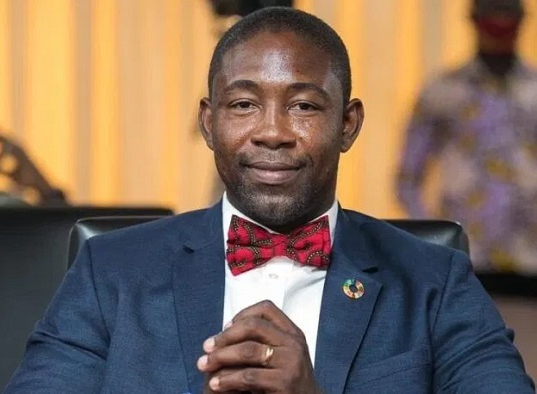
Meanwhile, Dr. Bernard Okoe Boye, the Chief Executive Officer of the National Health Insurance Authority (NHIA) touching on the history of health insurance financing in Ghana, said that the country moved from free healthcare in 1957 to the 70s and later to minimum token under the structural adjustment program from 1970s to 83.
Dr. Okoe Boye added that Ghana started to experience user fees (cash and carry) from 1983 to 1990s and it changed to cash and carry plus community health insurance from 1990 to 2003; thus, there was an Act of Parliament in 2003 to make it a national health insurance scheme.
He said the scheme which was being revised to Act 852 in 2012 was mainly financed by earmarked funds from social security and tax with enrolment being mandatory by law.
He disclosed that whereas membership coverage stood at 55 per cent of the population, the implicit benefit package covers about 95 per cent of disease conditions and the healthcare providers were contracted from public, private, and faith-based sectors.
Dr Okoe Boye said Ghana was poised to attain universal health coverage with three dimensions; reducing cost sharing, including other services to the scheme, and extending to the uninsured in the country.
Addressing the issue of inequalities, making it difficult to attain universal health coverage in the country, Professor Irene Akua Agyepong, Dodowa Health Research Centre of Research and Development, said there should be a strategy to ensure the remaining 45 per cent who are not enrolled in the scheme are registered to attain 100 per cent coverage since all Ghanaians contribute into it through the national health insurance levy.
“About half of Ghanaians are registered in the scheme but one of the things we did which is to our credit and we should not change is that the way we are funding the scheme is through the national health insurance levy."
"Ninety percent of the money that pays for the scheme is from the national health insurance levy. All of us in Ghana contribute to it. If you had bought anything in the shop, you would see it in the receipt, the national health insurance levy. If all of us in Ghana are contributing to that levy, then all of us in Ghana should benefit from the national health insurance but right now only about 55 percent have been enrolled," she said.
Professor Akua Agyepong therefore supported the need for a national dialogue to make the enrolment not voluntary but mandatory just as other schemes like the driver's license and Ghana Card almost force everyone to get it before driving or engaging in any transactions.
“We need to sit down as a nation and find the way to get 100 percent of Ghanaians enrolled in the scheme so that we are all paying the taxes and we are all benefitting from the scheme. It will help all of us because the aim is for all of us to be healthy”, she insisted.
Latest Stories
-
Mfantsipim must cultivate more business leaders, entrepreneurs – Nana Awuah
15 seconds -
MOBA must reduce reliance on donations to protect Mfantsipim’s future – Patrick Kittoe
1 minute -
GCB extends Customer Service Week into month-long customer engagement
2 minutes -
Africa risks widening inequality if it fails to build AI expertise – Kweku Awotwi
3 minutes -
Women’s Voices Matter Movement petitions Gender Ministry over women’s rights and development
4 minutes -
Huel ad banned for suggesting its products could replace all meals
16 minutes -
Global InfoAnalytics poll puts John Boadu, Justin Kodua and Titus Glover ahead in NPP executive race
2 hours -
Ghana to establish skills development university with $50m from German support package
2 hours -
Baffour Awuah under EOCO investigation over alleged financial loss and money laundering – Deputy AG
2 hours -
How healthy is Ghana’s health sector?
2 hours -
HACSA Tech4Girls graduates 80 young women with digital and technology skills
2 hours -
Arrest of Manhyia South MP should involve Parliament, not police station – Kpebu
3 hours -
Two Nigerians sentenced to 189 months in US prison over $2.4m cyber fraud
3 hours -
Cristiano Ronaldo leaves Portugal’s training camp after rift with Head Coach
3 hours -
Ghana Energy Awards opens nominations for landmark 10th anniversary edition
3 hours