

Audio By Carbonatix
Ghana’s informal cross‑border trade reached GH¢31 billion in the first three quarters of 2025, accounting for six per cent of total trade.
The figure exceeded formal trade with neighbouring countries, according to the Ghana Statistical Service (GSS) in its latest Informal Cross‑Border Trade Survey report released in Accra on Wednesday.
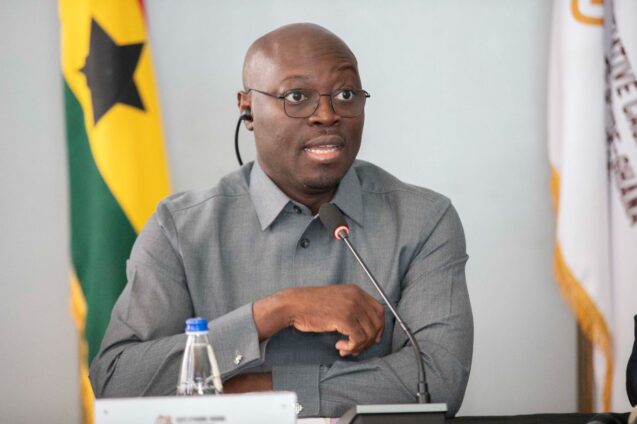
Presenting the report, Dr Alhassan Iddrisu, Government Statistician, said the GH¢31 billion recorded between January and September 2025 represented a significant contribution to the economy that had largely remained outside official trade statistics.
He noted that the value of informal trade with Togo, Burkina Faso and Côte d’Ivoire exceeded the GH¢20.1 billion recorded through formal channels over the same period.
“For years, informal cross‑border trade went almost entirely uncounted – a blind spot in Ghana’s official economy. Yet it feeds families, sustains jobs, and keeps markets stocked on both sides of the border,” he said.
The survey, covering 206 active border points across 10 regions, found that informal trade consistently accounted for about six per cent of Ghana’s total trade throughout the three quarters.
Trade with Togo remained overwhelmingly informal, rising from 70.5 per cent in the first quarter to 77.8 per cent by the third quarter.
More than three‑fifths of Ghana’s trade with Côte d’Ivoire was conducted informally, while trade with Burkina Faso shifted from predominantly formal in the first quarter to mostly informal in subsequent quarters.
The report highlighted changes in Ghana’s trade balance, noting that although the country maintained an overall surplus, the informal trade surplus narrowed sharply from GH¢665.3 million in the second quarter to GH¢49.3 million in the third quarter.
Ghana’s trade deficit with Togo widened steadily, increasing from GH¢725.5 million in the first quarter to GH¢994.1 million by the end of the third quarter.
Burkina Faso remained the leading destination for Ghana’s agricultural exports, accounting for nearly 63 per cent during the period.
Togo emerged as the dominant destination for fuel, food and beverage exports, while also serving as the primary source of most informal imports into Ghana.
Alcoholic beverages, soft drinks and energy drinks constituted about 30 per cent of Ghana’s informal food exports, while cooking oil remained the single largest informal food import.
Tricycles were identified as the most common means of transporting goods across borders, accounting for an average value of GH¢2 billion in exports and GH¢1.7 billion in imports each quarter.
At the regional level, Volta, North East, Northern and Oti regions consistently recorded trade deficits, importing more goods than they exported through informal channels.
A major concern highlighted was Ghana’s growing food trade deficit, which doubled from GH¢400 million in the first quarter to about GH¢800 million in the third quarter of 2025, suggesting increasing dependence on food imports.
“We need to target the goods that dominate flows such as rice, cooking oil, livestock and invest in local production and value chains in border regions,” Dr Iddrisu said.
The GSS said the findings underscored the need for policies that simplify registration and licensing for small‑scale traders, improve border infrastructure and strengthen data‑sharing among institutions.
It also called for sustained investment in domestic agricultural value chains and institutionalisation of informal trade monitoring to support policymaking and regional integration under the African Continental Free Trade Area (AfCFTA).
The survey was conducted with support from the Government of Ghana, the World Bank through the Harmonising and Improving Statistics in West Africa Project (HISWAP), and in collaboration with the Ghana Revenue Authority, Ghana Immigration Service and other stakeholders.
Latest Stories
-
Nestlé and NBA announce multi-year international marketing partnership
7 minutes -
Mahama sends condolences to Nigeria over plane crash that killed 25
7 minutes -
Our lifestyles may be killing us but our spatial planning is too
17 minutes -
12 arrested as police seize firearms, suspected drugs in Tamale
19 minutes -
Chamber of Mines challenges Reuters report on proposed mining law
26 minutes -
LA 2028: Black Queens take first leg advantage with 3-0 win over Mauritius
29 minutes -
UG academic calendar could collapse if GAUA strike extends into next week – Awandare
32 minutes -
Black Sherif partners with Telecel Ghana to promote Telecel Cash
35 minutes -
Nestlé Ghana expands Tema factory, raises evaporated milk production capacity
37 minutes -
Telecel Ghana launches CARE Month with customer rewards and community outreach
40 minutes -
Venezuela’s ex-leader Nicolás Maduro charged with conspiracy to commit torture
43 minutes -
Nestlé Ghana expansion shows Ghana’s 24-hour economy in action – Mahama
51 minutes -
Ghana to lead ECOWAS adoption of Accra Convention on cargo documents – Trade Minister
1 hour -
100-bed Atiwa Trauma Hospital to be commissioned in January 2027
1 hour -
Trade Minister launches Invest Ghana Summit, Ghana Club 100 to drive Ghana’s new economy
1 hour