

Audio By Carbonatix
At the launch of a menstrual hygiene management campaign, three under-aged girls shared their stories.
Sarah Baidoo (not her name), 15, and a junior high school student of Akyempim Basic School A said on her birthday this March, she saw her period for the first time.
Sarah always felt left out whenever the subject matter came up in class.
“Sometimes our madam comes to class to ask and I’ll be sitting there just like that because I haven’t menstruated yet.”
Akosua Aboagye (not her name), is in the same school and class as Sarah. She also started menstruating at 14.
“I was in school when it came. I was shocked so I just run home. I told my mum what had happened, and she told me I must stay away from boys”.
Mary Addo [not her name] is in class 6 at Akyempim D/A Model School and is 13 years.
She said, “my big sister menstruates. When I had my period for the first time, she was menstruating too. I hid and watched how she fixed her pad and copied her”.
These three girls share something in common. Whatever they learned about menstruation and menstrual hygiene either came from their teachers or other relatives, never their mothers and this holds sway for many girls across Ghana.
Menstruation still appears to be a taboo subject in some parts of the world such that it is treated hush.
Most mothers do not openly have conversations about the subject matter with their girl children and even when they do, it does not extend to menstrual hygiene management.
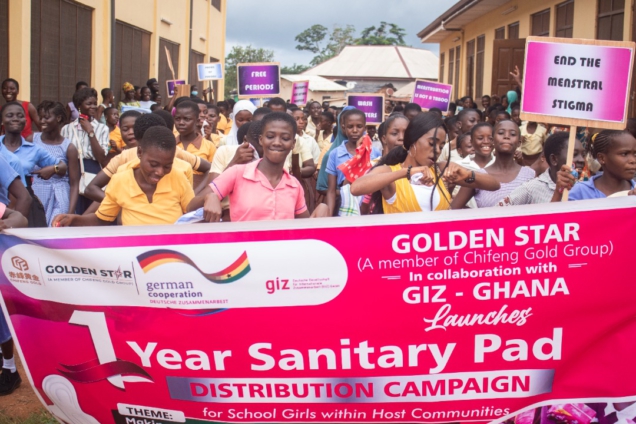
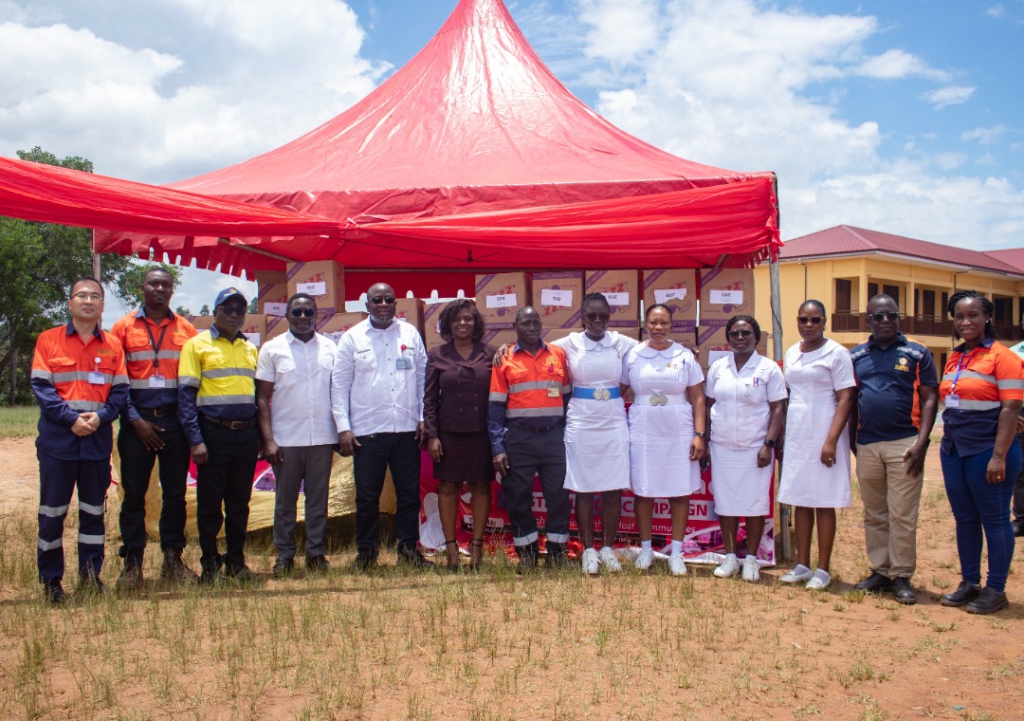
To contribute to the 2022 global theme of making menstruation a normal fact of life by 2030, Golden Star Resources (GSR) and the Deutsche Gesellschaft für Internationale Zusammenarbeit (GIZ) GmbH have launched a one-year campaign on menstrual hygiene management in the catchment communities of GSR.
The menstrual hygiene management campaign will promote access to evidence-based information about menstruation and menstrual hygiene products with the goal to prevent stigmatization against menstruating women and girls.
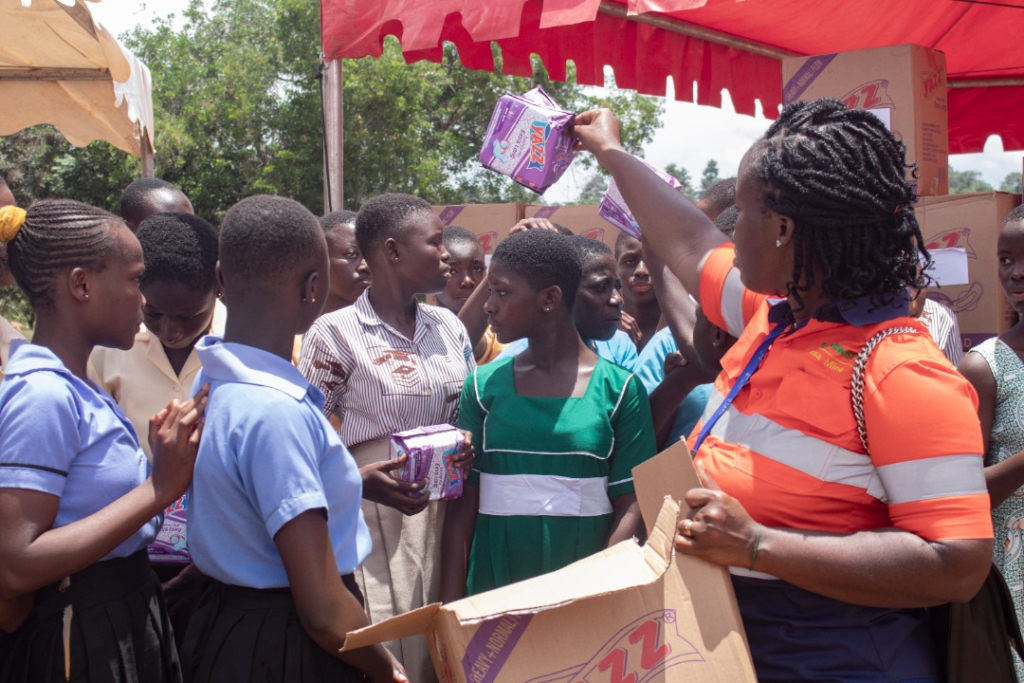
This campaign will run in 14 schools in the Wassa East district. Over the course of the campaign, 772 girls will benefit from almost 14,000 packs of sanitary pads to improve their menstrual hygiene management.
Sarah, Akosua and Mary are happy to be part of this campaign and for the next year, will not have to worry about where the next pad is coming from.
Part of the campaign strategy will see a team of health professionals travel to the schools to teach the girls basic grooming through periodic education on keeping clean during their periods and discarding sanitary pads properly.

The education will also target mothers, underscoring the importance of initiating conversations on menstruation and hygiene management with their girl children.
In her engagement with the school girls, the Wassa East Ag. Director of Health Services, Sheila Ampadu Okyere, offered some tips on menstrual management by asking the girls to change their pads frequently, use cotton sanitary pads, wash reusable pads properly, keep the vagina clean and seek gynecological help for any irritation around the vagina.
She called for action stating, “we need passionate leaders to popularize menstrual hygiene management and ensure it finds its way into policy documents as well as the sector plans and a tangible programme on the ground.”
Joining the call to end period poverty, the Managing Director of Golden Star Resources, Shadrack Sowah, re-echoed appeals for the exclusion of taxes on sanitary pads.
The menstrual hygiene management campaign is under the “COVID-19 Pandemic Management in times of COVID-19 and beyond”, a GIZ jointly implemented the project with Golden Star Resources, one of several private partners and funded through the develoPPP programme on behalf of the German Federal Ministry of Economic Cooperation and Development (BMZ).
The objective of the project is to increase the economic and health resilience within the catchment communities of the private partners in the mining industry to ensure they are better prepared to withstand future pandemics.
This project started in September 2021 and hopes to have supported the catchment communities of its partners with enhanced access to healthcare through Mass NHIS registration, extensive health screening exercises for various diseases, training of selected health personnel and campaign on maternal health by 2024.
Latest Stories
-
Real-Time VAT on cross-border digital services – not a new tax and does not violate double taxation principle
27 minutes -
Digitalisation, AI key to Ghana’s tourism transformation – GHATOF
39 minutes -
Stronger GTA-private sector partnership needed to grow tourism – GHATOF
49 minutes -
Amazon eyes Ghana for broadband expansion after talks with Mahama
2 hours -
National Investment Quiz 2026: Six schools qualify for quarter-finals
2 hours -
‘Do not let Russia pay for its madness with lives of your people’ – Zelensky to Ghana, 46 other countries
2 hours -
6,079 promotion cases fully processed and paid – CAGD says amid nationwide teachers’ strike
2 hours -
Teacher unions to meet government Monday over nationwide strike
3 hours -
Photo story: Republic Bank-JoyNews Habitat Fair clinic wraps up after three days of housing solutions, expert engagement
3 hours -
National Peace Council urges investment in youth to sustain Ghana’s peace
3 hours -
Afenyo-Markin urges youth to speak up against injustice
3 hours -
CAF annuls Edo Queens victory, orders WAFU B final to resume from extra time
4 hours -
Interior Minister urges traditional authorities to enforce anti-bushfire bye-laws
4 hours -
3rd Republic Bank-JoyNews Habitat Fair Clinic ends on a high note after three days of strong patronage
4 hours -
Ten climbers missing after avalanche hits Himalayan base camp
4 hours