

Audio By Carbonatix
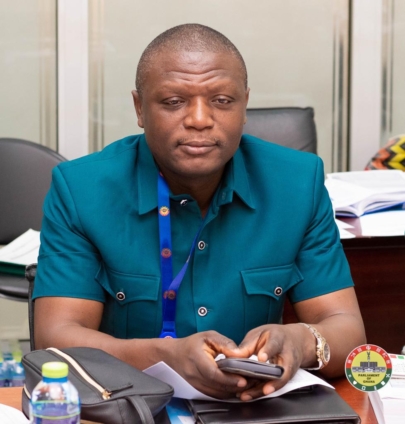
The Minister of Sports and Recreation-designate, Kofi Adams, has called for increased investment in grassroots sports to ensure the development of young talent across Ghana.
Reflecting on his childhood experiences, Adams highlighted how, despite limited opportunities, school sports were taken seriously and played a vital role in community life.
"At the time we grew up, school sports were something that was taken a bit seriously, even though it didn't send people too far. We used to really enjoy it, and I remember that in the village where I was born and grew up, we didn't even do the inter-school at one place," he said on JoySports.
He recalled how multiple communities came together for inter-school competitions, with only pupils from Class 4 and above qualifying to travel to the next location. For younger students, reaching Class 4 was a milestone that granted them the opportunity to participate in these much-anticipated sporting events.
"So, when you're in Class 2 or 3, you just have to keep praying to get to Class 4 or Stage, as we used to call it then, so that you can qualify to also travel to the next town that will be hosting the inter-schools because it was a joy of the moment."
However, despite the enthusiasm for sports, the conditions were poor. Athletes competed on uneven pitches, often running barefoot on tracks riddled with holes. Adams noted that, while the quality of sports infrastructure was lacking, the passion for participation never wavered.
"As bad as the pitches were, we enjoyed being there. Athletes were running barefooted. Sometimes, the tracks were undulating, with holes, and you'll run and fall—not because you don't know how to run, but because of the bad nature of the surface. But we did it for the fun of it, much more like the recreation of it," he explained.
He lamented the fact that only a few people had the opportunity to continue sports at the secondary school level due to the lack of proper structures for talent development. Adams, therefore, stressed the urgent need for government intervention to nurture young athletes from an early age.
"A few people went to secondary schools and continued, but it tells me one thing: as a country, we must invest heavily in grassroots sports, and at least we should make sure that we have standard facilities in communities and districts so that the potential—the talents that we have—can be unearthed. And when they are unearthed, we should have a place where we can assemble them so that they can be given the necessary training, which must start very early."
His call comes at a time when Ghana struggles to produce world-class athletes consistently, largely due to the absence of structured grassroots sports development programmes. With investment in facilities, training, and talent identification, Adams believes the country can unlock its sporting potential and create opportunities for young athletes to excel on the global stage.
The lawmaker’s remarks serve as a reminder that sports development must start at the grassroots level, where raw talent can be harnessed and nurtured for the future.
Latest Stories
-
Yaw Ampofo Ankrah hasn’t taken or received any money to facilitate visas – Lawyer insists
17 minutes -
World Cup visa scandal: Senyo Hosi urges focus on constitutional accountability
17 minutes -
La Beach demolition: Senyo Hosi condemns lack of consultation
28 minutes -
Russian glide bomb attack on Zaporizhzhia kills at least 15 people
43 minutes -
Jinapor warns underperforming energy sector CEOs of consequences, says no protection for failure
44 minutes -
Fire destroys head of tipper truck on Lower Volta Bridge
49 minutes -
Palmer signs new Chelsea contract until 2034
50 minutes -
World Cup visa scandal: Mahama will act on corruption allegations – Abass Nurudeen
52 minutes -
Abass Nurudeen accuses Minority of ‘scandal scavenging’ over World Cup visa controversy
54 minutes -
US Embassy recognised NSA, GFA and GTA as separate entities for visa applications – Sports Minister’s aide
1 hour -
Only 30% of Ghanaian teachers satisfied with their jobs – CAPCOE data reveals
1 hour -
Communities affected by construction of Akosombo Dam urge government to speed up compensation process
2 hours -
World Cup visa scandal: Sports Ministry not shielding anyone – Sports Minister’s special aide
2 hours -
World Cup visa scandal: Over 30 people misrepresented as GTA board members to US Embassy – Vincent Assafuah alleges
2 hours -
Fire destroys wooden structure near Yesu Mo Villa at Bush Road
2 hours