

Audio By Carbonatix
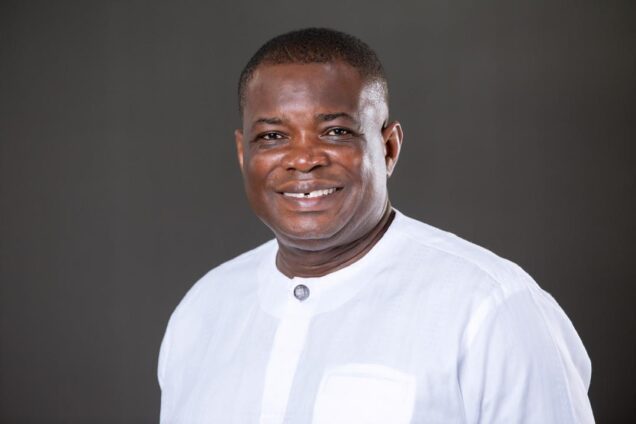
The Minister for Roads and Highways, Kwame Governs Agbodza, has firmly rejected claims that the government’s flagship Big Push Infrastructure Programme is driven by sole sourcing, describing such assertions as “mischievous” and inconsistent with the facts presented to Parliament.
Delivering an update to Parliament on Tuesday, March 24, the minister stated unequivocally that all contracts under the Big Push programme have been awarded in strict compliance with the Public Procurement Act and its regulations.
He stressed that procurement processes remain transparent, with full contractual details publicly accessible on the ministry’s website.
The minister revealed that, contrary to claims of widespread sole sourcing, only 44 percent of major contracts, including those under the Big Push, were awarded through sole sourcing, while over 400 contracts have been procured through open competitive tendering.
“It is therefore misleading for any right-thinking person to conclude that the Ministry only relies on sole sourcing,” he told the House.
He explained that given the scale and urgency of addressing Ghana’s deteriorated road network, a mix of procurement methods was deliberately adopted within the bounds of the law to accelerate delivery and prevent cost escalations. According to him, strict adherence to lengthy procurement processes would have significantly delayed critical projects and worsened economic hardship.
The minister further clarified that 23 major road projects worth GHS 14.88 billion, originally awarded under the previous administration but abandoned due to lack of funding, were incorporated into the Big Push programme and given new financing. These include key national projects such as the Suame Interchange, Ofankor Nsawam Road, and the Adenta Dodowa Road. He noted that many of these projects would have remained stalled without the expedited approach adopted under the programme.
On the structure of the programme, the minister disclosed that the Big Push focuses on 12 major economic corridors, broken into 54 lots to enhance competition and speed up execution. Currently, over 2,000 kilometres of roads across all 16 regions are undergoing reconstruction or upgrading.
Addressing concerns about value for money, the minister outlined multiple safeguards instituted by the government. These include in-house surveys, design, and costing by state agencies, saving billions of cedis, followed by independent value for money assessments of contractor proposals. He added that stricter monitoring systems have been implemented to ensure payments are tied strictly to work completed.
“We have established a system where no contractor will be paid without delivering measurable work,” he stated, adding that collaboration with the Ghana Institution of Surveyors is underway to strengthen independent cost verification capacity.
The minister also dismissed criticisms based on simplistic “cost per kilometre” comparisons, noting that such analyses ignore variations in project scope, engineering complexity, and associated infrastructure such as interchanges and bridges.
He further emphasised that the Big Push programme operates under continuous parliamentary oversight, with regular questioning, committee engagements, and independent validation of project costs by professional bodies.
Mr Agbodza contrasted the current approach with the previous administration, stating that many projects inherited in 2024 lacked commitment, authorisation and were not subjected to competitive procurement processes, contributing to arrears exceeding GHS 40 billion. He disclosed that the government has since paid over GHS 11 billion to clear part of these debts, the largest arrears settlement in recent history.
Reaffirming the government's position, the Minister declared, "There is no abuse of sole sourcing. It is the exception, not the norm. No procurement law has been breached, and there is no scandal.”
He urged Parliament and the public to support the programme, warning against attempts to undermine what he described as a transformative national intervention aimed at improving roads, reducing transport costs, creating jobs, and boosting economic activity across all regions.
“The Big Push is delivering the infrastructure Ghanaians demanded,” he said. “We must not allow misinformation to derail it.”
Latest Stories
-
No preacher has the right to impose beliefs on bus passengers – Kwesi Pratt Jr backs preaching ban
1 minute -
Africa Maritime Security Forum opens in Accra with call for stronger continental cooperation
2 minutes -
Techiman North MP fulfills promise with new CHPS Compound in Kokoago
12 minutes -
Enterprise Trustees, Sinapi Aba launch ‘Asetenapa Plan’ to promote retirement savings among informal workers
14 minutes -
Gov’t working to ensure GAUA strike is called off by October 16 – Haruna Iddrisu
19 minutes -
KAIPTC Commandant calls for continent-wide strategy to tackle Africa’s maritime security threats
31 minutes -
GRIDCo investigates Mallam substation fire as power restoration continues in Accra
31 minutes -
20% digital tax is not E-Levy – GRA boss
42 minutes -
Defence Minister calls for intelligence-sharing and regional cooperation to tackle maritime insecurity
46 minutes -
Afenyo-Markin failed to comply with procedural rules in defamation suit – Sammy Gyamfi’s lawyers
56 minutes -
GRA recovered GH¢1.3bn out of about GH¢1.4 bn unpaid VAT from ECG – Anthony Sarpong
59 minutes -
KMA to extend daily toll collection to nights and weekends
1 hour -
Ghana secures second consecutive term on UN Human Rights Council
1 hour -
KATH Catheterisation lab targets December completion amid specialist staffing concerns
1 hour -
Government working to address economic challenges driving youth into galamsey – Mahama
1 hour