

Audio By Carbonatix
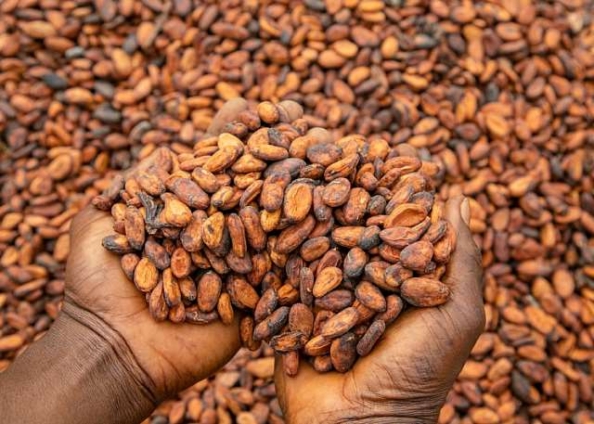
Government has released GH¢855 million to settle arrears owed to cocoa farmers after a prolonged payment crisis that left many producers unpaid for months, despite delivering their produce to licensed buying companies.
The payment is part of an emergency intervention to stabilise the cocoa sector and restore confidence among farmers and buying companies.
In the wake of the crisis, the government has also announced a broad package of reforms aimed at restructuring the industry and putting the Ghana Cocoa Board (COCOBOD) on a more sustainable financial footing.
These reforms include a controversial reduction of more than GH¢1,000 in the producer price per bag, a move that has sparked debate across the sector.
Speaking to journalists in Parliament of Ghana, Chairman of the Finance Committee, Isaac Adongo, defended the measures, describing them as difficult but necessary steps to rescue a sector he said has been under severe financial strain for years.
“The bottom line of all that has happened is that some amounts were owed to cocoa farmers, and the government took a decision to repay those monies so that the cocoa buying companies can settle the outstanding obligations,” he said.
“I’m happy to report that this morning, the government has released 855 million cedis for that purpose. But we have also decided to introduce a number of reforms that are long overdue.
"The cocoa sector has been under enormous strain over the years, and we have been pretending to service cocoa farmers while destroying the very vehicle we use to support them.”
Mr Adongo also blamed the crisis on the previous New Patriotic Party (NPP) administration, rejecting claims that responsibility lies with the current government.
According to him, COCOBOD entered 2025 heavily indebted and financially distressed.
“COCOBOD entered 2025 with about GH¢17.8 billion in loans, plus significant operational liabilities. When you add everything together, the exposure was over GH¢60 billion. That vehicle could not be sustainable and had to be addressed,” he said.
“You have 60 billion of somebody’s money, it’s not free money. You are not paying, and yet you are saying we should continue to go and borrow more.”
He maintained that the release of funds to farmers, coupled with structural reforms in pricing, financing and operations, is intended to stabilise the sector, protect farmers in the long term, and rebuild COCOBOD into a financially viable institution capable of sustaining Ghana’s cocoa economy.
Latest Stories
-
MamaCare CEO warns unresolved conflicts among health workers could undermine maternal and neonatal care
3 minutes -
Health professionals urged to translate medical knowledge into practice to save mothers
10 minutes -
Conflicts among care providers linked to maternal, neonatal deaths – Expert
2 hours -
GIS marks 10th TIME conference, champions improved teaching practices
2 hours -
BRICS Or Balance? What Ghana’s bid really means
2 hours -
GPRTU wants full TRAFFITECH-GH implementation to start in 2027
3 hours -
Mahama announces plans to import electric wheelchairs for PWDs
3 hours -
KGL U17 Colts 2026: Western beat Prempeh Elite Academy to set up final final with Greater Accra Region
3 hours -
Late Solanke strike salvages 10-man Spurs draw at Man United
3 hours -
Gender Ministry to monitor welfare of Nana Akua Addo’s children amid domestic violence case
3 hours -
Benedict Okyere Yeboah: Ghana’s football problem goes beyond sacking a coach
3 hours -
GPL 2026/27: Darkwah Wiafe’s winner sees All Blacks beat Kotoko
4 hours -
ITF World Tour : Patel Wins Boys’ Singles Final at J100 Accra
4 hours -
Ghana must pursue BRICS partnership if it brings economic benefits – Kpebu
4 hours -
Success and Wright Claims J100 Accra Girls’ Doubles Championship
4 hours