

Audio By Carbonatix
Over 120 toilet facilities are expected to be handed over to public basic schools in the Greater Kumasi Metropolitan Area in November this year.
The initiative under the Sanitation and Water Project is to improve access to toilet facilities at the over 1,000 public primary schools in the region.
Accessibility to convenient toilet facilities still remains elusive to many communities across the country, especially in schools.

A 2017 report by the Ghana Education Service showed more than 7,400 public basic schools out of the over 20,000 lacked toilet facilities.
Out of the number, nearly 1,500 schools in the Ashanti region are without toilet facilities.
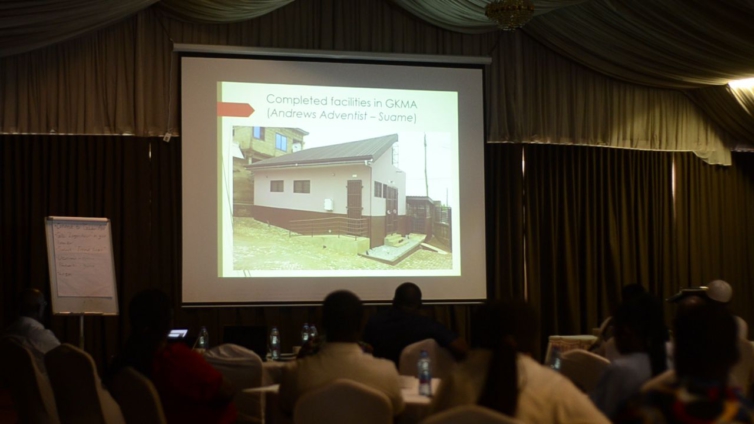
Under the Greater Kumasi Metropolitan Area – Sanitation and Water project, over 120 toilet facilities have been built for public basic schools in the metropolis awaiting commissioning in November.
The Project Coordinator of GAMA-GKMA Sanitation and Water Project, Ing. George Asiedu emphasised the need for accessing an improved toilet facility.

“If we are to achieve SDG 6, we must ensure that everyone has access to improved toilet facilities. We are working to provide household facilities to everyone,” he said.
Mr. Asiedu says the new facilities have user-friendly features for the physically challenged among other consumables to support girls during menstruation.
“The new toilet facilities have been made friendly for everyone including people with disabilities. At least 15-seater facilities have been built for each of the schools. Ladies can conveniently change their pads during their monthly flows,” he said.
To ensure the sustainability and maintenance of the facility, the Ministry of Sanitation and Water Resources held a three-day stakeholder forum with School Management Committees and Parent-Teacher Associations in the metropolis.

Programme Manager at the Sanitation Ministry, Charlotte Adjei advises a strict adherence to maintaining the facilities.
“It is important that school managers keep these facilities in good shape. This would help the girl child to have a sound mind for education during their periods. If these places aren’t kept well, the girls cannot access them,” she said.
The World Bank-funded initiative is aimed at providing household and institutional toilet facilities.
Latest Stories
-
Government pledges to pay striking teachers as payment dispute is resolved
2 minutes -
GTEC flags over 100 tertiary institutions as unrecognised
13 minutes -
Agric Committee chair commends NAFCO for turnaround from GH¢20m debt to GH¢96m profit
18 minutes -
NPP: Judicial office requires judges to surrender some personal freedoms
23 minutes -
Senyo Hosi: Ghana missed its chance to end galamsey under Akufo-Addo
29 minutes -
Okaikwei Central MP alleges Ghana was close to settling Tullow tax dispute for $150m
31 minutes -
Patrick Boamah credits Godfred Dame for Ghana’s victory in $400m Tullow tax arbitration
34 minutes -
Dr Jasaw calls for National Agriculture Development Fund to accelerate food systems transformation
38 minutes -
Armah-Kofi Buah honoured for developmental initiatives in Aiyinasi-North
42 minutes -
Agbodza didn’t accuse Adom Kyei’s church of blocking road — Spokesperson
48 minutes -
Tema native petitions EOCO over GH¢889,000 payment
48 minutes -
VIP Jeoun Service opens new terminal in Ho, expands transport network
52 minutes -
Mahama orders immediate action to get striking teachers back to class
56 minutes -
Tema Fire Commander calls for private-sector support
56 minutes -
Adaklu is not a safe haven for environmental degradation – DCE
60 minutes