

Audio By Carbonatix
Gunmen in Nigeria kidnapped around 100 people, including women and children, in two-weekend attacks in Kaduna state, residents and police said on Monday.
Kidnappings by criminal gangs demanding ransoms have become an almost daily occurrence in Nigeria, especially in the north, with authorities seemingly powerless to stop them.
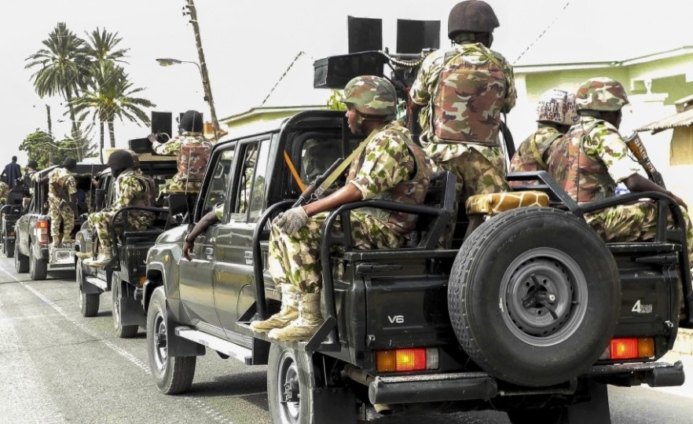
Kaduna police spokesperson Mansur Hassan confirmed the incident in Kajuru Station village on Sunday night but could not give a figure on those missing. He said security agents had been deployed to rescue the villagers.
Tanko Wada Sarkin, a village head, said 87 people were taken.
"We have so far recorded the return of five people back home who fled through the bush. This attack makes it five times that these bandits are attacking this community" he told Reuters by phone.
Residents said armed men dressed in army uniform arrived in the village undetected because they had parked their motorbikes away from the village.
Aruwa Yau, another resident, said he was captured but released by the gunmen because he struggled to walk due to poor health. He was receiving treatment at a local government clinic, he said.
Gunmen are known to force-march their victims deep into the bush, holding them for up to months while awaiting ransom payments.
The abductions come after an armed gang seized 286 students and staff from a school in early March in Kuriga in Kaduna state and gunmen seized 61 people on March 12 in Buda community.
In Dogon Noma, another community in Kajuru local government area, gunmen abducted 16 people from their homes in an attack on Saturday night, residents said.
Local resident Daniel Shamang said they had not heard anything from the abductors or the missing villagers.
Kidnappings at schools in Nigeria were first carried out by jihadist group Boko Haram, who seized more than 200 students from a girls school in Chibok in Borno state a decade ago.
But the tactic has since been adopted by criminal gangs without any ideological affiliation seeking ransom payments.
The kidnappings are tearing apart families and communities who have to pool their savings to pay the ransoms, often forcing them to sell prized possessions like land, cattle and grain to secure the release of captured loved ones.
Latest Stories
-
Diaspora Nasara Caucus congratulates Mohammed Ali Suraj, new NPP executives
48 minutes -
Dr Antwi-Boasiako’s cybersecurity book showcased at UN crime prevention congress
50 minutes -
We will empower the grassroots and protect every vote – NPP’s 1st Vice Chair Kojo Bamba
60 minutes -
I do not see myself as better than anyone – NPP’s 1st Vice Chair Kojo Bamba
1 hour -
Police blur the line between invitations and arrests – Reindorf Twumasi Ankrah
2 hours -
Turning invitations into arrests is making citizens reluctant to assist police – Twumasi Ankrah
3 hours -
The Traffitech-GH SMS spot-fine system: The good, the sad, and the funny – Bright Simons writes
3 hours -
Hawa Koomson pledges experienced and mature leadership of NPP women’s wing
4 hours -
Young woman found dead at Kasoa Peace Town
4 hours -
Playback: The Law examined lawful arrest in Ghana
5 hours -
Mahama urges African governments to treat healthcare as an investment, not budget cost
5 hours -
Bawumia congratulates John Boadu and new NPP executives, pledges support ahead of 2028
6 hours -
Aksa Energy delegation pays courtesy call on GRA Commissioner-General
6 hours -
‘No talent should be left out’ – Bawumia pledges inclusive NPP campaign for 2028
6 hours -
Prof. Mike Oquaye recounts how he blocked the Special Prosecutor’s attempt to arrest Bawku Central MP
6 hours