

Audio By Carbonatix
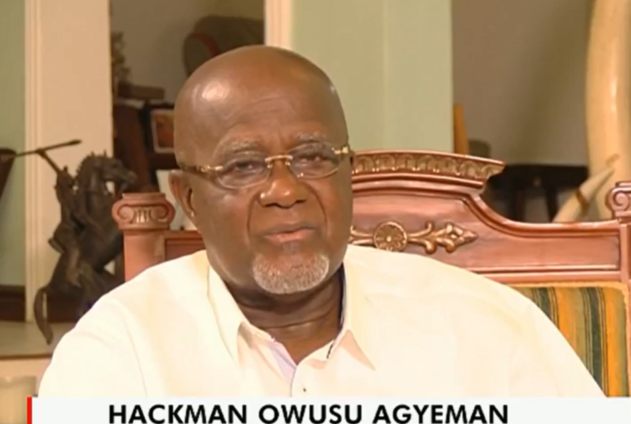
The Chairman of the New Patriotic Party’s (NPP) Council of Elders, Hackman Owusu-Agyeman, has called for a review of the party’s internal rules to reduce the influence of money in its primaries, warning that excessive monetisation threatens the party’s democratic foundations.
Speaking on JoyNews Desk on Monday, February 2, Mr Owusu-Agyeman said increasing the size of the electoral college could significantly reduce practices such as inducement, which he described as inconsistent with democratic principles.
According to him, expanding the electoral college remains central to addressing the problem, although recent attempts have faced challenges due to changes in party membership over time.
“We tried to expand the electoral college, but because many members have passed on over the years, the numbers remained almost the same,” he explained.
Mr Owusu-Agyeman stressed that political leadership should not be determined by financial strength, cautioning against systems that allow a few individuals with money to dominate party decisions.
“It should not be about who has money. If leadership is reduced to just a handful of people, then that is not democracy,” he said.
He argued that reforms must be gradual but deliberate, pointing to practices in other jurisdictions where party elders assess the competence and capacity of aspirants before opening the process to a wider electorate.
“They look at capability and capacity before the process goes to the wider group. That helps protect the party from undue influence,” he stated.
Mr Owusu-Agyeman warned that unchecked monetisation could ultimately cost the party its independence.
“Before you realise, the party has been bought over, and we do not intend to sell our party,” he said.
He added that although reforms may come at a cost, redirecting resources towards empowering party supporters would deliver long-term benefits.
“If the money spent is redirected to the people, it can help promote self-reliance and strengthen the party,” he concluded.
Latest Stories
-
UTAG-UG threatens strike on October 19 over unpaid allowance
11 seconds -
Let The Constitution direct Chieftaincy to deliver “All Development Is Local”
1 hour -
John Jinapor outlines renewable energy, nuclear power priorities for 2027
2 hours -
Ghana explores centre of excellence for hearing, communication and cochlear implant care
3 hours -
Schizophrenia-related disorders lead mental health cases recorded in Ghana
3 hours -
Dutch authorities enlist Ghana in hunt for fugitive drug lord Bolle Jos
3 hours -
Ghana housing finance conference adopts communiqué to improve affordable housing access
8 hours -
Special Initiatives Minister urges Wa Technical Institute to enrol more girls as EU-backed solar training lab opens
8 hours -
In the matter of my first year at the Bar
8 hours -
ActionAid Ghana calls for an end to child marriage, greater investment in girls’ rights
8 hours -
Newsfile to tackle World Cup visa scandal, beach demolitions, education strikes, BRICS bid
9 hours -
UK-Ghana Trade & Investment Summit: Trade Resource Centre to help businesses maximise UK-Ghana trade opportunities
9 hours -
Embassy of Denmark celebrates World Maritime Day
9 hours -
Linking LEAP to productive inclusion could cut extreme poverty by 2030 – UNICEF
10 hours -
Trade Ministry backs use of creative arts to rehabilitate prison inmates
10 hours