

Audio By Carbonatix
A new research finding warns that Ghana cannot afford to delay the urgent need for stricter regulation of artisanal mining, improved environmental intelligence, and direct community health interventions, as the citizenry remains exposed to a cocktail of toxic metals.
The year-long scientific study has uncovered alarming levels of mercury, arsenic, and other toxic metals in Ghana’s small-scale gold mining (ASGM) areas, raising major public health and environmental concerns.
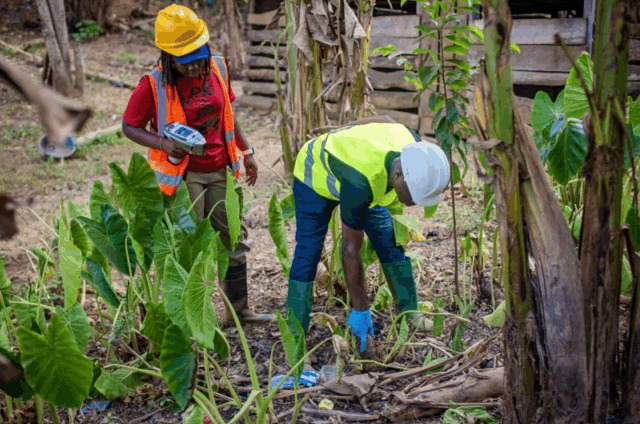
The Mercury and Other Heavy Metals Impact Assessment (August 2024 – September 2025), jointly conducted by Pure Earth and the Environmental Protection Agency (EPA), examined soil, water, air, crops, and fish in mining communities across six regions: Ashanti, Western, Western North, Eastern, Central, and Savannah.
Using the Toxic Sites Identification Programme (TSIP) methodology, researchers sampled more than a dozen sites, including Konongo Zongo, Prestea, Asiakwa, Osino, Bibiani, Dakrupe, and Wassa Kayianko.
Laboratory testing revealed widespread contamination, with several hotspots far exceeding both Ghanaian and international safety thresholds.
Mercury Contamination
The Ashanti Region’s Konongo Zongo recorded the highest soil mercury levels, with a mean concentration of 56.4 parts per million (ppm) — more than 560% above the safe guideline for playground soil (10 ppm) — and a maximum reading of 1,342 ppm.
In the Western Region, air mercury levels at Wassa Kayianko averaged 1.84 µg/m³, exceeding Ghana’s permissible standard of 1 µg/m³, with peak measurements reaching an extreme 150 µg/m³, linked to gold smelting.
While mercury in fish samples remained below World Health Organization (WHO) limits, experts warned that the limited sample size prevented conclusive safety assessments.
Lead and Arsenic Risks
The study also highlighted severe arsenic contamination. Konongo Zongo again stood out, with mean soil arsenic levels of 1,066 ppm and peaks as high as 10,060 ppm — about 4,200% above international safety thresholds.
Arsenic levels in water at Konongo Odumase and Nyamebekyere were also dangerously elevated, with one sample recording 3.3 mg/L, more than 300 times Ghana’s drinking water limit of 0.01 mg/L.
Lead was found at worrying concentrations in both fish and crops. In Konongo Zongo, lead in fish reached 1.7 mg/kg, surpassing the WHO’s food safety guideline of 0.3 mg/kg. At Akwaboso in the Central Region, fish samples contained even higher levels, up to 2.8 mg/kg.
Pumpkin leaves tested in the Western North Region also recorded lead concentrations of 3.1 mg/kg, well above the accepted 0.1 mg/kg threshold.
Public Health Concerns
The researchers concluded that communities in mining zones face serious health risks from multiple exposure pathways — contaminated soil, unsafe water, polluted air, and toxic food chains. Children, farmers, and miners are particularly vulnerable.
The report warns that long-term exposure could increase risks of cancer, neurological disorders, kidney damage, and developmental problems in children.
Recommendations
To address the crisis, the study recommends:
- Continuous Monitoring: Establishing a robust system to track toxic metals across all environmental media, with seasonal data collection.
- Pilot Remediation Projects: Using low-cost technologies such as phytoremediation (hyperaccumulator plants) and introducing mercury-capturing retorts in mining zones.
- Public Health Campaigns: Educating miners and local residents about the dangers of mercury and lead through community theatre, radio, and health outreach.
- National Task Force: Setting up an ASGM Environmental Response Task Force, involving the EPA, Ministry of Health, Ministry of Food and Agriculture, academia, and donor partners.
- Policy Alignment: Linking interventions to the Sustainable Development Goals (SDGs), particularly health (SDG 3), clean water (SDG 6), sustainable consumption (SDG 12), and life on land (SDG 15).
Latest Stories
-
Power restoration fault suspected in Kumasi Central Market fire
3 hours -
The 7-foot giant of Ngleshie Amanfro: Seven-foot Ghanaian Ephraim Saawa dreams of joining the national basketball team
4 hours -
Government promises support for Kumasi Central Market fire victims
4 hours -
Vibes The Movie: Big Ghun’s Ghanaian film earns five nominations at 2026 REFFA
4 hours -
MamaCare CEO warns unresolved conflicts among health workers could undermine maternal and neonatal care
5 hours -
Health professionals urged to translate medical knowledge into practice to save mothers
5 hours -
Conflicts among care providers linked to maternal, neonatal deaths – Expert
6 hours -
GIS marks 10th TIME conference, champions improved teaching practices
7 hours -
BRICS Or Balance? What Ghana’s bid really means
7 hours -
GPRTU wants full TRAFFITECH-GH implementation to start in 2027
7 hours -
Mahama announces plans to import electric wheelchairs for PWDs
7 hours -
KGL U17 Colts 2026: Western beat Prempeh Elite Academy to set up final final with Greater Accra Region
8 hours -
Late Solanke strike salvages 10-man Spurs draw at Man United
8 hours -
Gender Ministry to monitor welfare of Nana Akua Addo’s children amid domestic violence case
8 hours -
Benedict Okyere Yeboah: Ghana’s football problem goes beyond sacking a coach
8 hours