

Audio By Carbonatix
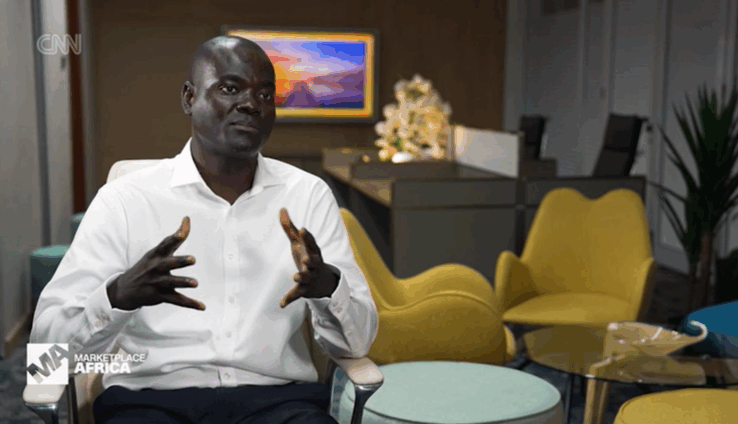
The Chief Executive Officer of Hubtel, Alex Bram, has revealed that the Ghanaian fintech company now generates over $110 million in annual revenue, a figure that highlights the rapid growth of digital payments in the country.
Speaking in an interview with CNN, Mr Bram attributed the company’s success to its wide customer base, spanning from informal micro-businesses to major corporate institutions.
Hubtel offers businesses the ability to accept payments across multiple channels, including mobile money, bank cards, digital wallets, and traditional cash.
“Today, we go to businesses and help them with payments. There are a lot of businesses that need to collect from different sources,” he said.
“We serve a wide range of customers from a woman roasting corn or plantain to large firms in utilities, gaming, entertainment, telecoms, and banking.”
Founded in 2005, Hubtel began as a bulk SMS service provider, leveraging Ghana’s early adoption of mobile telephony.
Mr Bram explained that the company’s initial focus was on helping businesses communicate more effectively with their customers.
As the SMS market matured, Hubtel expanded into mobile content and value-added services, eventually evolving into one of Ghana’s leading fintech firms.
“Our story is largely woven into the story of Ghana,” he noted. “Just a decade before we started, Ghana was one of the first African countries to open up to mobile telephony. That gave companies like us the opportunity to build systems, put up towers and create the momentum to succeed.”
The company’s impressive revenue figures, however, have not come without challenges particularly in navigating relationships with government and public service providers.
Mr Bram highlighted an ongoing debate about whether the company should apply the same payment terms to government clients as it does to private sector ones.
“When we serve small businesses, we charge upfront. There’s a debate about whether we should do the same with government. Our opinion is, yes,” he said.
“Unfortunately, we’ve also been heavily misunderstood by the public about the services we provide to some large public service providers,” he noted.
Despite such hurdles, Hubtel’s CEO remains confident in the firm’s future, stating that the Ghanaian market still offers considerable room for growth.
“Even with the number of fintechs in the country, we still process just about 12% of the volume of transactions,” Bram noted.
“That represents only around 2% of the total value of money moving through the economy so you can see, there’s still a lot of opportunity.”
Latest Stories
-
Mahama urges African governments to treat healthcare as an investment, not budget cost
34 minutes -
Bawumia congratulates John Boadu and new NPP executives, pledges support ahead of 2028
35 minutes -
‘No talent should be left out’ – Bawumia pledges inclusive NPP campaign for 2028
41 minutes -
Prof. Mike Oquaye recounts how he blocked Special Prosecutor’s attempt to arrest Bawku Central MP
57 minutes -
Make health sovereignty a priority for Africa – Mahama
1 hour -
Dorimon Naa, Wa West DCE lead massive clean-up exercise; threaten sanctions against recalcitrant residents
1 hour -
Photos From Adom FM Y2K Jam
1 hour -
Praye Tiatia steals the show at Adom FM Y2K Jam [Watch]
2 hours -
Boakye Agyarko congratulates John Boadu, pledges support for NPP leadership
2 hours -
Antwi HiMight thrills fans with Antwi ne Antwi hits at Adom FM’s Y2K Jam [Video]
2 hours -
Amb. Edward Boateng congratulates Boadu, Kodua on election wins
2 hours -
John Boadu pledges to rebuild NPP from grassroots and restore ‘winning machinery’
2 hours -
Ashaiman Assembly deploys monitoring system to curb dumping in storm drain
3 hours -
John Boadu must rebuild, unite NPP for 2028 – Edward Boateng
3 hours -
Executive intimidation of opposition undermines separation of powers – Prof Oquaye
3 hours