


Audio By Carbonatix
Record-breaking heat means ice cubes now cost more than bread and milk in parts of Mali.
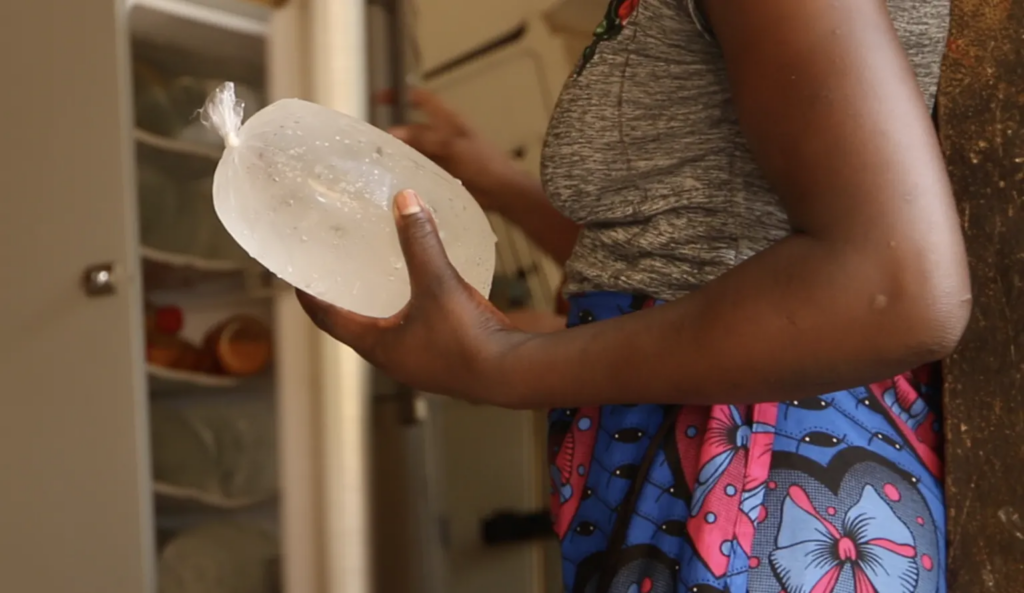
"I've come to buy ice because it's very hot now," says 15-year-old Fatouma Yattara as she visits her local vendor in the capital, Bamako.
With no working fridge due to prolonged power cuts, she resorts to using ice cubes to preserve food and keep cool during a heatwave which has seen temperatures soar to 48C.
It works to an extent, but price hikes are making life even harder.
"In some places it's 100 francs CFA ($0.20; £0.16)" for a small bag, she says, "even 300, 500 - it's too expensive."

This makes ice more expensive than bread - a standard baguette normally costs about 250 CFA.
It is an even bigger struggle for Nana Konaté Traoré, who is now forced to cook every day instead of a few times a week.
"We often go a whole day without power," she says, "so, the food goes bad, and you have to throw it away".
The problems began almost a year ago, with Mali's state power company failing to match growing demand after accumulating hundreds of millions of dollars in debt in recent years. Many Malians do not have back-up generators as it is expensive to refuel them.
No electricity means no fans at night, forcing many to sleep outside. And it is affecting people's health.
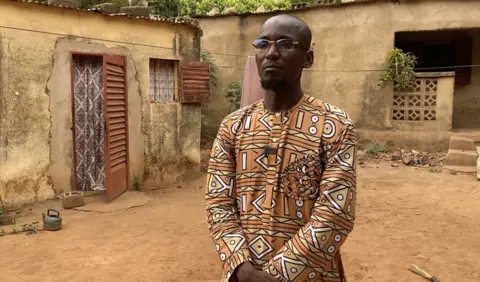
"We really suffer," says Soumaïla Maïga, a young man from the Yirimadio district on the outskirts of Bamako.
"At night it can reach 46C - it's unbearable because I suffer from dizziness. I have to pour water on myself to cope."
Since March, temperatures have soared above 48C in parts of Mali, killing more than 100 people. Most vulnerable are the elderly and the very young.
"We were seeing about 15 hospitalisations a day," says Prof Yacouba Toloba, who works at the university hospital in Bamako.
"Many patients are dehydrated - the main symptoms are coughs and bronchial congestion. Some also have respiratory distress," he tells the BBC.
Schools in some areas have closed as a precaution, and people in the Muslim-majority nation were advised not to fast during the Ramadan period which ended recently.
"We need to plan more for these situations, which will perhaps come back. This time it took us by surprise," adds Prof Toloba.
The deadly heatwave is also affecting neighbouring countries such as Senegal, Guinea, Burkina Faso, Nigeria, Niger and Chad.
Human-induced climate change is to blame for these extreme highs, according to scientists at World Weather Attribution (WWA).
"Extreme 5-day maximum heat as rare as the observed event over Mali/Burkina Faso would have been 1.5C cooler and 1.4C cooler over the larger Sahel region if humans had not warmed the planet by burning fossil fuels," their latest report says.
With temperatures expected to remain above 40C in Bamako over the next few weeks, people are trying to adapt to their new normal.
As sun sets in the capital, Ms Konaté Traoré takes several large mats outside to her yard and lays them down.
"We have to be outside all the time because of the heat. When it's hot I get sick," she says.
"It's not easy at all."
Latest Stories
-
Kwaku Azar writes: A-G vs OSP
27 minutes -
Mfantsipim–Adisadel rivalry built excellence, not division – Sam Jonah
52 minutes -
Vice President launches Mfantsipim’s 150 years of shaping Ghana’s greatest mind
1 hour -
I assure Otumfuo, Mahama will join him to commission KNUST Teaching Hospital by end of this year – Haruna Iddrisu
2 hours -
Barcelona dominate derby to extend La Liga lead
2 hours -
Gov’t to roll out free special education for persons with disabilities from July 1 – Education Minister
2 hours -
Importers and Exporters Association declares full support for Publican AI port system
2 hours -
“We used it to test our officiating officials’ readiness” – Bawah Fuseini after CAA Athletics event
3 hours -
Volleyball emerges as Ghana’s fastest rising sport
3 hours -
National Sports Fund needs strong leadership from the top – Administrator David Wuaku
3 hours -
JoySports Exclusive: Steve McLaren in talks with GFA after expressing interest in Black Stars job
3 hours -
Fire guts auto parts warehouse at Bubuashie, one fire officer injured
3 hours -
I owe my victory to coach Ofori Asare – Allotey after winning WBA Africa Gold Super Flyweight belt
3 hours -
Church of Pentecost supports over 2,000 BECE candidates in Obuasi with career guidance seminar
5 hours -
Brandon Asante and Coventry all but promoted to Premier League despite Sheffield Wednesday draw
5 hours