

Audio By Carbonatix
The Interior Ministry has introduced a technology-driven traffic enforcement system, TraffiTech-GH, to identify, track and penalise motorists who violate road traffic regulations.
Interior Minister Muntaka Mohammed-Mubarak announced the initiative during his appearance at the Government Accountability Series on Monday, August 24.
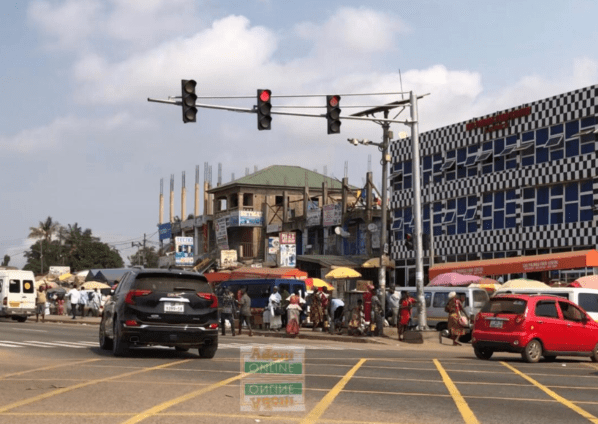
He said the system would use surveillance cameras and other monitoring devices installed on major roads to detect traffic violations and automatically generate evidence against offenders.
“Traffic offences are captured on devices such as fixed cameras, mobile cameras, vehicle cameras, hand-held devices and radar systems,” he said.
According to the Minister, once a violation is detected, the evidence is transmitted to a central control room for verification before an electronic notice is sent to the offender.
The notification will contain details of the offence, the applicable penalty and instructions on how to pay the fine.
“The evidence is revealed through a back office control room after the offenders receive electronic notices with details of the offences, penalty and payment process on their phones. So, if you cross a red light, you will just receive a text message,” he said.
Mr Mohammed-Mubarak said motorists who fail to pay the fines would be traced by the security agencies and could be arrested.
“If you fail to pay, then we will go after you,” he warned.
He said the initiative was intended to strengthen enforcement of road traffic regulations, deter irresponsible driving and help reduce road crashes and fatalities.
“So we hope that this is going to help minimise the carnage on our roads, as it is covering over 47 offences,” the Minister said.
How TraffiTech works
TraffiTech-GH is an automated traffic enforcement system developed by the Ghana Police Service to monitor road use and improve road safety.
The system uses fixed intersection cameras, mobile vehicle-mounted cameras, handheld and tripod devices, as well as other digital monitoring tools to capture traffic offences.
Detected offences are transmitted to a 24-hour control room, where evidence is reviewed before electronic notices are issued to offenders.
The notices are expected to provide information including the location and date of the offence, the applicable fine and visual evidence of the violation.
Fines are to be paid electronically within 14 days through the Ghana.gov platform.
The system is also designed to reduce direct interactions between motorists and police officers during enforcement, potentially limiting roadside disputes and opportunities for manual handling of traffic fines.
TraffiTech is expected to cover more than 47 traffic offences as part of efforts to improve compliance with road safety regulations and reduce road crashes.
Latest Stories
-
Mahama urges African governments to treat healthcare as an investment, not budget cost
34 minutes -
Bawumia congratulates John Boadu and new NPP executives, pledges support ahead of 2028
36 minutes -
‘No talent should be left out’ – Bawumia pledges inclusive NPP campaign for 2028
42 minutes -
Prof. Mike Oquaye recounts how he blocked Special Prosecutor’s attempt to arrest Bawku Central MP
57 minutes -
Make health sovereignty a priority for Africa – Mahama
1 hour -
Dorimon Naa, Wa West DCE lead massive clean-up exercise; threaten sanctions against recalcitrant residents
1 hour -
Photos From Adom FM Y2K Jam
1 hour -
Praye Tiatia steals the show at Adom FM Y2K Jam [Watch]
2 hours -
Boakye Agyarko congratulates John Boadu, pledges support for NPP leadership
2 hours -
Antwi HiMight thrills fans with Antwi ne Antwi hits at Adom FM’s Y2K Jam [Video]
2 hours -
Amb. Edward Boateng congratulates Boadu, Kodua on election wins
2 hours -
John Boadu pledges to rebuild NPP from grassroots and restore ‘winning machinery’
2 hours -
Ashaiman Assembly deploys monitoring system to curb dumping in storm drain
3 hours -
John Boadu must rebuild, unite NPP for 2028 – Edward Boateng
3 hours -
Executive intimidation of opposition undermines separation of powers – Prof Oquaye
3 hours