

Audio By Carbonatix
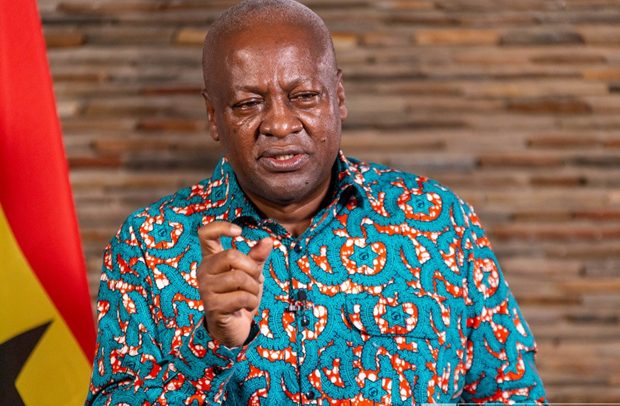
The International Perspective for Policy and Governance (IPPG), in a new policy brief, is calling on President John Dramani Mahama and the National Democratic Congress (NDC) to reconsider the proposed scrapping of the emissions levy.
While the intent to scrap various taxes aims to alleviate economic burdens on citizens, IPPG emphasizes that retaining the emissions levy and strategically channeling its revenues into climate finance will support the NDC in fulfilling its climate change, green growth, and renewable energy manifesto promises.
Additionally, the government could utilize the revenues to incentivize companies to adopt environmentally responsible expansions under the 24-Hour Economy policy and further finance initiatives to combat air pollution to reduce the estimated 28,000 annual premature deaths caused by air pollution in Ghana.
According to Mr. Seth Owusu-Mante, Research Fellow at IPPG and co-author of the policy brief, the emissions levy was introduced in December 2023 through the enactment of the Emissions Levy Act, 2023 (Act 1112).
The primary goal of the levy is to impose charges on carbon dioxide equivalent (CO2e) emissions from key sectors such as construction, manufacturing, mining, energy, and internal combustion engine (ICE) vehicles.
However, the lack of a clearly delineated allocation mechanism for revenue from the levy has been an oversight by the New Patriotic Party (NPP) administration.
This shortcoming undermines one of the core principles of any carbon tax: the reinvestment of revenues into clean energy projects and climate action. Without this reinvestment, the levy is perceived as a general tax rather than a transformative tool for addressing climate challenges and fostering green economic growth.
Why the Emission Levy Matters
Climate change poses significant challenges to Ghana, with severe impacts on economic sectors including agriculture, water resources, health, and infrastructure. Its effects exacerbate vulnerabilities, particularly for rural, women, and marginalized communities, who are disproportionately affected by extreme weather events, erratic rainfall patterns, and rising temperatures.
These challenges are rightly acknowledged in the NDC manifesto, which outlines a series of actions to address climate impacts through cross-sectoral approaches. Establishing a dedicated climate fund using revenues from the emissions levy will provide an essential local financing mechanism to implement these manifesto plans. Such a fund would ensure predictable and accessible resources to drive climate adaptation and mitigation efforts, reduce Ghana's reliance on external aid for climate finance, and strengthen the country's ability to meet its climate and development goals.
IPPG’s Key Recommendations
Cross-Sectoral Climate Resilience Initiatives: The climate fund can help finance NDC’s manifesto promises by supporting cross-sectoral initiatives such as climate-smart agriculture, water management, forestry, and infrastructure. For instance, it could fund advanced irrigation systems, flood-resistant infrastructure, and public health initiatives to mitigate climate-related diseases.
Incentivizing Green Practices for a 24-Hour Economy: The climate fund can be used to incentivize companies in key sectors to adopt green practices through tax rebates, grants, and subsidies, while encouraging individuals to embrace electric vehicles, solar panels, and energy-efficient appliances. Aligned with the 24-Hour Economy Policy, rebates and incentives for companies can act as a catalyst to drive new and future investments toward environmentally responsible practices and low-carbon operations.
Scaling Renewable Energy: The climate fund can drive large-scale renewable energy projects such as solar and wind farms, waste-to-energy systems, and off-grid solutions, as outlined in the NDC manifesto. These investments would enhance reliable electricity access, reduce emissions, address the gas supply and cost challenges, and support Ghana’s transition to a sustainable energy mix. The fund can also mitigate risks by providing project guarantees, credit enhancements, and financing for feasibility studies.
For all these recommendations to become a reality and given the NDC’s earlier promise to repeal the emissions levy, it is crucial for the government to adopt a pragmatic and strategic approach. Retaining the levy and repurposing it as a climate fund will require clear communication and consultation with stakeholders about its benefits, transparent governance mechanisms, and robust stakeholder consultations to build public trust. Strengthening emissions verification systems, ensuring targeted allocation of funds for cross-sectoral climate resilience initiatives, incentivizing green practices under the 24-Hour Economy Policy, and scaling renewable energy projects must remain top priorities.
The full policy brief can be downloaded here.
Latest Stories
-
What everyone should know about C-sections
2 hours -
Health Ministry engages Ga Mantse ahead of Free Primary Healthcare launch
2 hours -
We can tackle multiple priorities – Sam George defends Anti-LGBTQ Bill push
3 hours -
Statement: Ghana Chamber of Mines’ Response to Claims in Joe Jackson’s “Ananse Stories about the Economy of Ghana”
3 hours -
GES opens 2026 teacher recruitment for licensed B.Ed graduates
3 hours -
Ghana must value skilled trades, build resilient learners — Ibn Chambas
3 hours -
Ghana must rethink education around relevance, resilience and responsibility — Ibn Chambas
3 hours -
Prince Harry faces defamation lawsuit from charity he co-founded
3 hours -
South Korea deploys thermal cameras to track escaped zoo wolf
3 hours -
Calls for royal meeting with Epstein survivors grow ahead of US visit
3 hours -
Ibn Chambas advocates blend of technology and human values in education
3 hours -
UMA improves healthcare access in Asutifi North with GH₵700k ‘Kim Taylor Legacy’ Walkway
3 hours -
Scholarships Authority and Fanaka University offer sponsorship for procurement and supply chain studies
3 hours -
Bisa Kdei drops new single ‘Go N Look’ featuring Medikal
3 hours -
Benin facing rising terrorism in north as French military presence faces growing criticism
3 hours