

Audio By Carbonatix
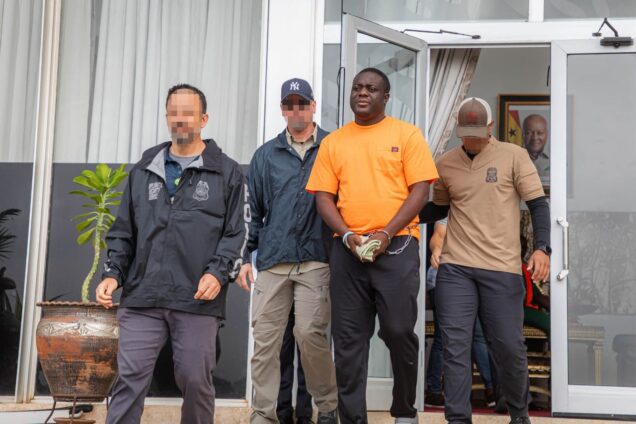
In recent times, the Federal Bureau of Investigation (FBI), with active support from Ghana’s security agencies, including the Economic and Organised Crime Office (EOCO), the Cyber Security Authority (CSA), and the Ghana Police Service, has intensified operations against romance scam syndicates in the country.
These operations have led to raids on suspected scam centres and the extradition of several alleged “fraud boys” or “sakawa boys”, the local term commonly used in Ghana for romance scammers. In Nigeria, they are popularly referred to as “Yahoo Boys.”
International security agencies, particularly the FBI, increasingly view Ghana and its West African neighbour, Nigeria, as major hubs for romance scams, wire fraud, and other cyber-related crimes. As a result, both countries have come under heightened international scrutiny.
But why is the FBI tightening the noose on Ghana? The answer is simple: romance scams continue to cause devastating financial losses in the United States, with billions of dollars lost over the past few years.
According to the U.S. Federal Trade Commission (FTC), Americans lost about US$1.14 billion to romance scams in 2023 alone from more than 64,000 reported cases. Victims lost a median amount of US$2,000 each — the highest median loss recorded among all imposter scam categories that year.
The situation was even worse in 2022, when nearly 70,000 Americans reportedly lost a combined US$1.3 billion to romance scams. The FTC noted that the losses were more than six times higher than figures recorded in 2017, highlighting the rapid rise of online relationship fraud.
In 2023, the FBI’s Internet Crime Complaint Center (IC3) also recorded about US$652.5 million in losses linked to romance and confidence fraud schemes.
Older Americans were among the hardest hit. People aged 60 and above accounted for roughly US$350 million of the reported losses—more than half of the total amount—from 6,470 complaints filed by elderly victims. In many of these cases, investigators reportedly traced the fraud networks to West Africa, particularly Ghana and Nigeria.
Although romance scams had long been widespread and frequently discussed in many Ghanaian communities due to the sudden lavish lifestyles of some young people with no known source of legitimate income, the issue did not dominate national headlines until the arrest and prosecution of Ghanaian socialite, influencer, and musician Mona Faiz Montrage, popularly known as Hajia4Real.
The popular Ghanaian celebrity was arrested in the United Kingdom on November 10, 2022, and extradited to the United States on May 12, 2023. She was subsequently sentenced on Friday, June 28, 2024, to one year and one day in prison after pleading guilty to conspiracy charges linked to a romance scam operation.
Prosecutors said Hajia4Real "received over US$2 million in fraud proceeds and pretended to marry one victim to further the fraud scheme."
According to FBI Assistant Director in Charge Michael J. Driscoll, "Ms. Montrage participated in multiple romance scams—often targeting elderly victims—resulting in more than US$2 million in fraudulent funds under her control."
Prosecutors had reportedly pushed for a 37-month prison sentence, but the judge opted for a more lenient punishment.
Shortly after her release in 2025, however, a series of high-profile arrests followed, with several wealthy and well-known "Accra big boys" rounded up for extradition to the United States.
Speculation quickly spread across social media and sections of the public that Hajia4Real may have cooperated with investigators in exchange for a reduced sentence, although no official confirmation has been provided.
So far, about 10 individuals have reportedly been extradited from Ghana to the United States over alleged involvement in romance scams and wire fraud schemes.
The latest high-profile development is the guilty plea of Ghanaian businessman Joseph Kwadwo Badu Boateng, popularly known as "Dada Joe Remix," who admitted in a U.S. court to Conspiracy to Commit Wire Fraud after being extradited from Ghana in 2025. Prosecutors said he participated in a romance and inheritance fraud scheme that targeted elderly victims across the United States between 2013 and 2023. As part of his plea agreement, Boateng agreed to pay approximately US$4.4 million in restitution and is scheduled to be sentenced on September 8, 2026.
Shockingly, a Ghanaian Member of Parliament, Ohene Kwame Frimpong, is also currently facing trial in the Netherlands following an extradition request linked to investigations by the FBI. He has reportedly been accused of money laundering and wire fraud offences.
With these high-profile arrests, extraditions, and guilty pleas, coupled with the increasingly low-profile lifestyles now being adopted by many suspected scammers, some Ghanaians believe the fight against romance scams is gradually yielding results.
Others also argue that the intensified crackdown is necessary to protect Ghana’s international image and prevent ordinary Ghanaians from being unfairly stereotyped abroad because of the activities of a few individuals involved in cyber fraud.
Whether Ghana is truly winning the war against romance scams remains open to debate. However, one thing is becoming increasingly clear: international law enforcement agencies are no longer treating cyber fraud in West Africa as an isolated problem, but as a growing global criminal enterprise requiring aggressive international cooperation and enforcement.
About the Writer
Isaac Nuamah Yeboah is a communications and media professional with nearly two decades of experience in journalism, editorial leadership, public relations, and copywriting. He is a journalist and editor for the Daily Analyst and Business Analyst newspapers and serves as the Managing Editor of CampaignerOnline.com.
Latest Stories
-
Hubtel willing to contribute to Ghana’s proposed AI fund – CEO
59 seconds -
Nkrumah family pays tribute to Gamal, says he died after prolonged illness
10 minutes -
Police arrest eight suspects in anti-narcotics operation at Okaishie Drug Lane
21 minutes -
Benjamin Danso pledges grassroots empowerment in NDC regional chairmanship bid
24 minutes -
GES recommends reposting of Obuasi SHTS headmaster after August 2026 campus riot
27 minutes -
Rocky Dawuni celebrates King Ayisoba for taking traditional music global
39 minutes -
Ghana targets $5bn in annual economic gains from AI – Sam George
40 minutes -
From childhood dreams to future careers: Ecobank’s Big Pitch seeks to promote early savings and investment
43 minutes -
Public office demands make party work difficult for NDC appointees – Mahdi Gibril
44 minutes -
AI could deepen rural-urban inequality without better connectivity – Sam George
47 minutes -
One of six inmates who escaped from Konongo police cells rearrested
52 minutes -
Sam George cautions ministers against reading unverified AI-generated speeches
56 minutes -
Ghanaian entrepreneur Mary Nyamekye Asamoah wins Africa Travel 100 award
58 minutes -
Obuasi SHTS abuse: Sanction all officials who failed to act – Moving Masculinity
1 hour -
Lucy Agyepong honoured for excellence in engineering education at maiden GAAS Women’s Awards
1 hour