

Audio By Carbonatix
Japan's top court has ruled as unconstitutional a defunct eugenics law which saw 16,500 disabled people forcibly sterilised between the 1950s and 1990s.
The Supreme Court also ordered the government to pay damages to 11 victims, who were involved in five cases that were heard on appeal.
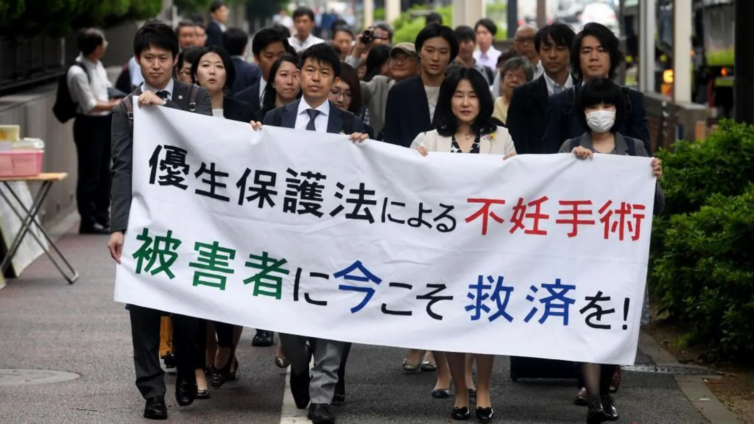
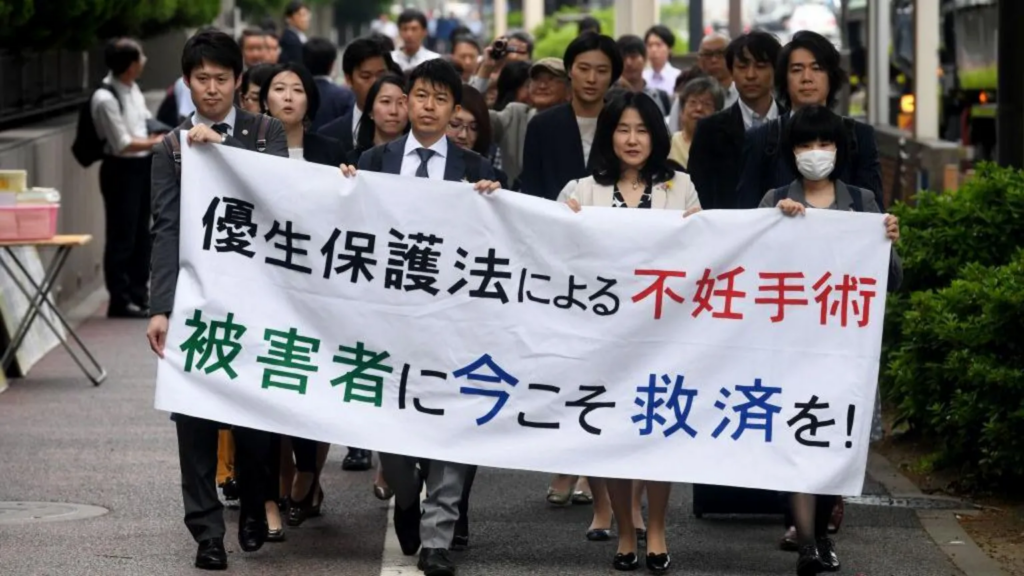
Wednesday's landmark ruling brings to an end a decades-long fight for justice by victims who have been demanding compensation and an apology.
After years of lawsuits, a 2019 law finally granted surviving victims damages but some have continued to fight for higher compensation.
In four of the cases brought to the court, the central government had appealed against the lower courts' compensation orders.
In the fifth case, two female plaintiffs had appealed against a dismissal of their claims, with the lower court citing the statute of limitations.
Under a post-World War Two law enacted in 1948, some 25,000 people - many of whom had inheritable disabilities - underwent surgeries to prevent them from having children deemed "inferior".
Japan's government acknowledged that 16,500 of the sterilisation operations were performed without consent.
Although authorities claim the 8,500 other people consented to the procedures, lawyers have said they were "de facto forced" into surgery because of the pressure they faced at the time.
Victims were as young as nine years old, according to a parliamentary report published in June last year.
The law was repealed in 1996.
'I could never be a mother'
On Wednesday, the Supreme Court also ruled that a 20-year statute of limitations could not be applied to compensation claims in forced sterilisation cases.
Lawyers had argued that the statute had meant that some victims, especially those who had been sterilised without their knowledge, had learnt of the surgery too late to meet the legal deadline.
Forced sterilisations were most prevalent in the 1960s and 1970s, during the post-war baby boom. Many of those forcibly sterilised had physical and intellectual disabilities, mental health problems or chronic diseases such as leprosy.
Physical restraint, anaesthesia and even "deception" were allowed for these operations, according to a government notice in 1953.
"From here, I believe that the government must take a hard turn and move forward at full speed toward a full-fledged resolution," said lawyer Yutaka Yoshiyama, who represented two of the plaintiffs.
He added that Japan has to date "turned a blind eye" to the "horrific harm" suffered by the victims and their family. Several of the victims who had sued the government died without receiving due reparations, he noted.
Under a law passed in 2019 following one of the lawsuits, surviving victims can each receive 3.2 million yen ($19,800; £15,600). About 1,300 people have applied for this compensation and 1,100 have been awarded so far, reports say.
Still, for some of the victims, financial compensation can only go so far.
“When I found out I realized I could never be a mother... It broke my heart," Yumi Suzuki, who was born with cerebral palsy and forcibly sterilised when she was just 12, told the BBC in a 2021 interview.
The 68-year-old is among the 11 plaintiffs whose cases were brought to the court on Wednesday.
"I [have] faced discrimination from when I was small but his was very different. It broke my heart.
"I don’t want money. I want people to know what happened to us. To make sure it never happens again. I want disabled people to be treated equally. We are not things. We are human beings."
Latest Stories
-
Chef Abbys: Feeding 50,000 people, putting food security on Ghana’s agenda
2 minutes -
Ho set to host Republic Bank–JoyNews Habitat Fair as multiple firms prepare to showcase housing solutions
10 minutes -
NPP demands public inquiry into alleged $600,000 World Cup visa fraud, wants Sports Minister, GTA CEO summoned
17 minutes -
I want my brand to be bigger than just music – Yaw Wazinga
20 minutes -
Houthi missile attack on Yemeni presidential palace kills two, minister says
21 minutes -
I hoped to win an award; I worked hard – 2026 Best Graduating Law Student
31 minutes -
Fraudsters increasingly target bank customers instead of banking systems – Fraud detection expert
31 minutes -
44 teacher sexual abuse cases tracked since 2015; school heads feature in 40% of recent cases — JoyNews Research
34 minutes -
Unchecked imports and the Middle East crisis threaten Ghana’s fragile food inflation anchor
53 minutes -
Ecobank Junior Saver Big Pitch to reward 10 winners with GH¢2,000 each
57 minutes -
AMA demolishes unauthorised pigsty obstructing Agbogbloshie waste evacuation exercise
57 minutes -
I was filled with disbelief – Akosua Achia Sarpong Esq. shares her first reaction
58 minutes -
Snake Village: A look at Volta Region’s hidden snake village and its tourism potential (Video)
1 hour -
Election Watch Ghana calls for constitutional reforms to strengthen Electoral Commission independence
1 hour -
NACOC, Postal and Courier Services Regulatory Commission intensify efforts to curb drug trafficking
1 hour