

Audio By Carbonatix
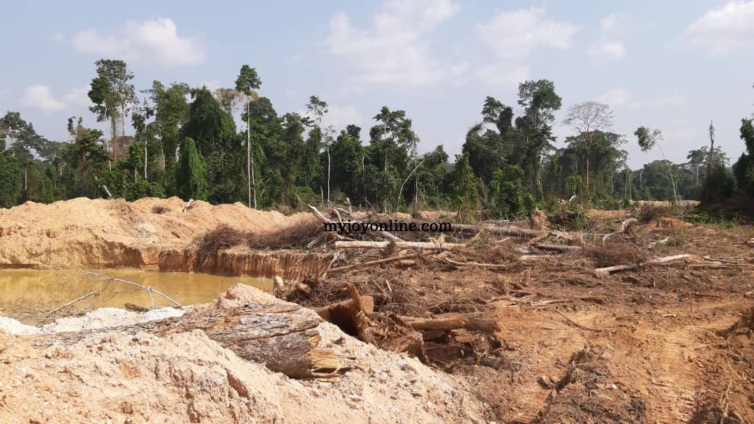
Land Ministry through the National Alternative Employment and Livelihood programme for Illegal Miners, has begun reclaiming degraded lands and water bodies in five regions in Ghana where illegal mining has been pervasive over the years.
This is being done as part of efforts tailored towards creating alternative livelihoods for the people involved in the illegal mining menace to help reduce it to the barest minimum, if not entirely eradicated.
According to the Coordinator of the Programme, Dr Louise Carol Serwaa Donkor, they have so far raised 20 million seedlings to that effect, and their contractors are currently working on various sites to get those lands and water bodies into states that will be able to support plant and aquatic life respectfully.
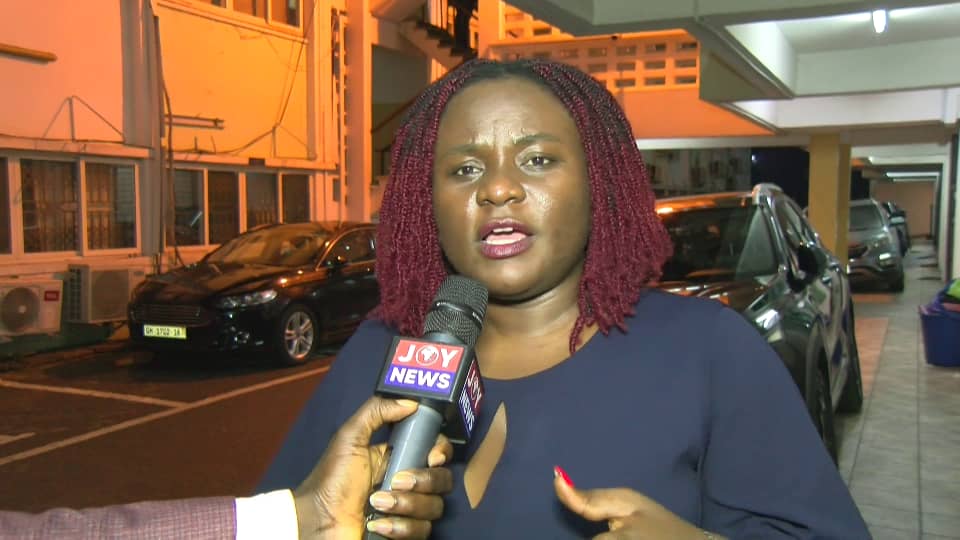
“Our focus now is on land reclamation and revegetation. We actually raised 20 million seedlings to support green Ghana day, part of which went to securing our water beds, some of which went into destroyed forests and reserves.
“We all know that mining anywhere near a river or water body or source of a water body is a no-go area, and that’s where our focus is.
"That’s where when you go, you will see our contractors working to reengineer the lands, and bring them back to states that support revegetation, and also redirect our water bodies,” she told JoyNews in an exclusive interview.
Dr Serwaa Donkor revealed that they have begun working on, cumulatively, 1000 acres of land area in five mining regions across the country.
“The portions that we have focused on to reclaim is really about water beds or where water has their sources. So we have gone to Abuakwa South in the Eastern Region; we’ve gone to Nsuaem in the Ashanti region, and we’ve gone to Western North.
"We are working in five mining regions where we have selected districts where the issue is quite endemic so we can bring the intervention,” she said.
She says, to successfully reduce illegal mining to the barest minimum, they have begun community engagements to ascertain how mining communities envisage the menace can effectively be dealt with.
“Now, our landscape studies are underway to be able to understand the illegal miners better. What is very important is that we need to understand the people with that we are trying to get interventions.
"Yes, we have ideas about what we intend to do, but we need to be able to understand the people too,” stated Dr Carol Serwaa Donkor.
Latest Stories
-
Catholic Bishops pressure gov’t to sign long-delayed mission schools agreement
48 minutes -
Cedi under fresh pressure as Christmas import demand drives dollar surge
1 hour -
Ato Forson eyes first-week November for 2027 Budget, promises jobs and major infrastructure push
1 hour -
Catholic Bishops demand probe into ‘protocol’ admissions amid SHS placement challenges
1 hour -
SHS placement: Catholic Bishops demand probe into alleged payments for school places
2 hours -
Facts about Nigeria’s Dangote oil refinery Initial Public Offering
2 hours -
Trump says AI safety fears a ‘hoax’ as he rejects calls for greater safeguards
2 hours -
Oil climbs as Saudi pipeline outage, fresh attacks heighten supply concerns
2 hours -
Donald Trump Jr and Bettina Trump say Putin ally paid for some wedding festivities as a ‘gift’
3 hours -
Farouk Aliu Mahama supports medical student with GH¢10,000 donation
3 hours -
EU is set to propose ban on social media and AI chatbots for under-15s
3 hours -
No SHS space shortage – GES says 800,000 places available for just over 600,000 students
3 hours -
Emmys 2026: The winners and nominees in full
3 hours -
African banks’ foreign subsidiary contributions increasing; Access Bank records fastest cross-border growth
3 hours -
Food prices in Ghana remain largely stable – AGRA report
3 hours