

Audio By Carbonatix
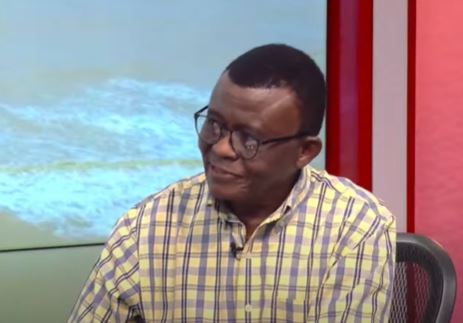
A former UN Senior Governance Advisor, Professor Baffour Agyeman-Duah, has expressed concern about the government’s perception of the illegal mining (galamsey) crisis in the country.
He pointed out that while the public and various organisations are making efforts to combat galamsey through public statements, the government's understanding of the crisis appears to differ significantly.
Speaking on UpFront on Wednesday, September 11, Prof Agyeman-Duah voiced his disappointment with the statement issued by the Ministry of Lands and Natural Resources regarding the galamsey menace.
According to him, the government's statement failed to convey the gravity of the situation and questioned whether government officials are aware of the pollution of river bodies and destruction of lands.
"I wonder if these people do drive on our ways and they are alerted and they see the river bodies over which we drive on the bridges.
“...So for the government to issue this statement is a non-starter in my humble view. The problem is huge and I think the government has been lacking the nerves to tackle it over the years to a point where it has completely gone out of control,” he said.
His comment follows the statement issued by the Lands Ministry on Wednesday, September 11, reiterating the government's commitment to promoting sustainable and legal mining practices in Ghana.
The ministry stressed that responsible mining remains a priority to protect the environment and ensure the well-being of communities impacted by mining activities.
The statement further noted that following a high-level meeting on Wednesday, stricter guidelines were issued to all Regional Ministers and their security councils to strengthen the fight against illegal mining.
In light of this, Prof Agyeman-Duah criticised the government's approach of fighting against galamsey by working through regional ministers as “useless.”
He argued that the country’s centralised governance system has been ineffective in resolving the crisis.
“We have a centralised government and it’s what the government or the president wants is what the ministers will do in the region. They represent the president, the same with the District Chief Executives and that tells you how this centralised governance system we have is failing us.
“Those in the districts and the regions are almost powerless in enforcing measures unless the national government takes the action so this statement that you just read, for me it’s a non-starter,” he said.
Latest Stories
-
‘We have turned the tide’ – Ato Forson says Ghana is ready to take off
22 seconds -
Police arrest man captured in viral video assaulting wife in Agona Nkwanta
2 minutes -
KATH Mother and Baby Unit construction stalled for 14 months over unpaid contractor arrears
16 minutes -
Government wanted to ‘tilt the balance’ with new EC appointments – Kwakye Ofosu
22 minutes -
Angry Tema Community 25 residents threaten to sleep at GWL over water shortage
36 minutes -
BoG takes financial literacy drive to Techiman, vows to protect depositors
36 minutes -
‘Stop the distractions’ – Akosua Manu demands answers over GH¢49.7m South Africa evacuation cost
37 minutes -
Formula 1 to return to Africa with Rwanda Grand Prix in early 2030s
43 minutes -
Mahama says Ghana is safer today as he commissions 85-bed ward at Police Hospital
48 minutes -
LA 2028: Black Queens face Zambia in final Olympic qualifier
56 minutes -
WAFU Zone B: Black Starlets seal semifinal place with 3-1 win over Benin
1 hour -
Black Queens thrash Mauritius 7-0 to advance 10-0 on aggregate in Olympic Qualifiers
1 hour -
Kaizen as a strategic pathway for micro business scale-up in Ghana
1 hour -
Minister orders suspension of Obuasi SHS headmaster over alleged sexual misconduct following JoyNews investigation
1 hour -
Over 38,000 commercial, 150,000 residential customers unbilled – Ghana Water MD
2 hours