

Audio By Carbonatix
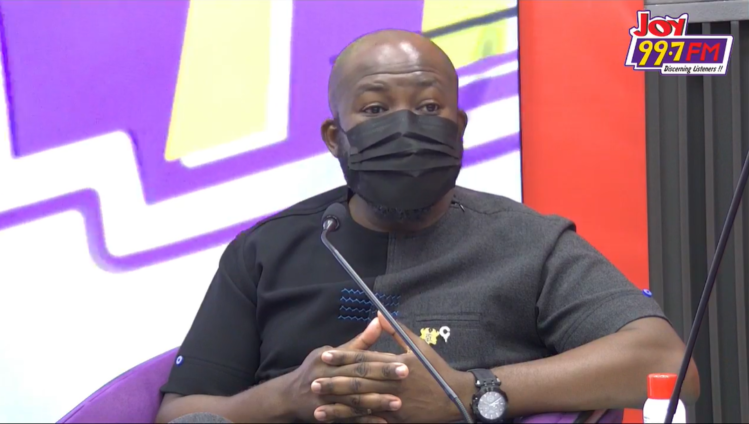
The Chief Executive Officer of the Ghana Chamber of Bulk Oil Distributors (CBOD), Senyo Hosi, has lamented the country's high cost of fuel prices.
According to him, the government must manage the foreign exchange rate to mitigate the high cost of fuel prices.
"One of the most potent and immediate things that government can do is to manage the forex rate. Either we have a central bank that is unwilling or a government that is not focused on the solution. We should be having a major crisis meeting by now oh how to deal with prices," he said.
Speaking in an interview on the Joy Super morning show, Senyo Hosi noted that government must commence talks with industry players to address petroleum prices.
"Politicians are not industry people; when they are out of government, they consult industry when they are in government sometimes they forget and then become people who claim to know all. So you can't fix these problems without the industry people.
"That conversation is not going on, and I don't think it is optimal from the policy front. Since our last conversation in your studio, we've not had an industry crisis meeting to see how to fix this," he said.
Mr Hosi noted that the country would face dire consequences in the future if prices are not controlled at the moment.
"It is crucial we address those things now. Going into the future, this is the bigger problem we are going to have. With prices going up, the crisis risk of Ghana will be going down, and there would be little funding even for oil import into this country.
"I think this is a crisis time there is the need for policymakers, the central bank to sit down and figure out a solution. The solutions are available if people are willing to help alleviate the suffering of our people.
Meanwhile, former CEO of the Volta River Authority, Dr Charles Wereko-Brobby, blamed the increase in fuel prices on government's failure to control fuel prices through its windfall profit.
"Right now, oil is around 85 dollars a barrel; we used $54 for our budgeting; it means that every extra barrel of oil that goes into our net basket $31 is the windfall profit that the government makes.
"I cannot think of a government saying it cares about the people if it is making $31 good windfall profit and is not applying that profit which is revenue neutral to reduce the prices of petroleum products," he explained.
At the beginning of this month, the National Petroleum Authority (NPA) commenced the removal of the Price Stabilisation and Recovery Levies (PRSL) on petrol, diesel, and LPG for two months.
The move is to stabilise prices for consumers and pay for Premix Fuel and Residual Fuel Oil (RFO) subsidies.
However, the Chamber of Petroleum Consumers (COPEC) said the removal of the PSRL will not cause a reduction in fuel prices at the pumps.
Latest Stories
-
Kwaku Azar writes: A-G vs OSP
19 minutes -
Mfantsipim–Adisadel rivalry built excellence, not division – Sam Jonah
44 minutes -
Vice President launches Mfantsipim’s 150 years of shaping Ghana’s greatest mind
1 hour -
I assure Otumfuo, Mahama will join him to commission KNUST Teaching Hospital by end of this year – Haruna Iddrisu
2 hours -
Barcelona dominate derby to extend La Liga lead
2 hours -
Gov’t to roll out free special education for persons with disabilities from July 1 – Education Minister
2 hours -
Importers and Exporters Association declares full support for Publican AI port system
2 hours -
“We used it to test our officiating officials’ readiness” – Bawah Fuseini after CAA Athletics event
3 hours -
Volleyball emerges as Ghana’s fastest rising sport
3 hours -
National Sports Fund needs strong leadership from the top – Administrator David Wuaku
3 hours -
JoySports Exclusive: Steve McLaren in talks with GFA after expressing interest in Black Stars job
3 hours -
Fire guts auto parts warehouse at Bubuashie, one fire officer injured
3 hours -
I owe my victory to coach Ofori Asare – Allotey after winning WBA Africa Gold Super Flyweight belt
3 hours -
Church of Pentecost supports over 2,000 BECE candidates in Obuasi with career guidance seminar
5 hours -
Brandon Asante and Coventry all but promoted to Premier League despite Sheffield Wednesday draw
5 hours