

Audio By Carbonatix
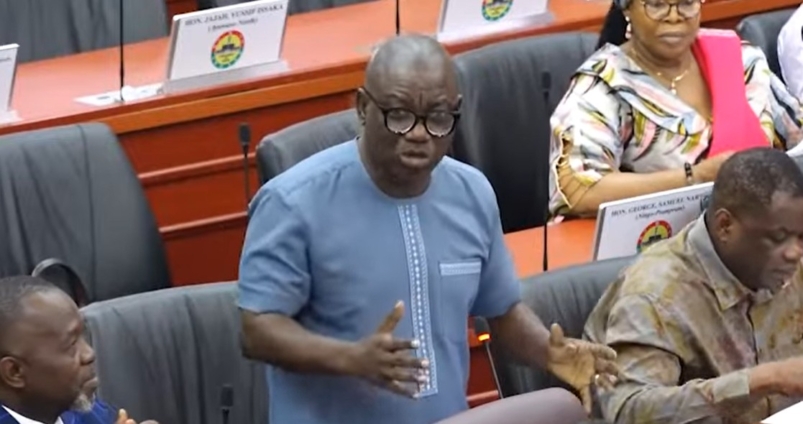
In a fiery rebuttal during parliamentary proceedings on Thursday, February 5, 2026, the Member of Parliament for Bolgatanga Central, Isaac Adongo, dismissed criticisms from the Minority regarding the government's flagship 24-Hour Economy initiative.
Mr Adongo asserted that the opposition’s anxiety stems from the realisation that the policy is not a mere campaign slogan but a meticulously planned "mainstreaming activity" now backed by a robust institutional and legal framework.
Responding to claims that the initiative lacked clarity, Mr. Adongo contrasted the 24-hour economy with previous government flagship programmes, which he argued lacked the necessary policy backing.
“You thought that the 24-hour economy was going to be like your 'Ghana Beyond Aid', your 'Free Senior High School', or your 'One District, One Factory' that never had a policy. Today, we are walking the talk. We are implementing a policy backed by a coordinating mechanism that ensures whatever we do is well thought out, implemented, and funded, and that is where NPP will remain in opposition for the next 30 years because of 24-Hour Economy,” Mr Adongo stated.
Clarifying the scope of the initiative, the Bolga Central MP explained that the 24-hour economy is not a stand-alone sector like agriculture or industry. Instead, it is a foundational shift in how all sectors operate.
He noted that the initiative will find expression in:
- Agriculture: Boosting processing and off-peak productivity.
- Industry: Moving from single-shift to three-shift systems.
- Services: Ensuring financial and digital systems are active round-the-clock.
Mr Adongo emphasised that the 24-Hour Economy Authority Bill, 2025, currently under consideration, is designed to create the "enabling environment" required for these sectors to thrive simultaneously.
The 24-Hour Economy Authority Bill
The debate followed the laying of a memorandum by the government seeking to establish a statutory 24-Hour Economy Authority. This body will replace the temporary Secretariat and act as a central hub for coordinating security, energy tariffs, and tax incentives for participating businesses.
Mr Adongo took a jab at the Minority for what he termed a failure to read the foundational documents of the bill.
“Unfortunately, it appears people did not even read the memorandum that came with the bill. It is not our fault that you don't read. If you had, it would have been clear what Cabinet and the Government of Ghana want to do with this Authority.”
Predicting a long stint in opposition for the current Minority, Mr Adongo argued that the successful rollout of the 24-hour economy would redefine Ghana's economic landscape so profoundly that voters would keep the current administration in power for decades.
Latest Stories
-
Ghana wins $393m Tullow tax arbitration as tribunal upholds GRA assessment
4 minutes -
Gender Minister assures women’s group of action on Affirmative Action, Development Bank
48 minutes -
Over 2,000 teachers in Dormaa comply with strike – GNAT Secretary
58 minutes -
Food Buffer Stock seeks stronger liquidity buffer despite record profit
1 hour -
LPG investments key to achieving 50% access target by 2030 – Energy Minister
1 hour -
Jinapor: New LPG terminal strengthens Ghana’s energy security
1 hour -
Agbodza directs road agencies to fast-track design approvals to prevent project delays
1 hour -
Housing Minister urges stakeholders to prioritise quality education in Banda District
1 hour -
Government redeems pledge to complete abandoned projects – Kofi Buah
1 hour -
Sam George calls for Black Stars disbandment, GFA dissolution after Gambia defeat
1 hour -
Bunkpurugu MP urges action to curb network disruptions in Northern Ghana
1 hour -
Education Minister calls for evidence-based response to learning crisis in West Africa
2 hours -
NPA reaffirms regulatory support as Puma Energy deepens investment in LPG and CRM
2 hours -
Ketu South NDC clears 73 aspirants for constituency elections
2 hours -
We are with all flood victims – Hohoe MP
2 hours