

Audio By Carbonatix
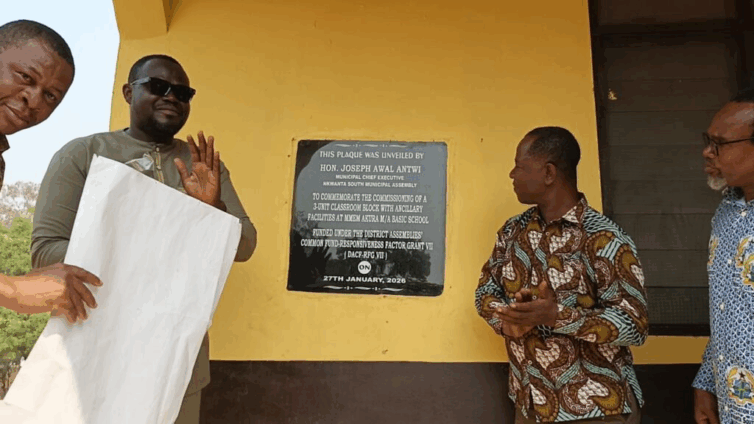
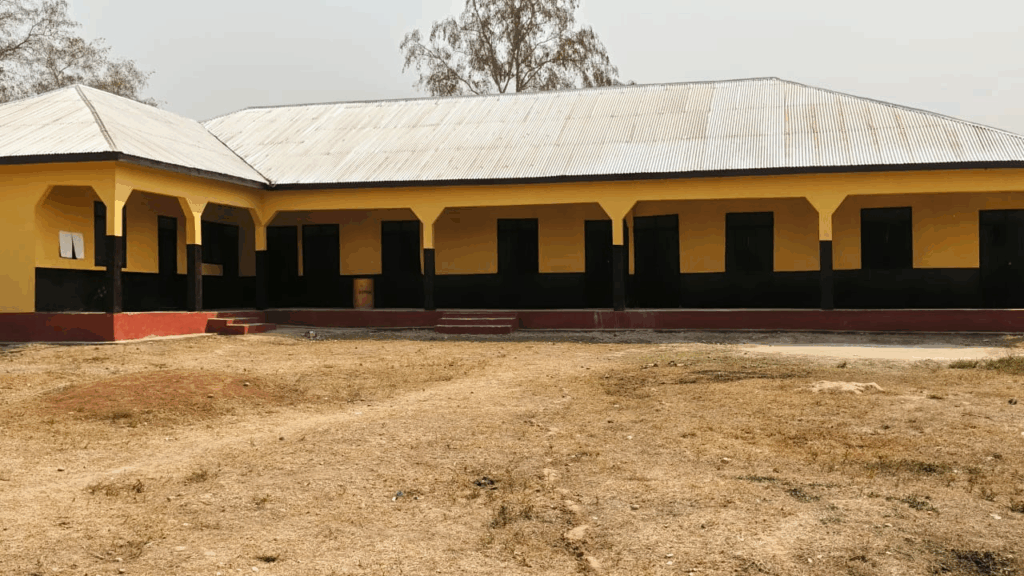
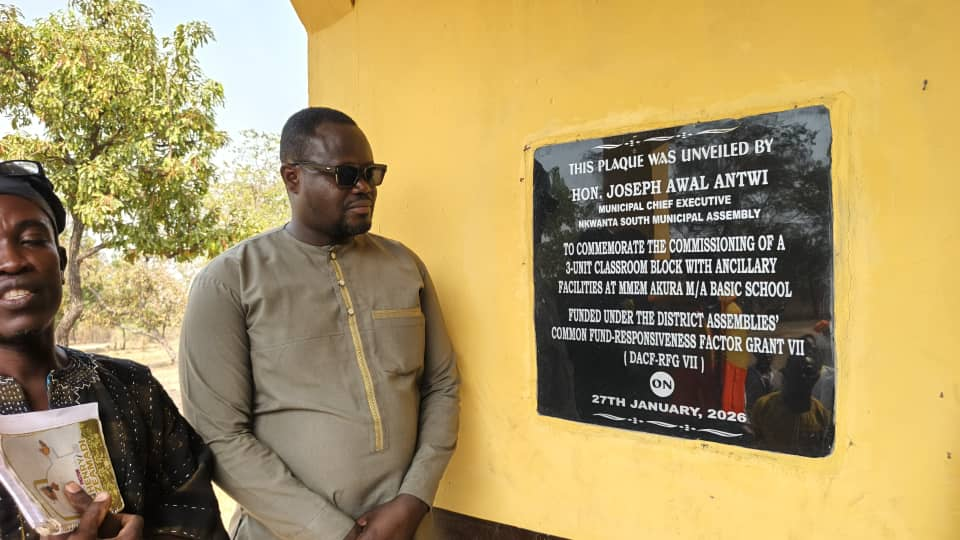
The Municipal Chief Executive (MCE) for Nkwanta South in the Oti Region, Joseph Antwi Awal, has commissioned a newly completed three-unit classroom block for Mmen Akura M/A Junior High School (JHS), a key step toward improving teaching and learning conditions in the community.
The facility, funded under the District Assembly Common Fund (DACF) Responsiveness Factor Grant VII, is designed to address long-standing challenges related to overcrowded classrooms, which have placed pressure on both learners and teachers.
The commissioning ceremony brought together education authorities, traditional leaders, community members, and Assembly representatives, highlighting a collective commitment to strengthening education delivery in the municipality.
Speaking at the event, MCE Joseph Antwi Awal emphasized the Assembly’s dedication to expanding access to quality education through strategic infrastructure investments, particularly in underserved areas.
“We continue to prioritize social infrastructure, but the growing needs of schools across the municipality require broader collaboration,” he said. He appealed to development partners, NGOs, corporate organizations, and philanthropists to support the Assembly’s efforts to provide a conducive learning environment for children.
He further stressed that sustainable improvements in education depend not only on building classrooms but also on complementary investments such as furniture, learning materials, water and sanitation facilities, and the maintenance of existing structures.
MCE Awal urged the Mmen Akura community to take ownership of the facility, emphasizing that community involvement in maintenance is crucial to preserve public investments and ensure lasting benefits for current and future learners.
The Nkwanta South Municipal Director of Education, Jonathan Korsinah, praised the Assembly and MCE for completing the project, describing it as a timely intervention that will reduce congestion and enhance the learning environment.
He highlighted that improved infrastructure directly impacts teacher effectiveness and student performance, especially in rural areas where school facilities often fall short of required standards.
However, he used the occasion to draw attention to another pressing issue: teacher accommodation. Korsinah noted that lack of housing in remote areas is a major barrier to attracting and retaining qualified teachers, leading to long commutes, late reporting, reduced teaching hours, and sometimes refusal of postings.
“Addressing accommodation gaps will strengthen teacher stability, improve punctuality, and ultimately lead to better learning outcomes for pupils,” he said.
The new classroom block reflects the Assembly’s commitment to responsive governance and the strategic use of public funds to meet community needs. With additional support—particularly in teacher accommodation and learning logistics—the municipality can further progress toward providing every child, regardless of location, the opportunity to learn in a safe and enabling environment.
Latest Stories
-
Imagination Africa, Mentors Chess Academy to host second African Genius Chess Championship at Ghud Park
20 minutes -
Nana B passport claims a diversionary tactic — Abu Jinapor
1 hour -
Pope Leo diagnosed with cancer as doctors remove lobe of lung, Vatican says
1 hour -
Legal Aid Commission takes free legal services to Techiman main lorry terminal
1 hour -
Nana B denies seeking passport favour, accuses Ablakwa of failing to account for GH¢16.4m
1 hour -
Young girls demand climate action, stronger protection against child marriage
2 hours -
Ex-gang boss sentenced to 40 years for orchestrating Tupac Shakur’s murder
2 hours -
From near-deferral to three awards: UMaT graduate’s academic journey
2 hours -
Atta Akyea denies seeking presidential pardon for Wontumi in galamsey case
2 hours -
Photos: Mahama commissions 85-bed Police Hospital ward, donates two ambulances
2 hours -
GTEC directs Ghana’s public universities to reopen by October 16 and begin lectures on October 19
2 hours -
Star Oil donates GH¢1million towards construction of new CID facility
3 hours -
Court hands Adjetey Sowah, two others lifetime bans after Amputee Football legal dispute
3 hours -
NDC appoints Julius Kwame Anthony as a Deputy Communications Director
3 hours -
Ghana repatriates 120 Nigerians rescued from suspected cybercrime centres
3 hours