

Audio By Carbonatix
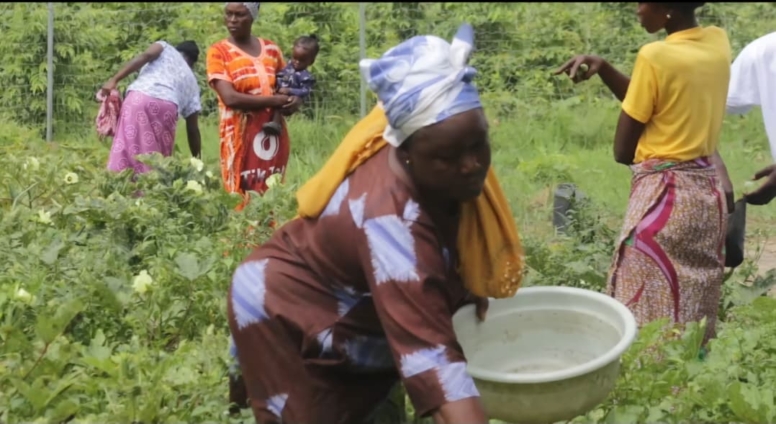
Climate change is exacerbating the struggles of women farmers in the Nyasabga community in Northern Ghana's Karaga District.
Prolonged drought has left many women farmers reaping empty harvests, but while some have no harvest, others are defying the odds by adopting climate-smart agricultural practices, showcasing persistence and determination.
This story explores the limited access to land by women, climate change, and its implications on food security.
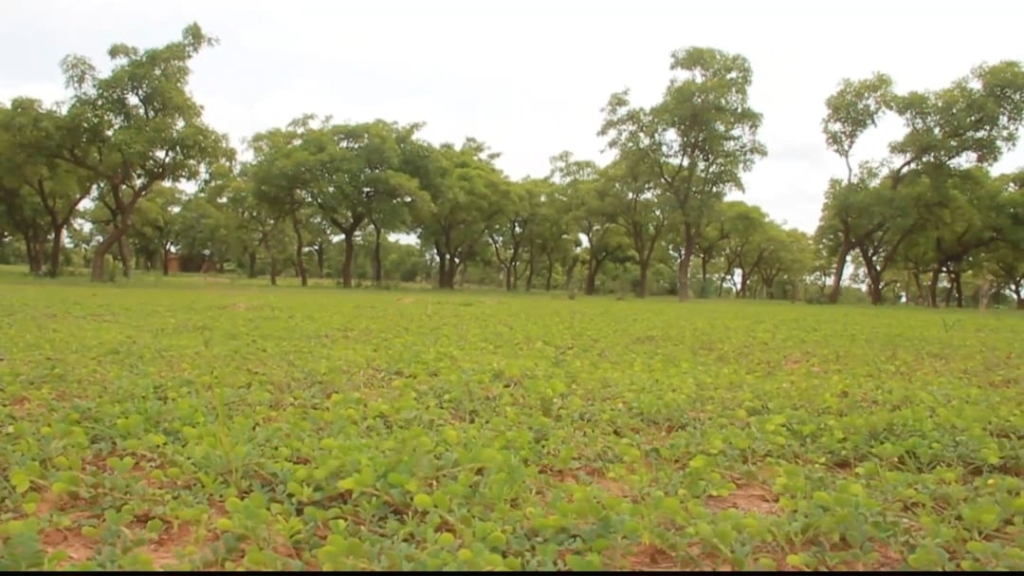
In the Nyasabga community in the Karaga District of the Northern Region, women farmers are struggling with declining crop yields due to continuous tilling and drought.
Baba Fati, a farmer, has been working on a piece of land given to her by her husband six years ago. She notes that the yields have decreased significantly over the years, especially last year due to the drought that hit the area.
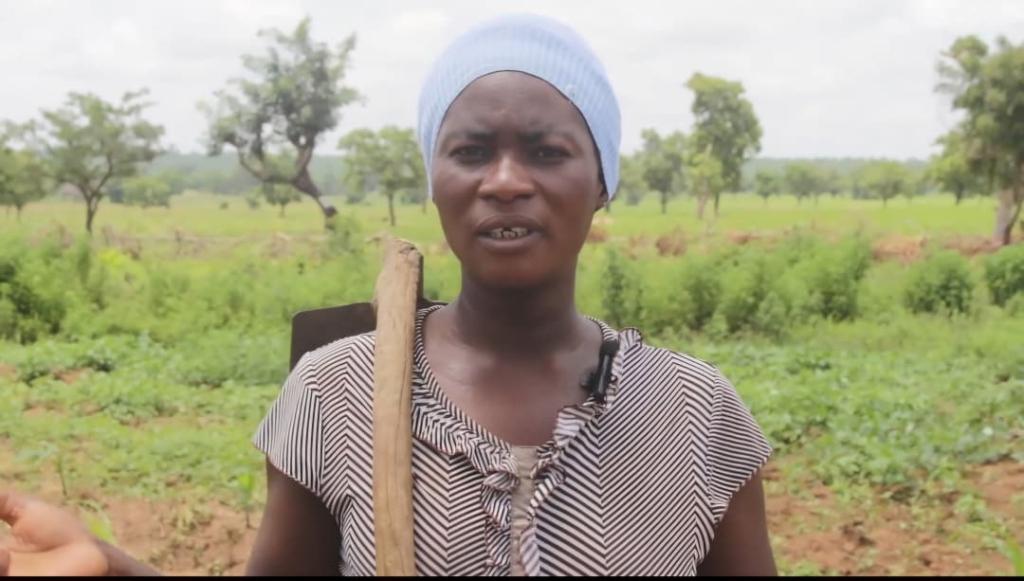
Fati added that the dry spell that had hit the area again was likely going to affect her yields.
"I have been farming on this piece of land over the years to feed my children. It was better at first, but last year was terrible, the drought was severe, so the yields were very low and it looks like its happening again this year. There has been a dry spell for the past two weeks," she said.
She makes a passionate appeal for support to buy fertilizers.
"I am appealing for support to buy fertiliser to be able to apply on my farm. Hopefully, I can make some yields when the rains finally come," she added.
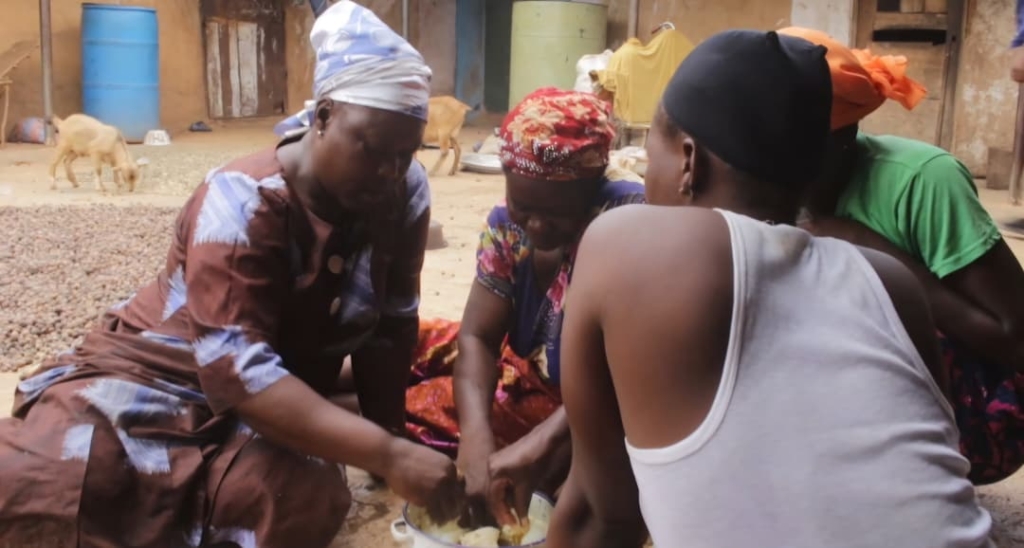
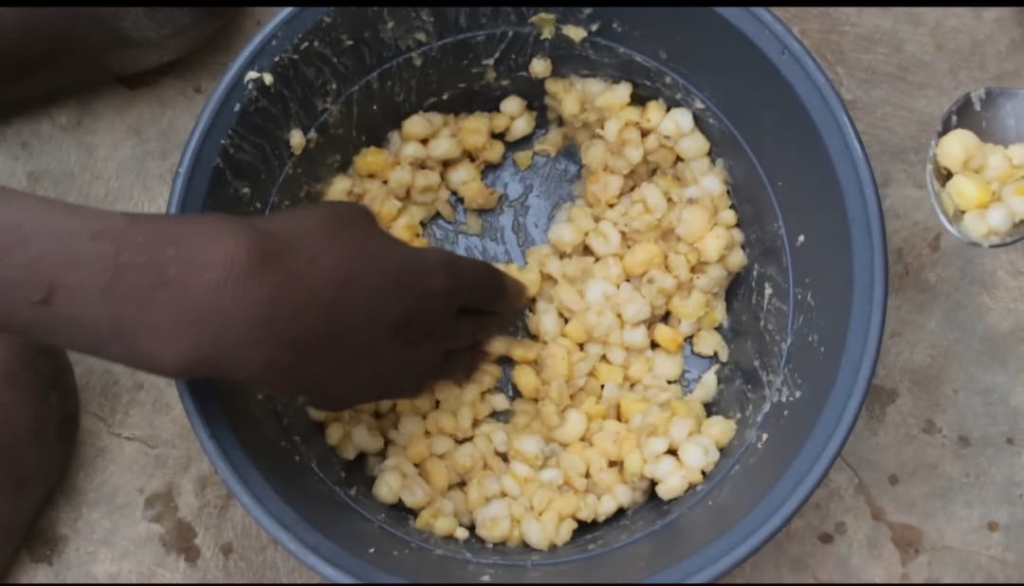
At Fati's home, her children are having breakfast. It is a meal made of cooked corn without any protein or vegetables, but Fati said that is all she can afford. “If you harvest and there is no yield how can you pay your children fees and give them nutritious meals, what you saw them eating at home that is all I can afford,” she said.
Even though these challenges continue to hamper farming for women farmers like Fati, some have worked to beat the odds.
Abukari Suweba is one of the women farmers in the Nyasabga community who has found a way to survive in this difficult time.
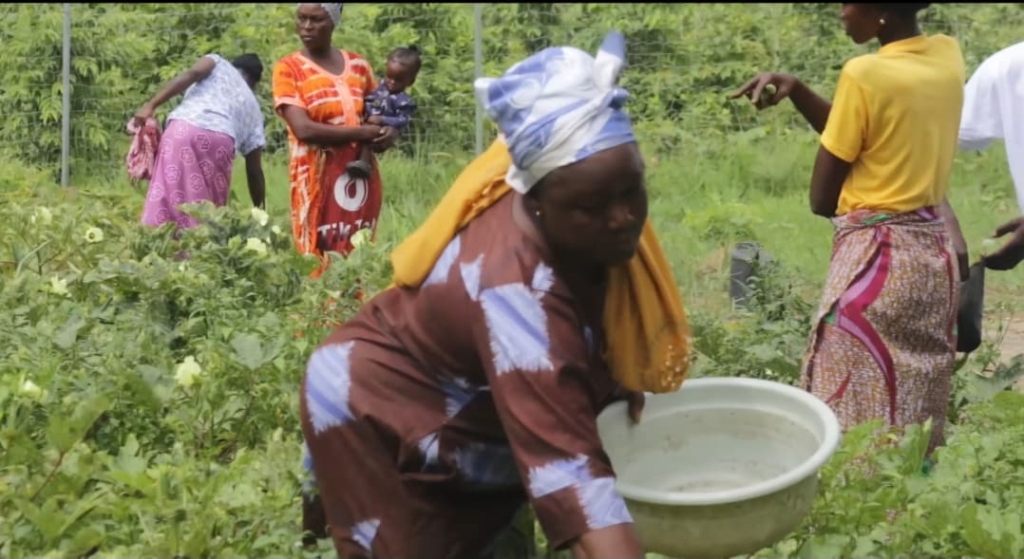
Despite facing land scarcity and the challenges of continuous farming, she has adopted smart agricultural practices that she said are giving her good yields.
"SWIDA Ghana visited us and beg the chief who gave us this land which had been overused by previous farmers. So they taught us how to use grass, waste, and cow dung to make the land fertile for our farms, and now my corn, tomatoes, okro, ayoyo and more are growing so well," she said.
Suweba added that they are also into fish farming where the water from the fish pond is used in watering her vegetable farm as fertiliser.
“There is a fish pond were we collect the water to fertilise our farms we have all manner of vegetables and tress growing on this land,” she said.
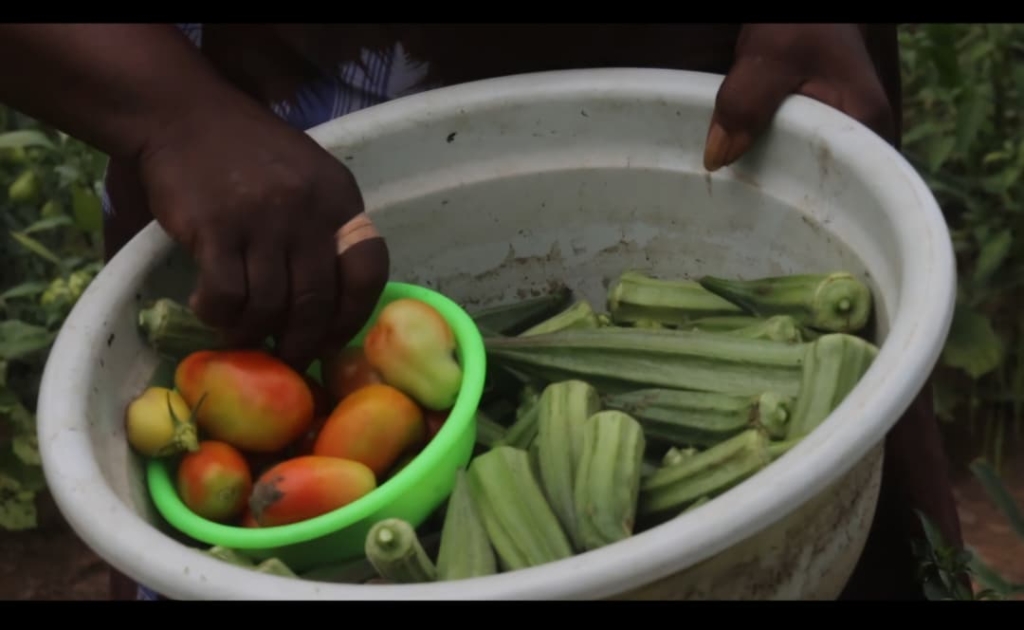
The farmer said they are able to feed their families with the balanced diet they need.
“You see our vegetables from the farm, when you cut it and add kanton, our local spice and cook. It’s so delicious, you will eat and want more. It's so healthy no need for the hospital to tell you, you are anemic or malnourished,” she said.
A lecturer at the Tamale Technical University in the faculty of Agriculture and Natural Resources, Mahama Wayo, explained that the devastating impact of human activities on the ozone layer by human-induced pollution and emissions is significantly contributing to the climate change that the world is witnessing.
"The more we send gases up, the more we are causing problems to the ozone layer and what do expect heat at the end of the day and so we always complain of heat, it's because of our activities. The population is growing by the day, we are becoming more industrialised, buying more vehicles by the day and every time you stand at the traffic image the amount of chlorofluorocarbons that are emitted in the atmosphere," he said.

He said the impact is what is causing the drought that is affecting the women.
Mr. Wayo said the smart agricultural policy, which aligns with the country's National Climate Change Policy, aims to promote sustainable agriculture practices, enhance climate information dissemination, and provide support to vulnerable farmers.
"Climate-smart agriculture is one of the policies under Ghana's climate change policies. And under this policy, we have smart agricultural practices that we encourage farmers to adopt," he said.
Mr. Wayo said smart agricultural practices can be expensive, adding that there is the need for the government to support farmers. "At the end of the day the adoption of these practices are expensive."
Mr. Wayo recommended that government subsidise farm inputs and support farmers with some loans and grants that will help the farmers adopt these technologies.
This article is brought to you by JoyNews in partnership with CDKN Ghana and the University of Ghana Centre for Climate Change and Sustainability Studies (C3SS), Legon with funding from R4I Opportunities Fund.
Latest Stories
-
US, Iran fail to reach peace agreement after marathon talks in Pakistan
6 minutes -
ECG kicks off Phase Two of transformer upgrades at Lashibi; brief outages expected
40 minutes -
Port crises loom as 11,000 drivers threaten four-day strike
1 hour -
A source of excellence across generations – Vice President Opoku-Agyemang lauds Mfantsipim
2 hours -
(Photos) Mfantsipim School launches historic 150th anniversary
3 hours -
Knights and Ladies of Marshall group backs Catholic Bishops’ stance on anti-LGBTQ+
4 hours -
Bright Simons writes: All the Filla in the Ibrahim Mahama/E&P – Gold Fields Saga
4 hours -
Monetise Idiocy In Ghana
4 hours -
The Ghanaian prophet and the mysterious death of his scottish wife Charmain Speirs
5 hours -
Nearly 400 sentenced in Nigeria for links to militant Islamists
5 hours -
Ghana’s recovery supported by gold strength despite global oil price pressures – Standard Bank Research
5 hours -
Methodist Church hails Mfantsipim@150; calls for “fresh consecration” to excellence
6 hours -
‘Excellence is our inheritance’ – Nana Sam Brew-Butler hails Mfantsipim’s 150-year reign in leadership
6 hours -
Kwaku Azar writes: A-G vs OSP
6 hours -
Mfantsipim–Adisadel rivalry built excellence, not division – Sam Jonah
6 hours