

Audio By Carbonatix
There are 54 countries in Africa. More than 20 produce oil and five of these countries are part of the world’s 30 oil-producing countries.
However, only two countries in Africa do not import oil.
In 2019 Africa accounted for more than 7.9 million barrels per day, which is about 9.6 per cent of global output.
Between 2005 and 2010, however, oil production in Africa rose to nearly 10 million barrels per day.
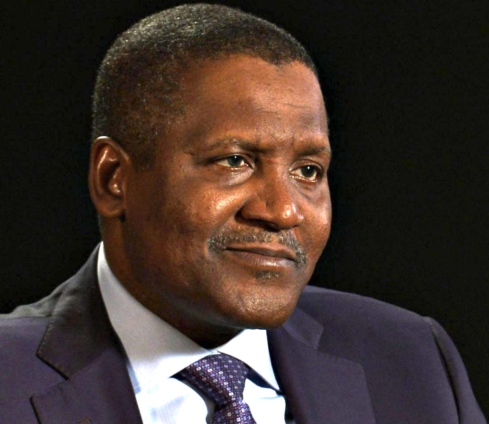
Speaking on Sunday, June 18, at the opening of the 30th Anniversary of the Afreximbank Annual Meetings in Accra, Ghana, the businessman, Aliko Dangote, pointed out that even though there are oil-producing countries on the continent, only two countries, Algeria and Libya, do not import oil.
Dangote who was speaking about the importance of free movement and intra-Africa trade, said: “We are importing poverty and exporting jobs.” He said that in relation to the fact that African countries continue to export raw materials.
He also expressed concern about the difficulty of travelling around the continent.
He said he has an African passport and should be able to travel around, but there are two countries that for some reason do not recognise the African passport.
According to Dangote, Nigeria produces about six million tons of urea and therefore, Africa should not be seeking to import fertilizer from outside the continent.
Dangote shared his experience on how his company started producing cement for local consumption and export, as well as opening factories in other countries and urged the establishment of local domestic.
In his welcome address, the Governor of the Bank of Ghana, Dr Ernest Addison gave tribute to Afreximbank.
He said since its establishment three decades ago, Afreximbank has transitioned into a first-class supranational financial institution, championing African trade and driving growth across multiple sectors in Africa.
“Evidence of the bank’s interventions are numerous and includes infrastructural investments to support intra-African trade, investments in agriculture and industry, trade facilitation, trade guarantee and advisory services, and country-specific programmes to support those in dire economic situations, among others,” he said.
Latest Stories
-
GoldBod must be more accountable to Ghanaians – Haruna Iddrisu
12 minutes -
Affi Agbenyo’s EC appointment is constitutionally appropriate, but politically, people have the right to remind us – Haruna Iddrisu
24 minutes -
Education is critical to Ghana’s future and development – Haruna Iddrisu
43 minutes -
Who’s Emelia Affi Agbenyo, the 43-year-old newly sworn-in Deputy EC Chair?
1 hour -
Haruna Iddrisu calls for limits on annual university accommodation fee increases
2 hours -
Today’s front pages: Tuesday, October 13, 2026
3 hours -
Wealth Over Water: How Galamsey Is Threatening Ghana’s Water Security
3 hours -
LA 2028: Black Queens pumped up for second leg of Mauritius tie
3 hours -
LA 2028: Black Queens hold final training session ahead of second leg against Mauritius
4 hours -
Standards are not Seasonal: What the EC appointments teach both sides
4 hours -
King Mohammed VI urges private sector to create youth jobs and spread benefits of growth
4 hours -
KGL U17 Colts 2026: Greater Accra win title after penalties win over Western Region
4 hours -
UK Investment Roadshow opens in London to advance UK-Ghana growth partnership
4 hours -
Assemblies of God requires pastors to resign before entering partisan politics – Rev. Wengam
5 hours -
Ghana targets 20% annual reduction in maternal deaths – Health Minister
5 hours