

Audio By Carbonatix
A private legal practitioner and a one-time President of the Ghana Bar Association (GBA), Sam Okudzeto, has highlighted the crucial role of the judiciary in interpreting the law.
According to him, “Parliament makes the law but Parliament doesn’t interpret the law.”
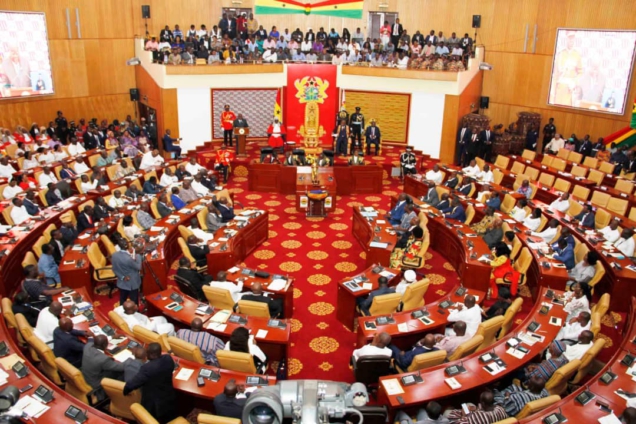
His comments come in the wake of the confusion over the leadership composition of Parliament after Speaker Alban Bagbin declared four parliamentary seats vacant on Thursday, October 17.
Three of the affected seats belong to the NPP, with the fourth held by the NDC. The decision therefore engendered a new leadership crisis in Parliament, with the NDC which has been the Minority now claiming to be in the Majority with 136 seats against the NPP's 135.
However, on Friday, October 18, the Supreme Court ordered a stay of execution on Speaker Alban Bagbin's declaration, ordering Parliament to recognise and allow the four MPs to fully represent their constituencies and carry out their official duties until the substantive case is held.
Nonetheless, the NDC caucus has vowed not to relinquish its newly attained Majority status insisting the Supreme Court cannot usurp the powers of Parliament as an independent arm of government that works with its rules.
Several legal luminaries have shared varied opinions on the matter.
Speaking on JoyNews' The Probe on Sunday, October 20, Mr Okudzeto expressed concern over the stance some lawmakers have taken on the issue, arguing that the interpretation of the Constitution remains the prerogative of the Supreme Court, not Parliament.
“The constitution is the Supreme law of the land. It was not Parliament that made the constitution; it was the people of Ghana and the power to interpret the Constitution has been given to the Supreme Court,” he said on Sunday.
Mr Okudzeto criticised some of his colleagues in Parliament for what he described as the use of sentiments over legality in the interpretation of constitutional provisions.
He emphasised that the controversy surrounding the declaration of vacant seats should be resolved by the Supreme Court, as it is the institution constitutionally mandated to interpret the law.
“It is rather surprising that my legal colleagues in Parliament don’t want to apply their minds to legality but are instead trying to use sentiments to interpret the law, and I don’t think it is in the interest of Ghana,” he noted.
Latest Stories
-
Hubtel willing to contribute to Ghana’s proposed AI fund – CEO
6 seconds -
Nkrumah family pays tribute to Gamal, says he died after prolonged illness
10 minutes -
Police arrest eight suspects in anti-narcotics operation at Okaishie Drug Lane
20 minutes -
Benjamin Danso pledges grassroots empowerment in NDC regional chairmanship bid
23 minutes -
GES recommends reposting of Obuasi SHTS headmaster after August 2026 campus riot
26 minutes -
Rocky Dawuni celebrates King Ayisoba for taking traditional music global
38 minutes -
Ghana targets $5bn in annual economic gains from AI – Sam George
39 minutes -
From childhood dreams to future careers: Ecobank’s Big Pitch seeks to promote early savings and investment
42 minutes -
Public office demands make party work difficult for NDC appointees – Mahdi Gibril
43 minutes -
AI could deepen rural-urban inequality without better connectivity – Sam George
46 minutes -
One of six inmates who escaped from Konongo police cells rearrested
51 minutes -
Sam George cautions ministers against reading unverified AI-generated speeches
55 minutes -
Ghanaian entrepreneur Mary Nyamekye Asamoah wins Africa Travel 100 award
58 minutes -
Obuasi SHTS abuse: Sanction all officials who failed to act – Moving Masculinity
1 hour -
Lucy Agyepong honoured for excellence in engineering education at maiden GAAS Women’s Awards
1 hour