

Audio By Carbonatix
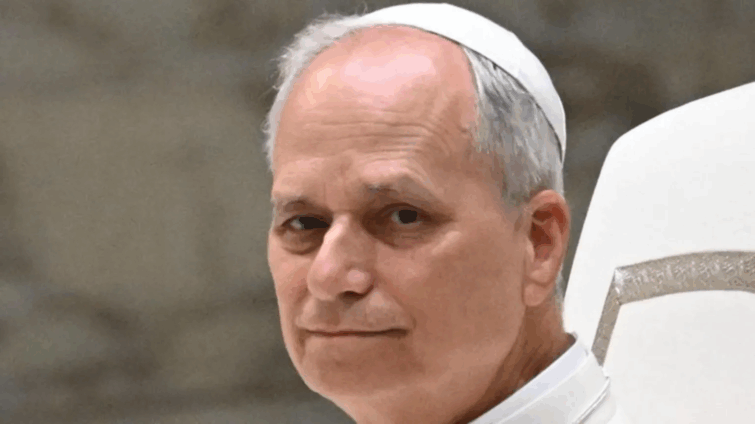
Pope Leo XIV has appointed the first Chinese bishop of his papacy, signalling that he will continue a historic agreement that sought to improve relations between the Vatican and China.
Both sides have hailed the appointment of Fuzhou Auxiliary Bishop Joseph Lin Yuntuan as an affirmation of their commitment to the 2018 accord, which was reached under the late Pope Francis.
The agreement gave Chinese officials some input on the appointment of bishops. However, its contents were never fully disclosed to the public.
Beijing insists that the state must approve the appointment of bishops in China, running contrary to the Catholic Church's insistence that it is a papal decision.
China has some 10 million Catholics.
Currently, they face the choice of attending state-sanctioned churches approved by Beijing or worshipping in underground congregations that have sworn allegiance to the Vatican.
On Wednesday, the Vatican said Yuntuan's ministry had been "recognised" by Chinese law.
"This event constitutes a further fruit of the dialogue between the Holy See and the Chinese Authorities and is an important step in the journey of communion of the Diocese," the Vatican said.
When asked about Yuntuan's appointment, foreign ministry spokesperson Lin Jian told reporters on Thursday that this showed how the 2018 agreement had been "smoothly implemented", state media reported.
China is willing to work with the Vatican to continue improving relations, he said.
The Pope's move shows a "willingness to support reconciliation instead of antagonism", Michel Chambon, a research fellow at the Asia Research Institute in Singapore who has written extensively about the Catholic Church, told Reuters news agency.
In September 2018, Pope Francis recognised seven bishops appointed by China. The Vatican also posthumously recognised an eighth bishop who died the year before.
China first broke off diplomatic ties with the Holy See in 1951, and many Catholics were forced to go underground during former communist leader Mao Zedong's rule, emerging only in the 1980s when religious practices were tolerated again.
Latest Stories
-
GAEC must retain nuclear scientists for Ghana’s nuclear ambitions – Minister
22 minutes -
Man reportedly mistaken for game and shot by hunter dead in forest
25 minutes -
19-year-old mason jailed 15 years for defiling seven-year-old pupil
29 minutes -
Ghana’s banking sector assets rise 20.47% to GH¢500.2bn – BoG Governor
33 minutes -
22 injured as Sprinter bus overturns at Sege after tyre burst
35 minutes -
UN housing expert urges Ghana to strengthen Rent Control Department amid housing affordability concerns
43 minutes -
Delta-BCI partnership reaches 166,000 people with breast cancer education
52 minutes -
Power restoration fault suspected in Kumasi Central Market fire
6 hours -
The 7-foot giant of Ngleshie Amanfro: Seven-foot Ghanaian Ephraim Saawa dreams of joining the national basketball team
7 hours -
Government promises support for Kumasi Central Market fire victims
7 hours -
Vibes The Movie: Big Ghun’s Ghanaian film earns five nominations at 2026 REFFA
7 hours -
‘I’m a fulfilled man’—Justice Korbieh on missing out on Supreme Court despite two nominations
7 hours -
MamaCare CEO warns unresolved conflicts among health workers could undermine maternal and neonatal care
8 hours -
Health professionals urged to translate medical knowledge into practice to save mothers
8 hours -
Retired judge Justice Francis Korbieh charges 1,568 new lawyers to uphold integrity
9 hours